
Fabian and Labude’s Unfinished Friendship
FabianThis flow traces how Jakob Fabian and Stephan Labude remain intimate confidants despite opposing ideas about action, until Labude’s death leaves Fabian to carry their unresolved argument alone.
increasing Bearing strength in each event
 decreasing
Bearing strength in each eventdecreasingA Familiar Confidant

A Familiar Confidant
The refuge of friendship
Labude gives Fabian a place to speak outside the routines of work and Berlin nightlife. Their easy familiarity is evident in the teasing names and unceremonious talk: Fabian can challenge him without the formality that governs Labude’s family home.
Their bond rests partly on contrast. Labude is ambitious, organized, and intent on shaping public life; Fabian distrusts conventional goals and watches society with skeptical distance. Rather than separating them, these differences provide the substance of their companionship.
An intimacy without agreement
Fabian listens to Labude’s scholarship and political plans, even when he doubts their premises. Labude, in turn, keeps trying to draw Fabian out of passivity, treating his friend’s judgment as valuable precisely because it is so independent.
The friendship therefore offers neither simple comfort nor consensus. Its closeness comes from the willingness to disagree and remain present, a bond that will matter when Labude’s carefully ordered private life begins to collapse.
The Argument over Action

The Argument over Action
Two accounts of responsibility
At Haupt’s, Labude tells Fabian that he must move forward and use his abilities. Fabian answers that advancement has no meaning without a system worth serving, and he refuses to treat money or power as self-justifying goals.
Labude believes authority could be used for others and that imperfect reforms are preferable to standing aside. Fabian suspects that power is usually redirected toward private interests, while even an ideal society would leave human cruelty intact.
Friendship under pressure
The exchange is affectionate but serious. Labude’s frustration arises not from indifference to Fabian but from a wish to see him take part in the world; Fabian’s resistance is equally bound to his concern for what honest participation would require.
Neither persuades the other. Their disagreement establishes a lasting tension between Labude’s faith in organized action and Fabian’s wary moral observation, without making their friendship conditional on agreement.
The Bridge and the Gunfire

The Bridge and the Gunfire
A dispute interrupted
After discussing the uncertain future of Europe, Labude insists that reasonable people must still dare to act. Fabian counters that the just and reasonable are unlikely to gain power. Labude grips his friend’s coat as if trying to force the question from abstract debate into immediate commitment.
Gunshots interrupt them. Labude runs toward the fighting, and Fabian follows despite his heart condition. Their different instincts remain visible, but in the crisis both move toward the wounded rather than retreating into argument.
Shared responsibility
Together they help disarm and transport two injured political opponents. Fabian attempts to speak to both men about justice and the limits of partisan conviction; Labude contributes practical care, binding a wound and arranging help.
The episode briefly turns their friendship into common action. It does not settle their political disagreement, but it shows that their moral concern is not merely theoretical: each is willing to place himself beside people caught in violence.
The Friend’s Final Letter
The Friend’s Final Letter
A private explanation
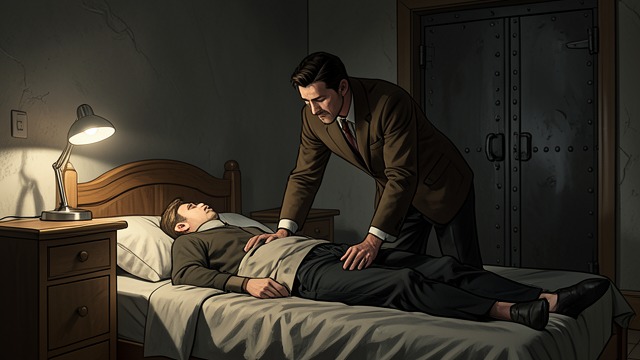
Fabian finds Labude dead and reads the farewell letter left for him. In it, Labude describes the rejection of his work, his failed relationship, and his exhaustion with a political world that offers no place for the convictions he tried to serve.
The letter makes their intimacy unmistakable. Labude calls Fabian the only person he loved despite knowing him, and entrusts him with his remaining affairs and books. He does not ask for a public defense; he gives his friend a deeply personal account of how his hopes became unbearable.
Grief without an answer
Fabian responds by speaking to the body as if Labude could still hear him. He remembers his friend as decent and intellectually serious, but also sees how much Labude depended on a planned identity and a future that could certify his worth.
The farewell does not resolve their old argument about action. Instead, it makes it more painful: Labude’s faith in purpose has ended in catastrophe, while Fabian’s distance has not protected him from loss. Friendship survives here as grief, memory, and the burden of unanswered questions.
The Friendship After Death
The Friendship After Death
Speaking to the absent friend
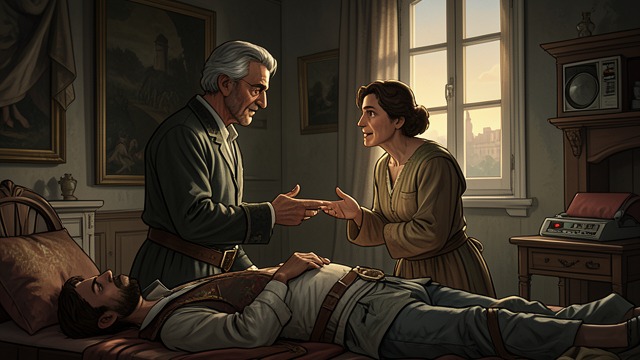
Fabian remains beside Labude’s body at the family villa and addresses him in an imagined conversation. He measures his friend against Lessing, whose fierce public life seems to embody a kind of self-forgetful struggle that Labude could not sustain.
His speech is not a dismissal. Fabian calls Labude a good and decent man, but recognizes that his friend’s self-image depended on succeeding as a reformer and scholar. When that identity broke, Labude could not find another way to remain himself.
A bond carried forward
The conversation occurs only in Fabian’s mind, but it is one of the last forms their friendship can take. He tries to understand what Labude wanted, what he could bear, and whether a life devoted to others requires a person to become estranged from himself.
Fabian cannot give Labude the rescue or consolation he might once have offered. He can only remember him and continue, burdened by the knowledge that affection does not guarantee understanding in time to prevent loss.
Early in the Berlin story, when Fabian visits Labude’s private apartment
At Haupt’s dance hall, during their conversation about money, power, and purpose
Later that night, near the Märkisches Museum
Near the end of the Berlin story, after Labude’s suicide
The morning after Labude’s funeral arrangements begin, at the Labude family villa
