
Fabian and His Mother’s Quiet Devotion
FabianThis flow follows the enduring affection between Jakob Fabian and Frau Fabian, expressed through letters, food, money, remembered childhood care, and Fabian’s eventual return home.
increasing Bearing strength in each event
 decreasing
Bearing strength in each eventdecreasingA Mother’s Ordinary Letter
A Mother’s Ordinary Letter
Care in everyday details
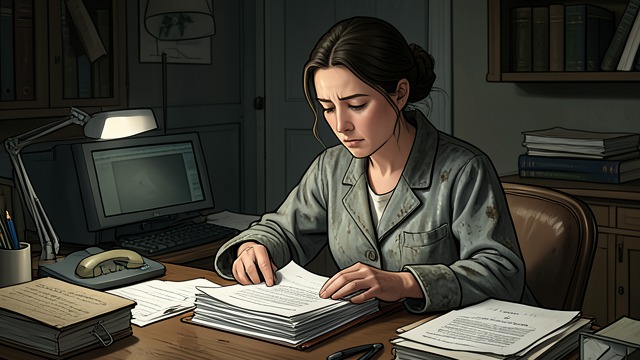
Frau Fabian’s letter moves among family health, washing, prices, garden news, and the household cat. Its ordinary subjects show how she keeps her son close through the small routines of home, even though they live apart.
She worries that Fabian works in cigarette advertising and repeats her belief that the job is only temporary. Her concern is affectionate rather than censorious: she knows he has to earn a living, but wishes his abilities could find a more fitting use.
Distance made painful
The letter remembers walks and shared adventures from his childhood and mourns that she sees him only briefly each year. Her longing does not become a demand; she asks him to come home when he can and sends greetings to Labude.
Fabian reads the letter in a shabby rented room and wonders why he remains in Berlin. His mother’s tenderness briefly makes the distance between them feel more consequential than his work or the city’s diversions.
The Visit with Provisions
The Visit with Provisions
Love carried in a basket
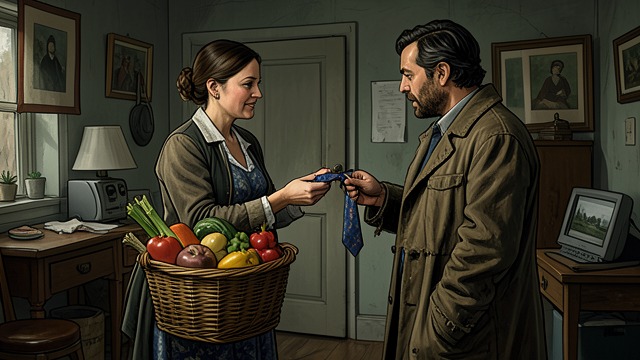
Frau Fabian arrives with food, soap, and a new tie, turning a short visit into a practical act of care. She has traveled because her son’s silence has worried her, and she immediately takes up the familiar work of organizing his room and feeding him.
Fabian protests that she should not spend so much on him. She dismisses the concern and focuses instead on what he needs, as if the simplest way to comfort him is to make sure he has enough to eat.
A childhood memory
He recalls running away from boarding school to see her when she was ill. She remembers that he had endured a great deal because of her, and their exchange brings a childhood bond into the present without bitterness.
They attend a film together, and her laughter delights him. Their happiness is modest and temporary, but it shows how easily her presence can make a strange room feel closer to home.
Two Secret Banknotes

Two Secret Banknotes
Giving without being asked
At the station, Frau Fabian worries over luggage, food, and whether her son will visit home. Fabian slips a twenty-mark note into her handbag because he knows she needs support even though she would object if he offered it openly.
His mother has already written him a note and tucked a twenty-mark bill among the provisions. She tells him to eat the schnitzel first and explains how to keep the sausage, converting affection into the practical language she trusts.
A moral exchange
Fabian discovers her money after the train leaves and understands that they have secretly given each other equal sums. Arithmetically, neither has gained; emotionally, each has tried to relieve the other’s worry.
The exchange crystallizes their relationship: neither wants to be a burden, and both care by quietly giving what little they can. Their affection works through reciprocal concealment, where a gift matters even when its value cancels out.
The Return to the Soap Shop
The Return to the Soap Shop
A son comes home in grief
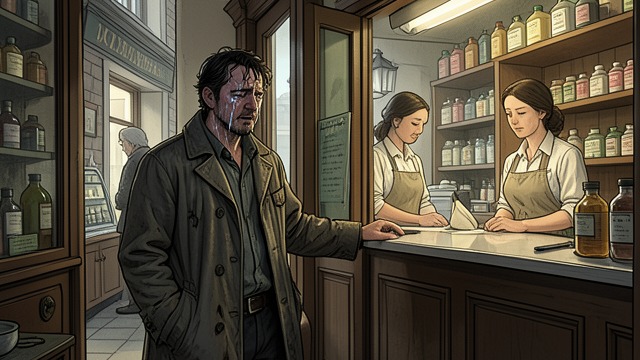
After leaving Berlin, Fabian reaches the familiar street where his mother works behind the counter of the family soap shop. He sees her weighing soap and serving customers before he enters and tells her that Labude has shot himself.
The news breaks through his practiced restraint. Fabian begins to cry, withdraws to the back room, and lays his head on the windowsill. His mother’s presence gives him a place where grief can finally become physical.
Home as a fragile refuge
The return is not a triumphant recovery. Fabian has lost his job, his closest friend, and the relationship that connected him to Berlin; he arrives without a settled answer about what comes next.
His mother does not solve those losses. Her shop, familiar gestures, and willingness to receive him offer something more basic: a surviving relationship that does not depend on his career, political usefulness, or success in love.
An Unfinished Homecoming

An Unfinished Homecoming
Remembering the son he was
Fabian walks through the barracks-like school of his childhood, recalling its strict routines and the lonely nights when he pressed his face to a window to think of his sick mother. The institution has changed little, and its order brings back the vulnerability of being a boy far from home.
The memory reveals that his attachment to his mother was shaped by separation and concern long before adulthood. He had once risked punishment simply to check whether she was well, turning a brief visit into a measure of his loyalty.
A future still undecided
Back in the family shop, Frau Fabian asks whether he might stay and find work locally. She wants the familiar family life of employment, marriage, and children, while Fabian says he wants to work and find a goal of his own.
Their difference does not weaken their bond. His mother’s hopes arise from care and her own sense of what makes life secure; Fabian cannot yet promise that he will adopt them. His return is therefore a beginning without resolution, held between filial closeness and the need to choose his own direction.
One evening early in the story, when Fabian reads a letter in his rented room
After Fabian loses his job, when Frau Fabian arrives unexpectedly in Berlin
The evening Frau Fabian leaves Berlin by train
After Labude’s death, when Fabian reaches his hometown
During Fabian’s first days back, after he revisits his former boarding school
