Consider the lilies of the field
Fahrenheit 451Consider the lilies of the field is a phrase drawn from the Sermon on the Mount in the Gospel of Matthew, where Jesus urges his followers not to worry about material needs, pointing to the lilies that neither toil nor spin yet are clothed in splendor. In Ray Bradbury's Fahrenheit 451, this fragment of scripture becomes a crucial mental anchor for Guy Montag during a moment of intense psychological crisis, as he attempts to hold onto the words of the Bible while being assaulted by a commercial jingle for Denham's Dentifrice on a subway train. The phrase represents the fragile possibility of preserving meaningful thought in a society engineered to drown it out.
The Subway Struggle
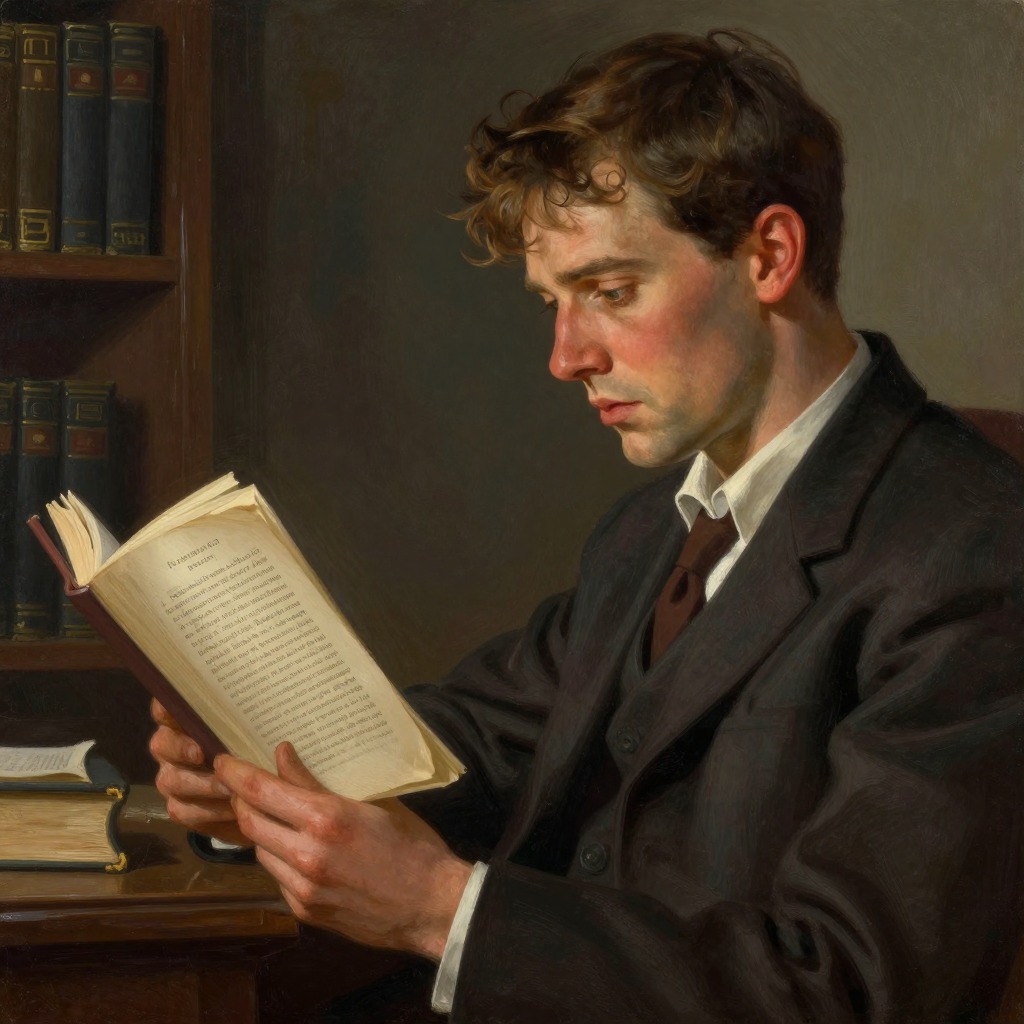
Montag, carrying a stolen Bible and desperate to memorize its contents before he must surrender the book to Captain Beatty, rides the subway and tries to read. The train's radio blares the jingle "Denham's Dentifrice" repeatedly, and Montag silently commands himself to "Shut up" and focus on the biblical text: "Consider the lilies of the field." He repeats the phrase to himself like a mantra, but the advertising slogan intrudes again and again, its rhythm and repetition making it nearly impossible for him to retain the scripture. The experience recalls a childhood memory of trying to fill a sieve with sand, a futile task that left him in tears; now, the words of the Bible sift through his mind just as the sand did, and the jingle proves more tenacious than the sacred text.
The Public Outburst
Montag's internal battle escalates until he can no longer contain it. He rises to his feet in the crowded subway car, his face "insane" and "gorged," and shouts "Shut up, shut up, shut up!" at the radio, clutching the flapping book in his fist. The other passengers, who had been tapping their feet to the jingle and mouthing the words "Dentifrice," stare at him in shock. The train radio retaliates with a "great ton-load of music," pounding the passengers into submission. Montag barely manages to leap through the closing doors at his stop, fleeing the car as the jingle follows him: "Denham's Denham's Denham's." The scene dramatizes the overwhelming power of mass media to occupy the mind and crowd out reflective thought, and Montag's outburst marks a turning point in his rebellion against the culture that has shaped him.
Thematic Significance
The phrase "Consider the lilies of the field" encapsulates the novel's central conflict between two kinds of knowledge: the deep, contemplative wisdom found in books and the shallow, repetitive information fed by the entertainment industry. Montag's inability to hold onto the biblical words mirrors the broader societal loss of meaningful discourse. Earlier, Captain Beatty had explained to Montag how mass media and minority pressure had reduced all culture to a "paste pudding norm," eliminating complexity and controversy. The jingle for Denham's Dentifrice is a perfect example of this process: it is catchy, mindless, and designed to occupy the brain without requiring thought. Montag's struggle to remember the lilies is thus a struggle for his own humanity, a fight to carve out space for reflection in a world that has systematically eliminated it. Later, when Montag joins Granger and the book people, he discovers that the only way to preserve knowledge is to internalize it completely, to become the book itself. The lilies, though nearly lost in the subway, represent the seed of that transformation.