Helicopters
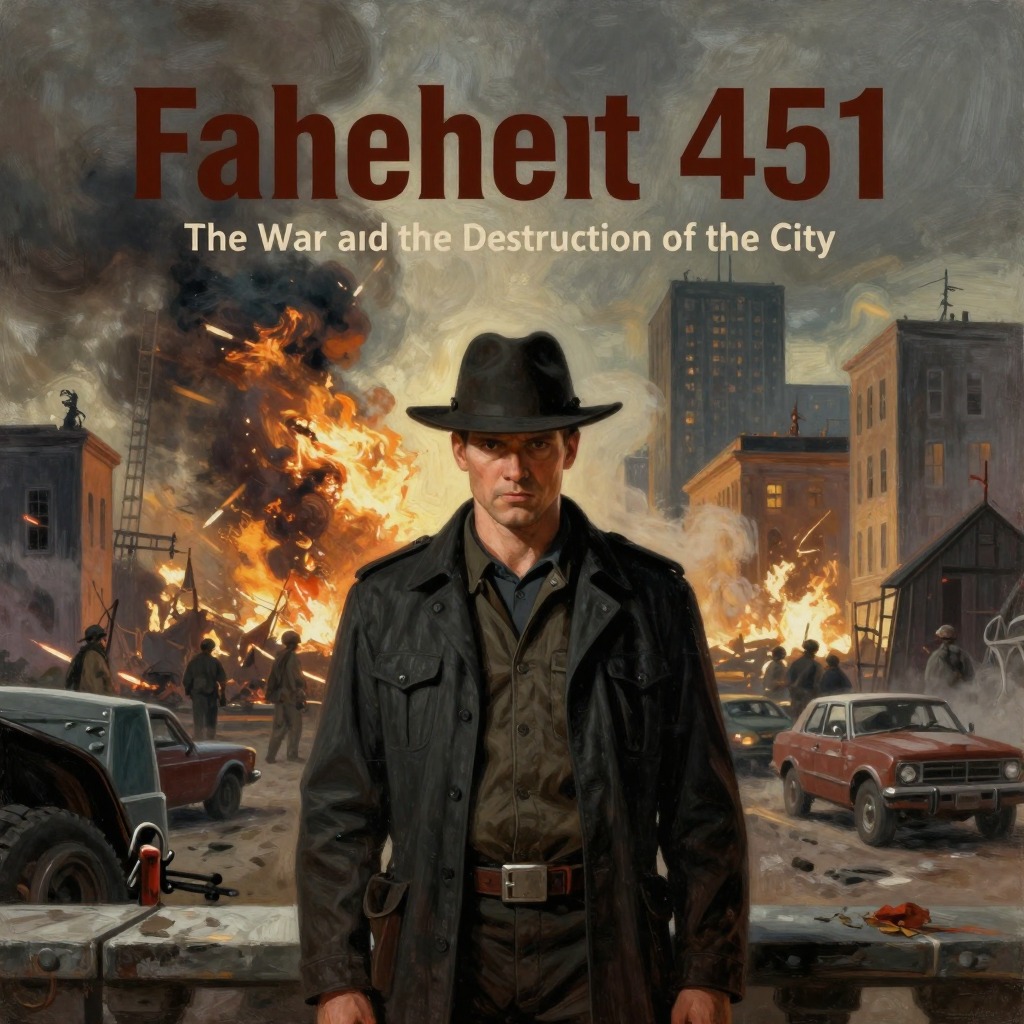
Fahrenheit 451Helicopters in Ray Bradbury's Fahrenheit 451 are the airborne arm of the state's surveillance and enforcement apparatus, serving both as the eyes of the police pursuit and as the delivery system for the war that ends the city. They transform the hunt for a single fugitive into a broadcast spectacle, and their final, devastating function is to carry the bombs that obliterate the metropolis, completing the novel's arc from controlled burning to total destruction.
Aerial Surveillance and the Manhunt
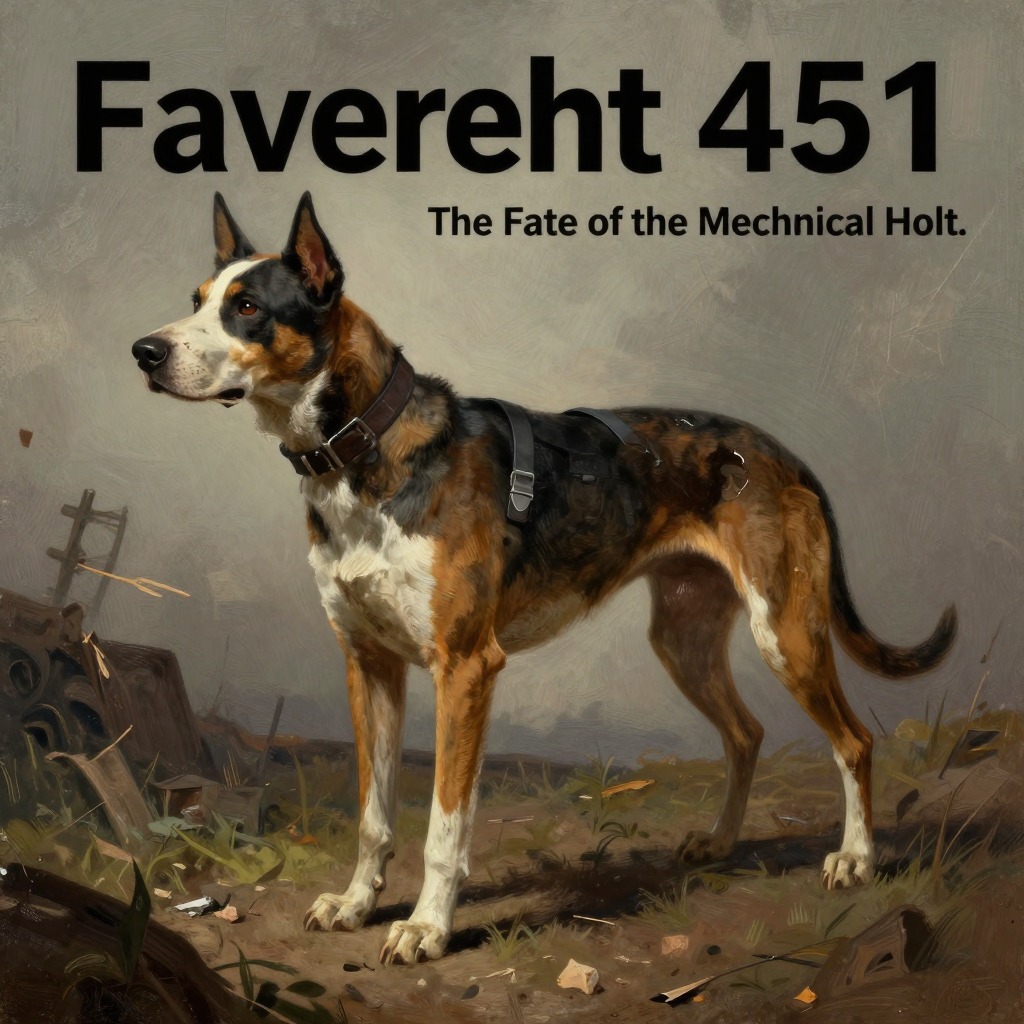
When Montag becomes a fugitive after killing Captain Beatty, the police deploy helicopters as the primary tool for tracking him from the sky. The helicopters are described as rising "so far away that it seemed someone had blown the grey head off a dry dandelion flower," appearing as "two dozen of them flurried, wavering, indecisive, three miles off, like butterflies puzzled by autumn." This delicate, almost organic imagery contrasts sharply with their function: they are the relentless, mechanized eyes of the state. The helicopters carry cameras that broadcast the chase live, turning Montag's flight into a public drama. The Mechanical Hound is delivered by helicopter to the site of Montag's burned house, landing "by helicopter at the site of the Burning!" and descending "out of the sky, fluttering, the helicopter like a grotesque flower." The helicopters also carry the searchlights that illuminate the river when Montag tries to escape by water, creating "a storm of light" that forces him to dive under the surface. Their presence is constant and oppressive, a mechanical swarm that fills the sky and drives Montag's desperate flight.
Media Spectacle and the Manufactured Ending
The helicopters are not merely tools of pursuit; they are the instruments of a media spectacle designed to provide a satisfying conclusion for the viewing public. The chase is broadcast live on the parlour walls, and the police use the helicopters' cameras to frame the narrative. When Montag escapes across the river, the helicopters "swerved over the city again, as if they had picked up another trail," but Granger reveals that the authorities are "faking" the chase. The helicopters and their cameras are used to find a scapegoat—an innocent man out for a morning walk—and present his death as Montag's. The camera, "hovering in the belly of a helicopter," swings down to capture the victim, and the Mechanical Hound is shown leaping at him in a carefully staged sequence. The announcer declares, "The search is over, Montag is dead; a crime against society has been avenged," even though the real Montag is alive in the wilderness. The helicopters thus become the key technology for manufacturing a false reality, prioritizing a neat, broadcast-friendly ending over the truth.
The Bombing of the City
In the novel's final moments, the helicopters' role shifts from surveillance to destruction. The war that has been a distant threat throughout the story arrives in the form of bombs delivered by aircraft. Montag sees "the flirt of a great metal fist over the far city" and knows the jets are coming. The bombs themselves are described as being carried by "the jets, ten miles, five miles, one mile up, for the merest instant, like grain thrown over the heavens by a great sowing hand." The helicopters that had been hunting Montag are now part of a larger, more terrible aerial force. The bombing is instantaneous and total: "the war began and ended in that instant." The city is reduced to "a heap of baking-powder," and the helicopters, along with the jets, have fulfilled their ultimate purpose—not to control or to entertain, but to annihilate. The helicopters thus embody the novel's central critique: a society that uses technology for surveillance, spectacle, and the suppression of dissent ultimately turns that same technology upon itself, bringing about its own destruction.