Professor West
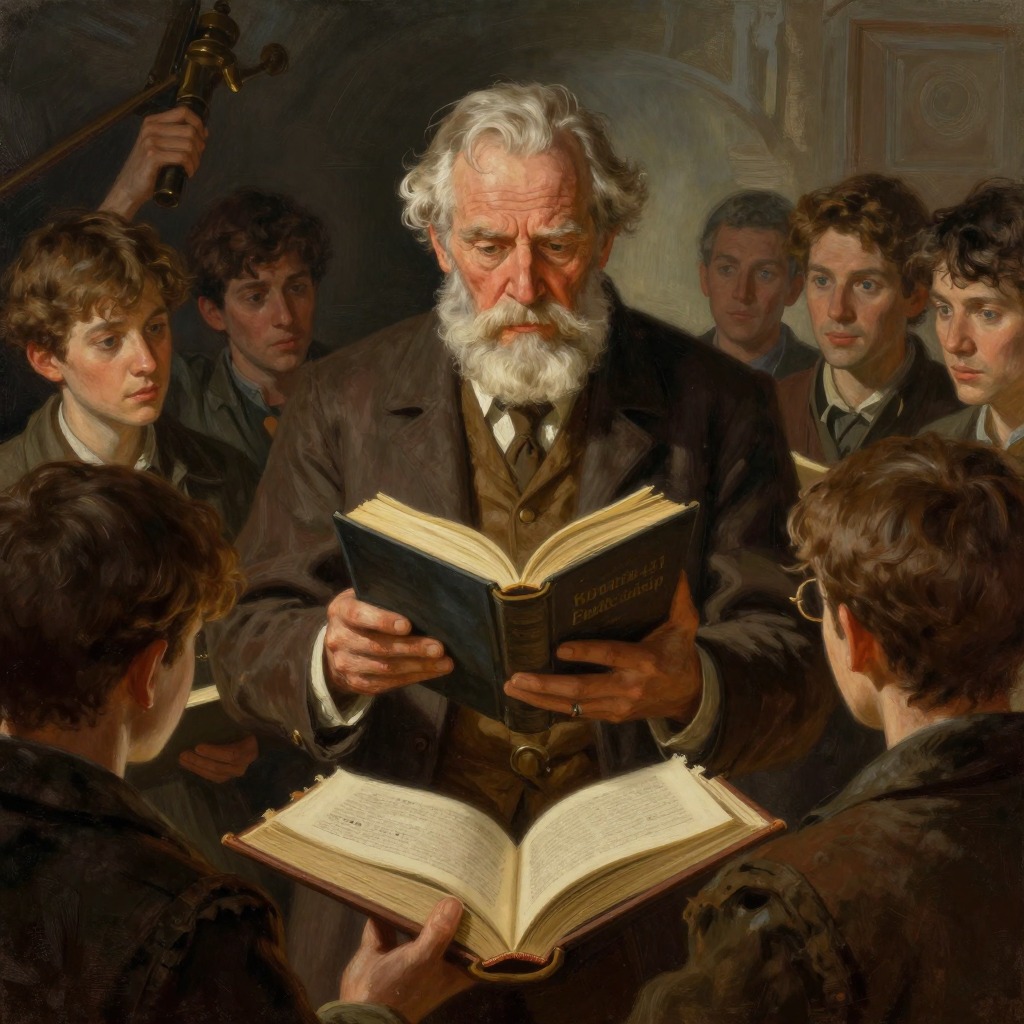
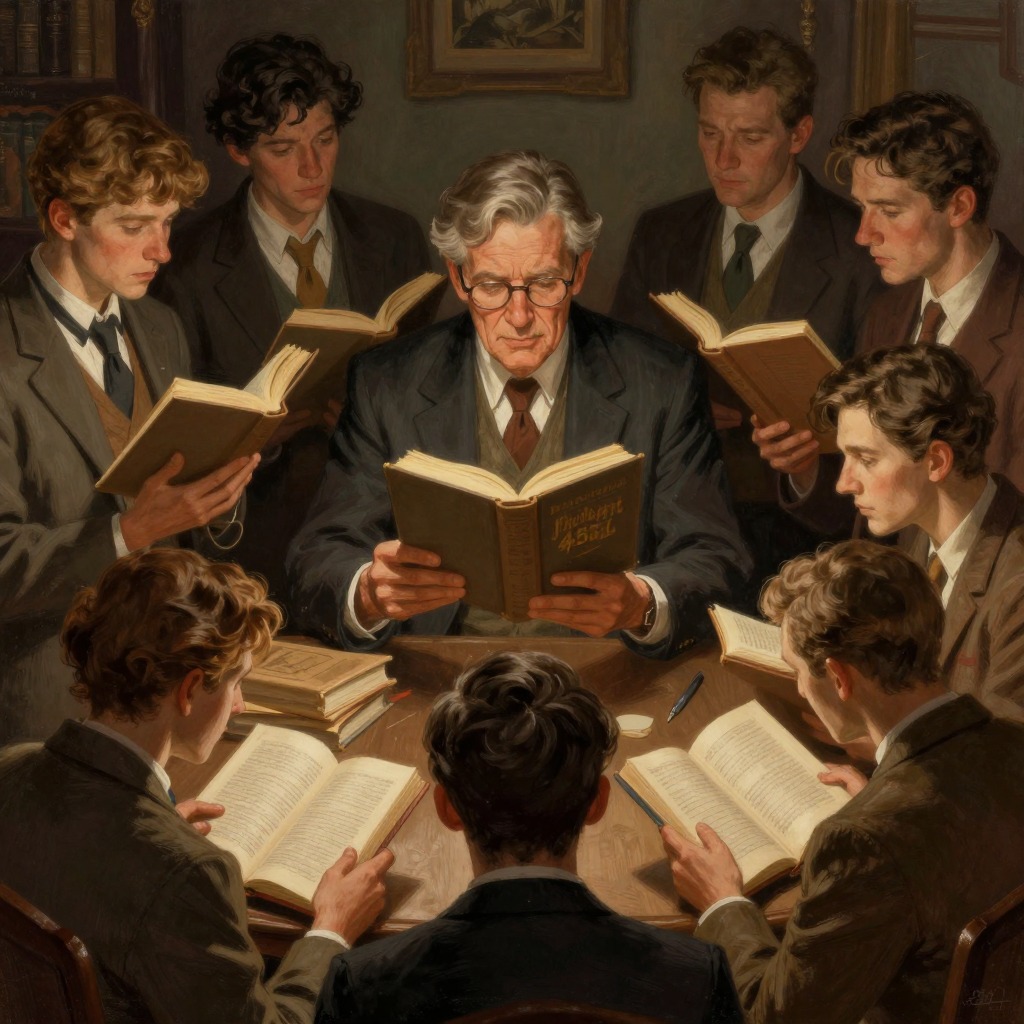
Fahrenheit 451Professor West is a minor but symbolically significant character in Ray Bradbury's Fahrenheit 451, a former academic who, after losing his university position, becomes a living repository of ethical philosophy among Granger's wandering community of book-people. His presence underscores the novel's central theme: that in a civilization that has outlawed books, the only way to preserve knowledge is to embody it.
Identity and Background
Professor West is introduced late in the novel, when Montag, having escaped the city and the Mechanical Hound, stumbles upon a campfire beside the railroad tracks. Granger introduces him as "Professor West here [who] did quite a bit for ethics, an ancient study now, for Columbia University quite some years ago" . The phrasing marks him as a relic of a vanished intellectual world: ethics, once a cornerstone of higher education, has become an "ancient study," and Columbia University, like all liberal arts institutions, has long since abandoned such disciplines. West's academic career ended when the culture that once valued philosophical inquiry turned against it, forcing him into the same nomadic existence as the other book-people.
Life Among the Book-People
Like every member of Granger's group, Professor West has committed a book to memory, becoming its living incarnation. When Montag expresses a desire to read Marcus Aurelius, Granger replies, "Mr. Simmons is Marcus" , and the pattern extends to West: he is not merely a former professor but a walking text, his mind a library that cannot be burned. The group's method—reading books and then burning them to avoid detection, preserving knowledge only in human memory—makes West's role both precarious and essential. He is one of "thousands on the roads, the abandoned railtracks, tonight, bums on the outside, libraries inside" , a man whose external appearance gives no hint of the philosophical wealth he carries.
Narrative Role and Thematic Significance
Professor West's function in the novel is primarily symbolic rather than dramatic. He appears only in the final campfire scene, part of a collective that Granger introduces with a roll call of intellectual giants: "Aristophanes and Mahatma Gandhi and Gautama Buddha and Confucius and Thomas Love Peacock and Thomas Jefferson and Mr. Lincoln, if you please. We are also Matthew, Mark, Luke, and John" . West belongs to this lineage, a living footnote in a chain of cultural transmission that stretches back centuries. His presence reinforces the novel's argument that knowledge survives not in institutions—which have been corrupted or destroyed—but in individuals willing to sacrifice comfort and safety for the preservation of ideas. When Montag, still doubting his own worth, says he has nothing to offer, Granger reassures him: "We have ways to shake down your clinkers for you" . West, along with the others, represents the method and the hope: that even a fragmented, wandering community can hold the seeds of a future renaissance.