Slow Driving Prohibition
Fahrenheit 451The Slow Driving Prohibition is a law in the dystopian society of Fahrenheit 451 that makes it illegal to drive a vehicle at a slow pace. This statute is a key instrument of the regime's broader campaign to eliminate reflection, solitude, and any form of unhurried engagement with the world. By outlawing the very act of moving slowly, the law ensures that citizens remain perpetually distracted, physically accelerated, and psychologically incapable of the stillness required for critical thought or authentic emotional life.
Definition and Enforcement
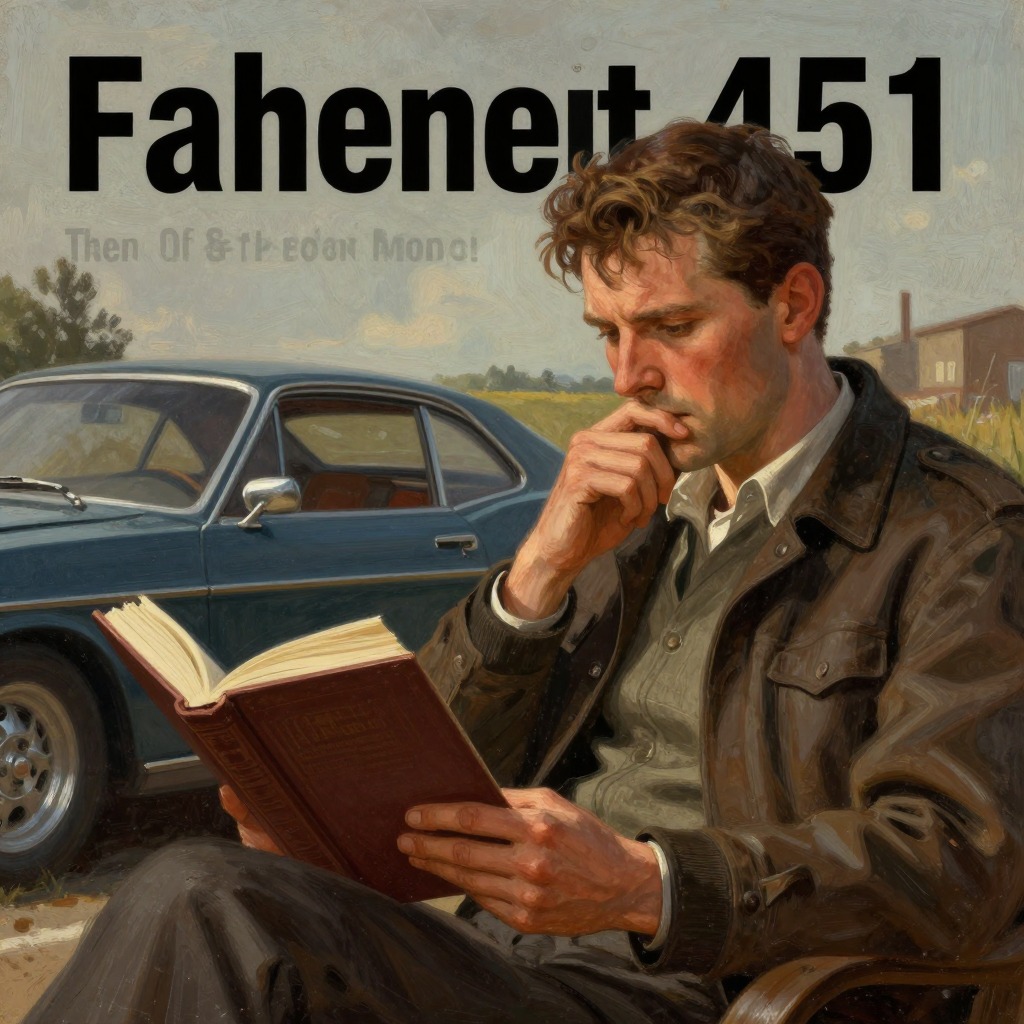
The law is first mentioned by Clarisse McClellan during her initial conversation with Guy Montag. She recounts that her uncle was once arrested for driving at forty miles per hour on a highway, a speed she describes as slow. The penalty for this infraction was a two-day jail sentence. This anecdote establishes that the prohibition is not a mere suggestion but an actively enforced statute with real consequences. The uncle's arrest for such a mundane act underscores the extent to which the state polices even the most private behaviors, transforming a personal choice of pace into a punishable offense against social order.
Cultural and Ideological Context
The Slow Driving Prohibition is part of a constellation of laws and social pressures designed to eliminate any space for quiet, unhurried existence. Clarisse's uncle also notes that front porches were removed from houses because they encouraged people to sit, rock, and talk—activities that were deemed the "wrong kind of social life." Similarly, rocking chairs were eliminated for being "too comfortable." The prohibition against slow driving operates on the same principle: it forces citizens into a state of constant motion and sensory overload, preventing them from having the time to think, question, or form meaningful bonds. The law is a physical manifestation of the society's hatred for the contemplative life, where speed is not just a convenience but a tool of social control.
Connection to the Society's Information Diet
The prohibition against slow driving aligns perfectly with the society's broader assault on depth and quality of information. Captain Beatty, in his lecture to Montag, explains that the culture has been engineered to eliminate anything that requires time to digest. Books are condensed into digests, then into two-minute book columns, and finally into ten-line dictionary resumes. The same principle applies to movement: driving slowly would allow a person to observe the world in detail, to notice the dew on the grass or the man in the moon—observations that Clarisse makes and that Montag finds unsettling. The law ensures that citizens experience the world only as a blur, a series of disconnected sensations that never cohere into understanding. As Beatty puts it, the goal is to "cram them full of non-combustible data" so they feel "absolutely 'brilliant' with information" but never actually think.
Consequences and Thematic Significance
The Slow Driving Prohibition, like the laws against books and pedestrians, creates a society where everyone is perpetually in motion but going nowhere meaningful. Montag's own wife, Mildred, drives at a hundred miles an hour across town, shouting at him, and when he asks her to keep it to fifty-five, she accelerates to one hundred and five. The law has been internalized; speed has become an addiction, a way to drown out the silence that might otherwise invite reflection. The prohibition is thus a perfect emblem of the novel's central critique: a society that outlaws slowness outlaws the very conditions under which a human being can become fully alive. The law is not about traffic safety but about the safety of the regime, which depends on keeping its citizens too rushed to remember what they have lost.