St. Louis
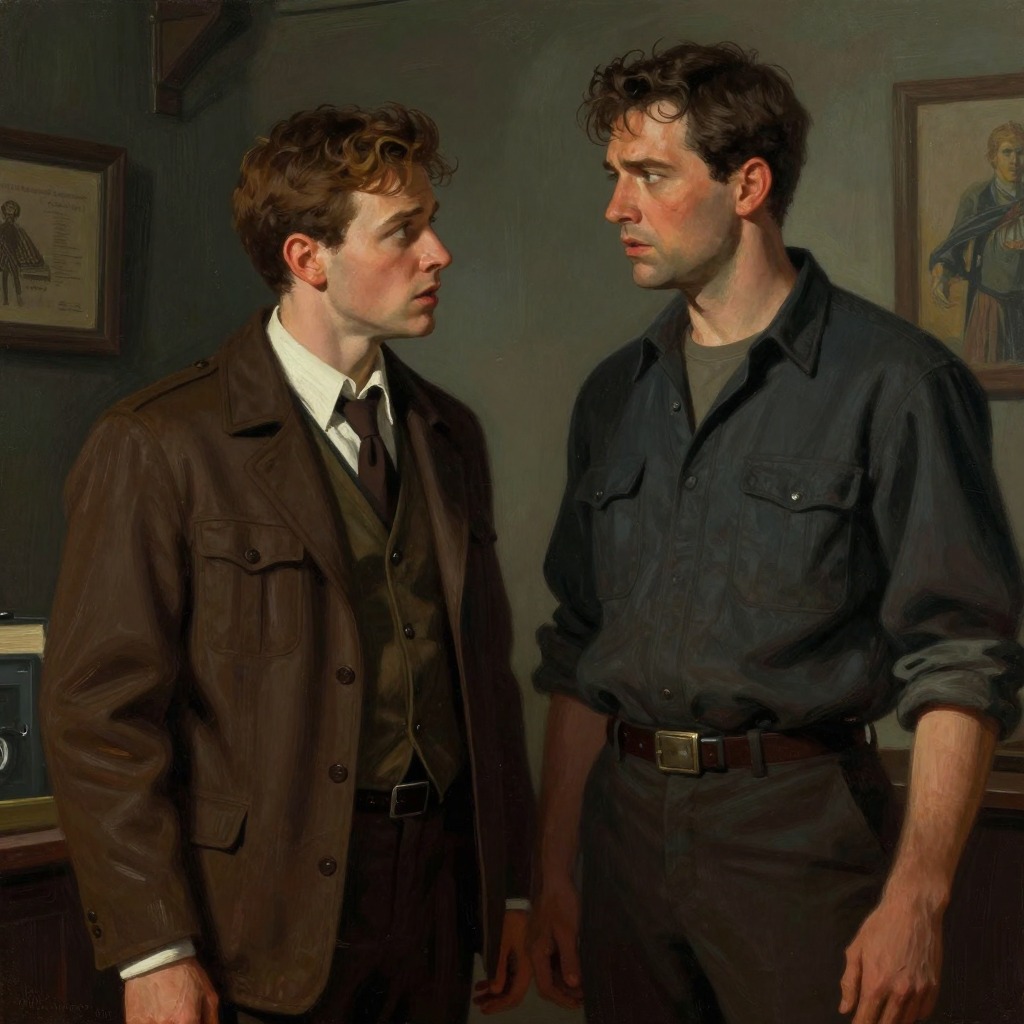
Fahrenheit 451St. Louis appears in the final chapters of Fahrenheit 451 as a destination and a symbol of continuity, a place where the remnants of intellectual life might regroup after the collapse of the unnamed city. It is first mentioned by Professor Faber during his hurried farewell to Montag, when he reveals his plan to leave on the five a.m. bus that morning to see a retired printer there. Faber instructs Montag that if both are still alive in the following week or the week after, he should get in touch via General Delivery in St. Louis, establishing the city as a potential point of reconnection and the first concrete location in a plan to preserve and reproduce books.
Faber's Destination and the Printer
St. Louis is the city where Faber intends to find an unemployed printer, a man who had printed the college paper half a century earlier, when Faber came to class at the start of a new semester and found only one student signed up for Drama from Aeschylus to O'Neill. This printer represents a link to a pre-censorship era when the printed word still circulated freely. Faber's journey to St. Louis is his first decisive act of resistance after decades of fearful silence; he tells Montag he is "getting out into the open myself, at last." The money Montag gives him—a hundred dollars—is meant to be used to help fund this printing effort, and Faber promises to put it to good use.
A Point of Contact After the Chase
After Montag kills Captain Beatty, destroys his own house, and escapes the Mechanical Hound by crossing the river, he makes his way to Faber's house one last time. There, Faber gives him the instruction to head for the river and follow the old railroad tracks out into the country, mentioning that there are still hobo camps—"walking camps"—across the country, and that many wanted men survive on the tracks between there and Los Angeles. St. Louis is the specific city where Faber will be, and where Montag might later reach him. The city thus functions as a fixed point in Montag's otherwise directionless flight, a place where the intellectual underground might begin its work of remembering and rebuilding.
The City's Fate and Its Thematic Significance
The bombing of the unnamed city occurs before Montag can ever reach St. Louis, and the novel does not describe St. Louis's fate. Yet the city's role as a planned meeting place and a site for printing books gives it a symbolic weight beyond its geographical location. It represents the possibility of a future in which knowledge is not merely preserved in memory, as Granger's group does, but actively reproduced and disseminated. Faber's choice of St. Louis—a real Midwestern city with a history of printing and intellectual life—anchors the novel's hopeful conclusion in a concrete, plausible geography, suggesting that the work of rebuilding civilization will happen not in a single heroic act but in scattered, practical efforts across the continent.