The Book of Ecclesiastes
Fahrenheit 451The Book of Ecclesiastes is the biblical book that Guy Montag steals from a burning house and later tries to commit to memory, serving as the primary emblem of his intellectual awakening and the knowledge he ultimately preserves as a living text among the exiled book-people. Its verses, particularly the passage beginning "To everything there is a season," become the core of what Montag carries in his mind after the destruction of the city, and Granger's group designates him as the living embodiment of Ecclesiastes should its current keeper perish.
The Stolen Book and Montag's Awakening
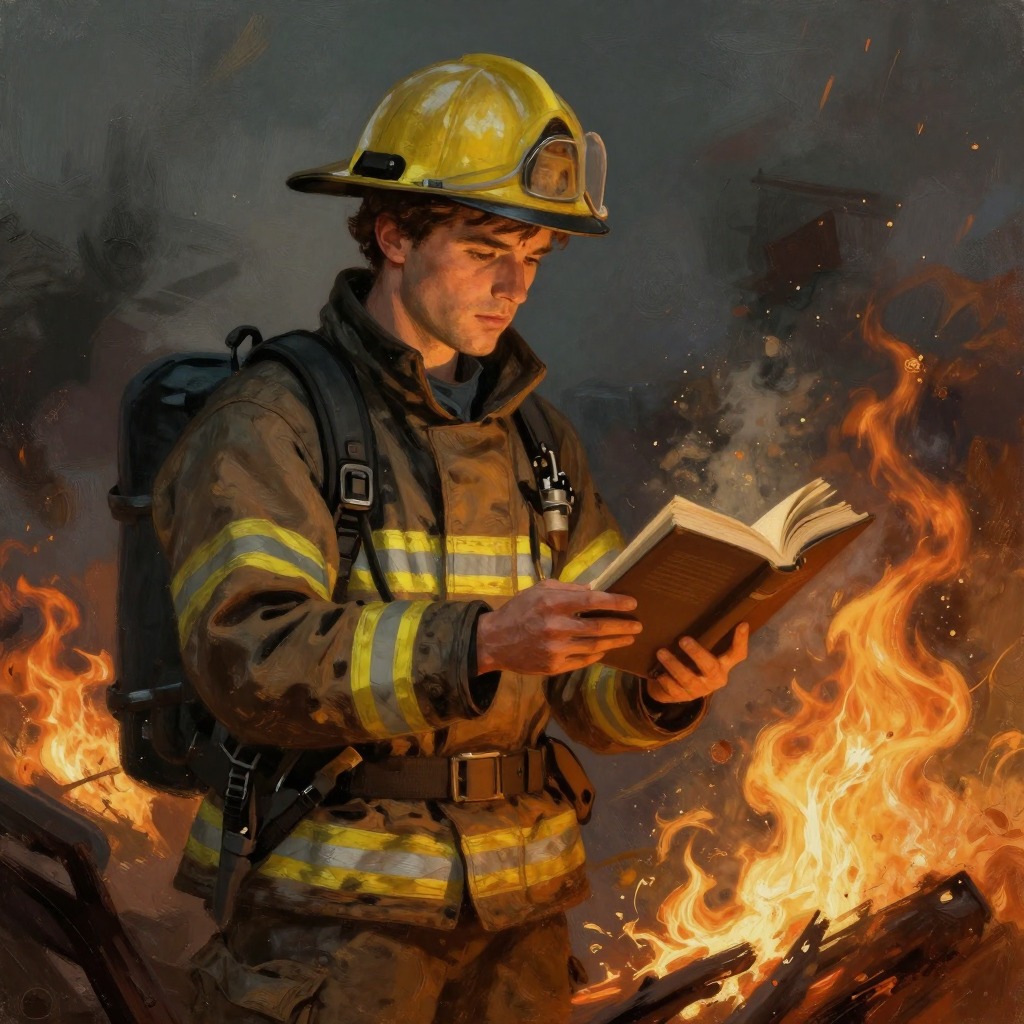
Montag first encounters the Book of Ecclesiastes when he steals a Bible from the house of the old woman who chooses to burn alive with her books. During the raid, a book alights in his hands "almost obediently, like a white pigeon," and he reads a single line—"Time has fallen asleep in the afternoon sunshine"—that blazes in his mind "as if stamped there with fiery steel." This theft marks the beginning of his transformation from a fireman who burns without thought into a man who senses that "there must be something in books, things we can't imagine, to make a woman stay in a burning house." Later, when he reveals his hidden library to Mildred, he shows her the Bible and says, "This is the Old and New Testament," adding that "it might be the last copy in this part of the world." The book becomes the focal point of his desperate attempt to find meaning, and he carries it open on the subway, trying to read fast enough to memorize its words before he must hand it over to Captain Beatty, feeling the "terrible logic of that sieve" as the phrases fall through his mind.
The Attempt to Memorize and the Sieve Metaphor
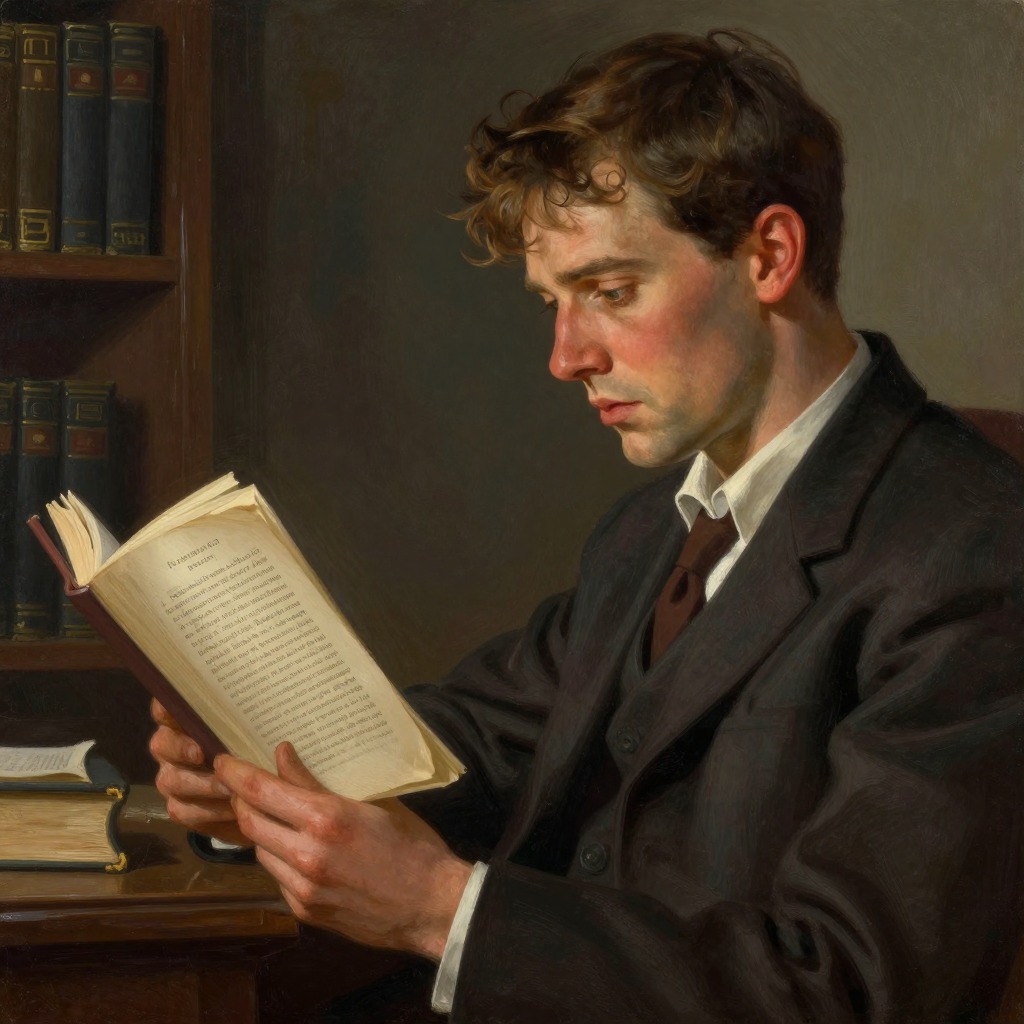
Montag's struggle to retain the words of Ecclesiastes is explicitly linked to a childhood memory of trying to fill a sieve with sand on a hot summer day, a task at which he failed and wept. On the subway, he holds the Bible open and thinks, "if you read fast and read all, maybe some of the sand will stay in the sieve," but the words fall through as the relentless Denham's Dentifrice advertisement blares in the train, drowning out his attempt to recite "Consider the lilies of the field." This conflict between the sacred text and the commercial noise encapsulates the novel's central tension: the struggle to preserve meaningful knowledge against a culture designed to obliterate it. Montag's eventual cry of "Shut up, shut up, shut up!" on the train is a desperate plea to protect the biblical words from being erased by the jingle.
The Book as a Living Text Among the Wanderers
After Montag kills Beatty and escapes the city, he meets Granger and the group of exiled intellectuals who have preserved books by memorizing them. When Montag admits he thought he had part of Ecclesiastes and Revelation but has lost it, Granger responds with delight: "The Book of Ecclesiastes would be fine." He reveals that a man named Harris of Youngstown already carries Ecclesiastes, but tells Montag, "If anything should happen to Harris, you are the Book of Ecclesiastes. See how important you've become in the last minute!" Montag protests that he has forgotten, but Granger reassures him: "No, nothing's ever lost. We have ways to shake down your clinkers for you." The group has developed methods to recall anything that has been read once, and Montag is told that in time the verses will return.
The Return of the Verses at the Moment of Destruction
As the bombs fall on the city, Montag lies flat on the trembling earth and suddenly remembers the words of Ecclesiastes. He says them over to himself silently, "perfect without trying," with no Denham's Dentifrice anywhere, just "the Preacher by himself, standing there in his mind, looking at him." This moment of recall is the culmination of his journey: the knowledge he stole and struggled to hold has become permanently embedded in his consciousness, immune to the forces that tried to erase it. Later, as the group walks north in the morning, Montag feels "the slow stir of words, the slow simmer," and thinks of the passage "To everything there is a season," along with "A time to break down, and a time to build up" and "A time to keep silence and a time to speak." He resolves to save the final verse—"And on either side of the river was there a tree of life, which bare twelve manner of fruits, and yielded her fruit every month; And the leaves of the tree were for the healing of the nations"—for noon, "when we reach the city."
Thematic Significance
The Book of Ecclesiastes functions as the novel's central symbol of knowledge that must be preserved through oral tradition in a world that has destroyed written texts. Its theme of cyclical time—"a time to break down, and a time to build up"—mirrors the novel's own structure of destruction and renewal, and its final image of the tree of life whose leaves heal the nations offers a vision of hope after the apocalypse. Montag's journey from thief to keeper to living book transforms Ecclesiastes from a physical object to be burned into an embodied memory that can survive the end of civilization, embodying Granger's philosophy that "everyone must leave something behind when he dies."