the campfire
Fahrenheit 451The campfire appears in the final section of the novel as a transformative symbol, marking the point at which Montag, having fled the city and the Mechanical Hound, encounters a community of outcasts who have preserved the contents of books in their memories. This fire is not the destructive blaze of the firemen but a small, warming flame around which men sit in silence, turning the world over with their eyes. It represents a complete inversion of the fire Montag has known: it is not burning but warming, and its smell is different. The campfire is the physical and spiritual center of the book people's existence, a place where knowledge is shared, memory is honored, and a new kind of hope is kindled.
The Fire's New Meaning
When Montag first sees the campfire from a distance, it appears and disappears like a winking eye, and he approaches it warily, afraid he might blow it out with a single breath. He stands looking at it from cover for a long time, recognizing that this fire means a different thing to him. It is not burning; it is warming. He sees many hands held to its warmth, hands without arms, hidden in darkness, and faces that are only moved and tossed and flickered with firelight. He had never thought in his life that fire could give as well as take. Even its smell is different. The silence gathered around the fire is concerned with all of the world, and the men's voices rise and fall quietly, turning the world over and looking at it. They know the land and the trees and the city which lies down the track by the river, and they talk of everything, with a continual stir of curiosity and wonder.
The Community Around the Fire
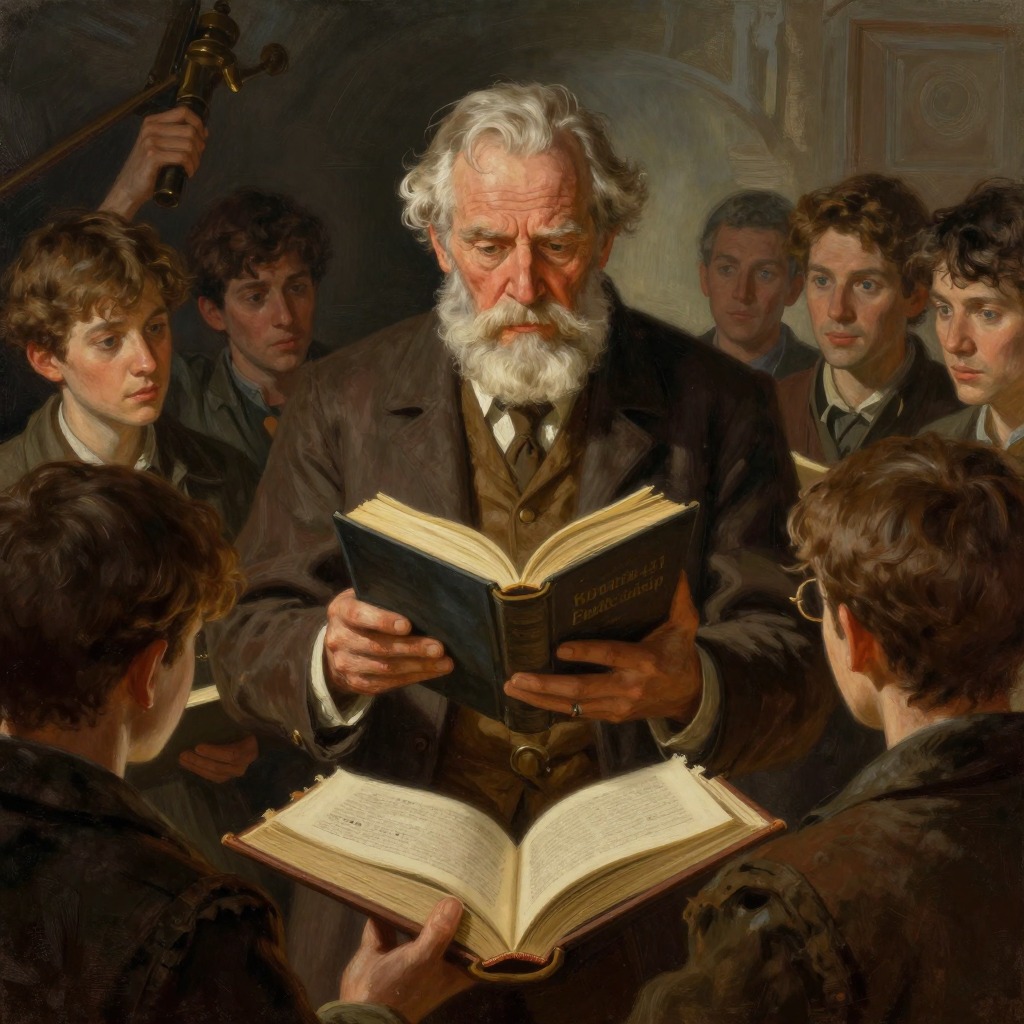
Montag walks slowly toward the fire and the five old men sitting there dressed in dark blue denim pants and jackets and dark blue suits. The leader, Granger, welcomes him and offers him coffee from a collapsible tin cup. The men have been watching the chase on a portable battery TV set by the fire, and they know Montag's name. Granger introduces the others: Fred Clement, former occupant of the Thomas Hardy chair at Cambridge; Dr. Simmons from U.C.L.A., a specialist in Ortega y Gasset; Professor West, who did quite a bit for ethics at Columbia University; and Reverend Padover, who lost his flock for his views. Granger himself wrote a book called The Fingers in the Glove; the Proper Relationship between the Individual and Society. Each man is a living book: Simmons is Marcus Aurelius, another is Jonathan Swift, another is Charles Darwin, another is Schopenhauer, another is Einstein, another is Albert Schweitzer. They are also Matthew, Mark, Luke, and John. They are book-burners, too, having read the books and then burnt them, afraid they would be found, keeping the knowledge in their heads where no one can see it or suspect it.
The Ritual of the Fire
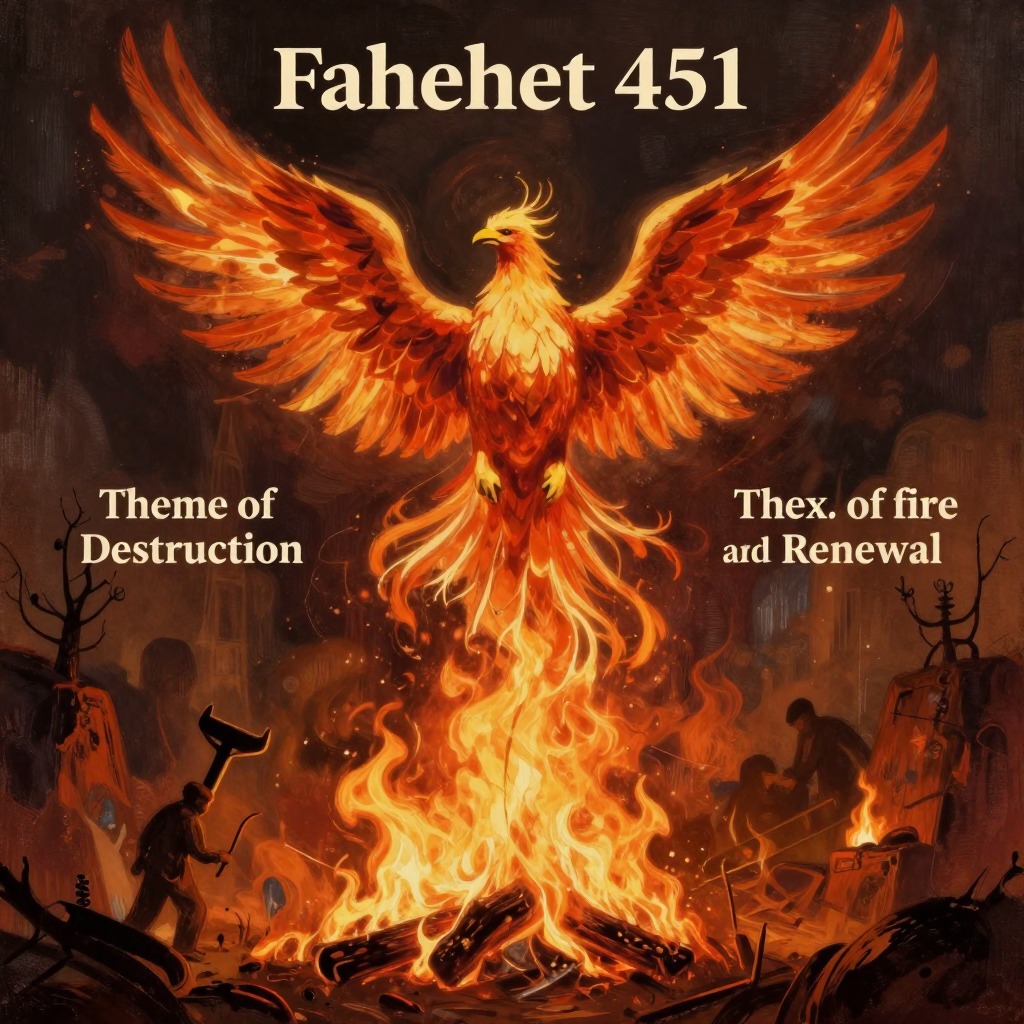
After the bombing of the city, the men gather around the fire again. Granger unfolds an oilskin with some bacon in it, and someone produces a small frying-pan. The bacon flutters and dances in the pan, and the sputter of it fills the morning air with its aroma. The men watch this ritual silently. Granger looks into the fire and speaks of the Phoenix, a silly damn bird that every few hundred years built a pyre and burned himself up, only to spring out of the ashes and be born all over again. He says that man has one thing the Phoenix never had: the knowledge of the damn silly things he has done for a thousand years, and as long as that knowledge is kept where it can be seen, some day man will stop making the goddam funeral pyres and jumping into the middle of them. The fire here is not an end but a beginning, a source of warmth and sustenance for the journey ahead.
The Fire as a Symbol of Continuity
When the men finish eating, they put out the fire. Granger throws dust and dirt on it, and the other men help, and Montag helps. In the wilderness, the men all move their hands, putting out the fire together. This act of extinguishing the fire is not an act of destruction but of preservation, a deliberate choice to move on and carry the knowledge within them. The fire has served its purpose: it has warmed them, fed them, and brought them together. Now they will walk upstream, and Montag will go ahead, with the others falling in behind him. The campfire, in its brief existence, has transformed Montag's understanding of fire and of community, and it stands as a powerful symbol of the possibility of renewal and the enduring power of human memory.