the city
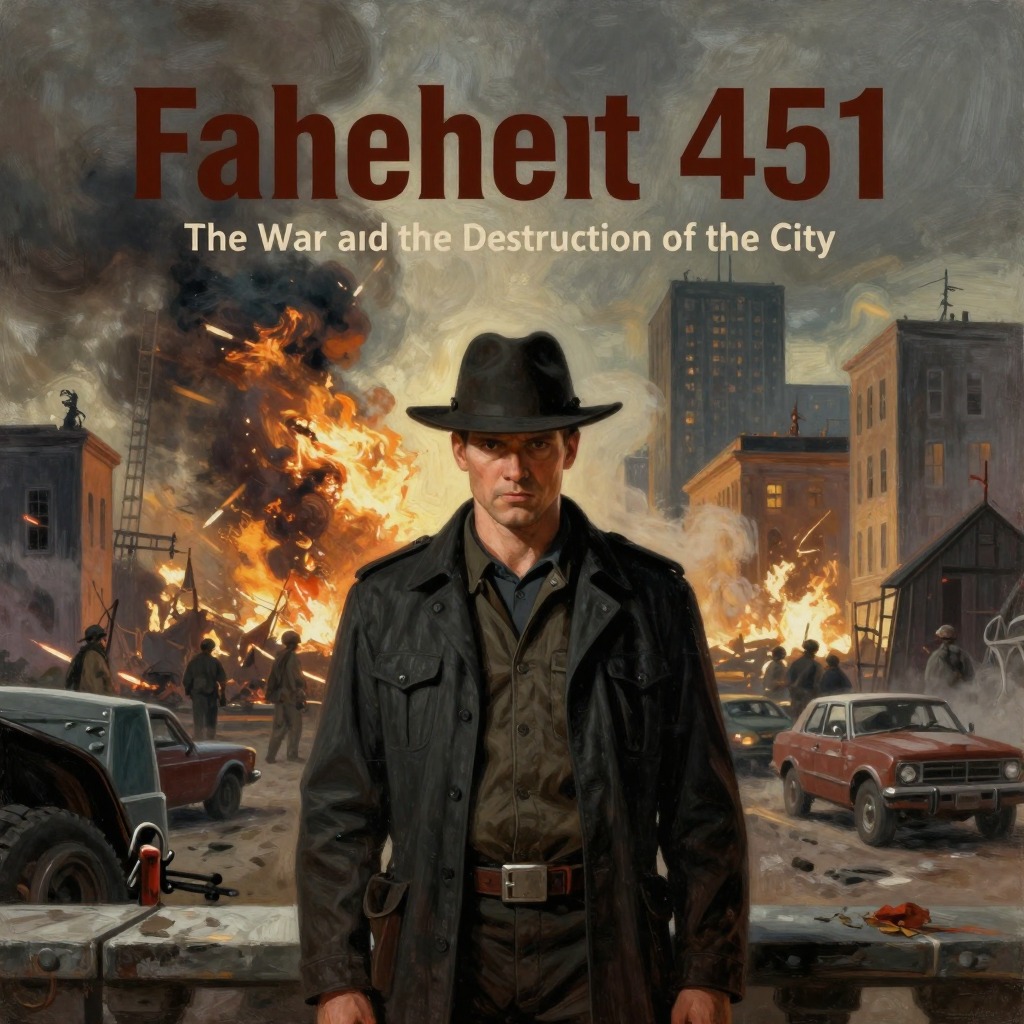
Fahrenheit 451The unnamed city in Ray Bradbury's Fahrenheit 451 is a sprawling, technologically advanced metropolis that has systematically eradicated intellectual life, replacing it with mindless entertainment and enforced happiness. It is the primary setting for the novel's action, a place where firemen burn books, citizens are numbed by Seashell Radios and Parlour Walls, and the threat of war looms constantly overhead. The city's destruction in the final pages symbolizes the inevitable end of a society that has abandoned knowledge, memory, and genuine human connection.
Geography and Atmosphere
The city is depicted as a vast, modern urban landscape with wide boulevards, a subway system, and suburbs connected by silent, air-propelled trains. Montag walks home from the firehouse through a midnight street to the subway, where the train slides soundlessly down its lubricated flue and lets him out with a puff of warm air onto a cream-tiled escalator rising to the suburb. The streets are often empty at night, but the air is charged with the presence of jet cars racing on the boulevards and the constant scream of jet bombers overhead. The city's architecture reflects its values: houses are fireproof, front porches have been eliminated to discourage idle conversation and thought, and the homes are dominated by the three-walled Parlour, where citizens watch interactive soap operas featuring the 'Family.' The city is a place of constant noise and distraction, where the natural world—dew on the grass, the man in the moon—has been forgotten by most.
Social and Political Structure
The city is governed by a regime that enforces intellectual conformity through the Firemen, an organization established in 1790 to burn English-influenced books in the Colonies, with Benjamin Franklin as its first fireman. The Firemen's rules are simple: answer the alarm swiftly, start the fire swiftly, burn everything, report back immediately, and stand alert for other alarms. Captain Beatty explains that the system did not originate from government decree but from technology, mass exploitation, and minority pressure. As the population grew, books were simplified, condensed, and eventually banned to avoid offending any minority group. The city's citizens are kept happy with contests, sports, and non-combustible facts, while the word 'intellectual' becomes a swear word. The city also maintains a Mechanical Hound, a robotic creature that tracks and kills fugitives, and its police force uses helicopters and a network of informants to maintain order.
Key Locations and Events
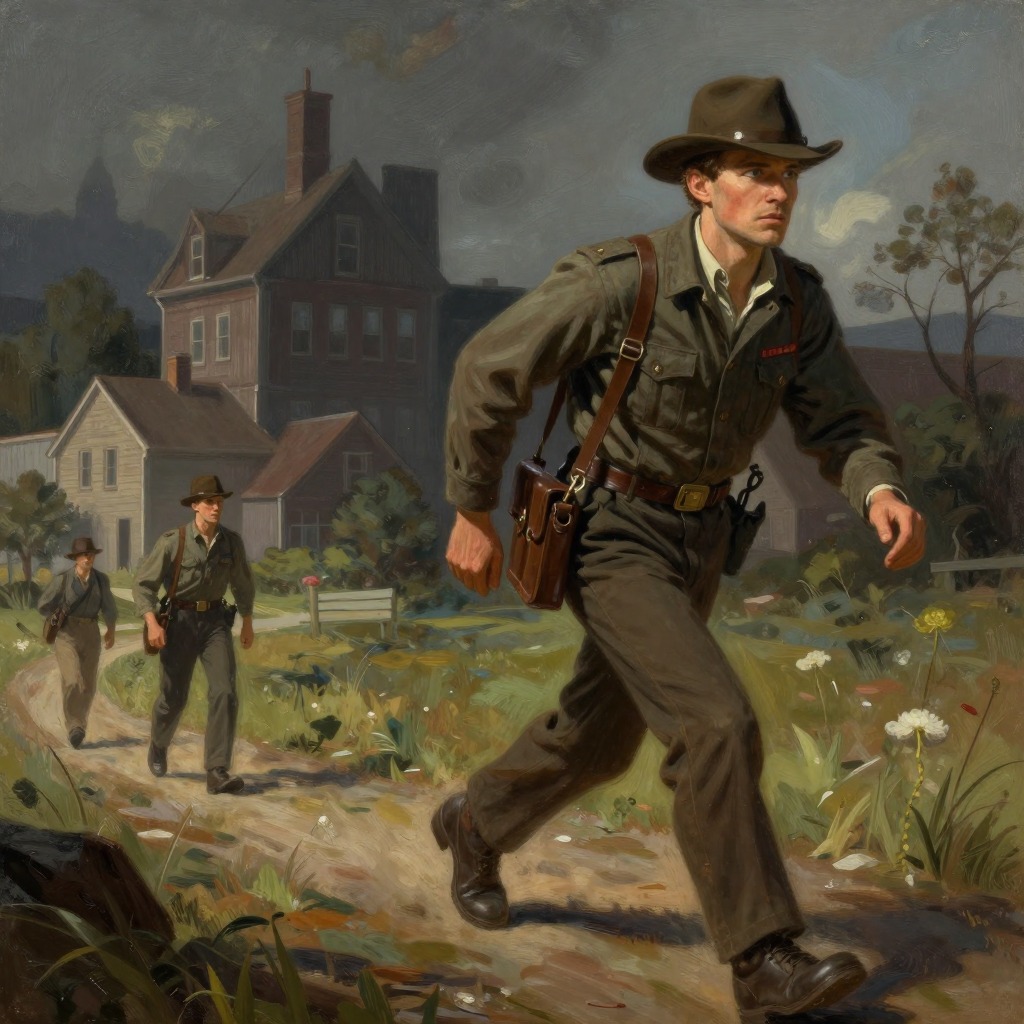
Several key locations within the city drive the plot. Montag's house, where he lives with his wife Mildred, is the site of her overdose and his hidden book collection. Clarisse McClellan's house, with its brightly lit windows and lively family conversations, stands in stark contrast to the darkened homes around it. The firehouse, with its brass pole and the Mechanical Hound's kennel, is where Montag works and where Captain Beatty delivers his long monologue on the history of book burning. The city's streets and alleys become a stage for Montag's escape after he kills Beatty, culminating in his desperate run across a wide, empty boulevard where a carful of children nearly kills him for sport. The city's destruction comes when atomic bombs fall, leveling the metropolis and killing Mildred, who is last seen leaning into her hotel room's Parlour wall, seeking comfort in the 'Family' as the bombs strike.
Destruction and Aftermath
The city is obliterated in an instant when the war begins and ends simultaneously. Montag, floating in the river outside the city, sees the bombs fall: a great metal fist over the far city, followed by a concussion that knocks the air across the river and turns the men over like dominoes. The city is described as a heap of baking powder, and Montag wonders how many other cities have been destroyed across the world. The destruction is total, leaving only a few survivors like Montag and the book people who have fled to the wilderness. The city's fall is presented as the inevitable consequence of a society that has abandoned critical thought and genuine human connection, choosing instead the hollow pleasures of the Parlour and the false security of conformity.