the country
Fahrenheit 451The country is the vast, silent wilderness beyond the city, a realm of grass, forests, and abandoned railroad tracks that stands in stark opposition to the noise, speed, and enforced happiness of urban life. It is not merely a geographical location but a symbolic space where Montag, after his flight from the city, encounters a different kind of fire—one that warms rather than destroys—and joins a community of wanderers who preserve books in their memories. The country represents the possibility of renewal, leisure, and authentic connection to the world, and it is here that Montag begins to understand his own transformation and the hope for a future after the war.
Geography and Sensory Abundance
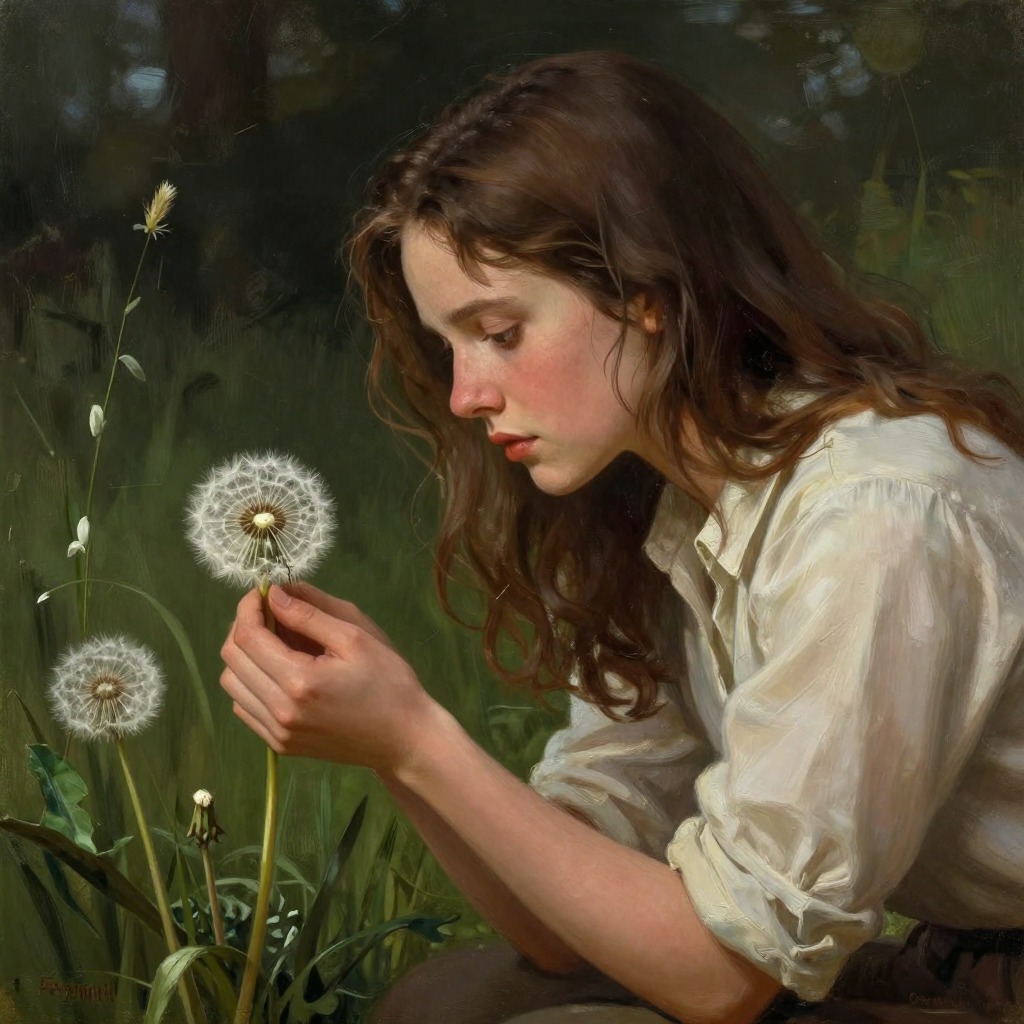
The country is defined by its overwhelming sensory richness and its profound silence. When Montag first steps onto the land after floating down the river, he is crushed by "the million odours on a wind that iced his body" . The earth itself smells of "a cut potato," "pickles from a bottle," "parsley on the table at home," and "carnations from the yard next door" . He wades through "a billion leaves" that smell of "hot cloves and warm dust" . This is a world of texture and detail, where every blade of grass and grain of dust is perceptible . The country is also a place of immense scale and emptiness: "a great black creature without eyes or light, without shape, with only a size that went a thousand miles without wanting to stop" . For the first time in a dozen years, Montag sees the stars "in great processions of wheeling fire" . The silence is so complete that Montag wonders how Mildred would react: "So much silence, Millie, I wonder how you'd take it? Would you shout Shut up, shut up!" .
A Different Kind of Fire
The country transforms the meaning of fire itself. When Montag sees the campfire of the wanderers, he realizes that "it was not burning; it was warming" . He had never known that fire "could give as well as take" . The fire is surrounded by silence, and the men around it are "turning the world over and looking at it" . This is a fire that does not destroy but sustains, a fire that allows for contemplation and community. Montag, who has spent his life as a fireman burning books, now approaches this fire as "an animal come from the forest, drawn by the fire" . The country thus redefines the elemental force that had defined his entire adult life.
Refuge and Transformation
The country becomes Montag's refuge from the Mechanical Hound and the police. After he throws off his scent by dousing himself in whisky and changing into Faber's old clothes, he floats down the river and emerges into the wilderness (E01367–E01368). The railroad tracks, rusted and abandoned, lead him through the forests and woods (E01406–E01407). Here he meets Granger and the other wanderers, who are "bums on the outside, libraries inside" . They are former professors, writers, and thinkers who have memorized books and now live as itinerant keepers of knowledge. Granger tells Montag that they are "nothing more than dust-jackets for books" . The country is where Montag sheds his old identity and begins to become a new person: he is told that he will be "Montag-plus-Faber, fire plus water, and then, one day, after everything had mixed and simmered and worked away in silence, there would be neither fire nor water, but wine" .
The Bombing and Aftermath
The country is also the vantage point from which Montag witnesses the destruction of the city. When the bombs fall, the concussion knocks the men "over like dominoes in a line" and blows the water "in lifting sprays" . Montag lies flat on the trembling earth, and in that moment he remembers the Book of Ecclesiastes perfectly . After the bombing, the men build a new fire and eat bacon, and Granger speaks of the Phoenix, a bird that burns itself up and is reborn from the ashes . The country, though scarred by the distant blast, remains a place of life: birds that had flown away return and settle down . Montag begins walking north, and the others fall in behind him . The country is now the site of a new beginning, a place where the survivors will "go build a mirror-factory first and put out nothing but mirrors for the next year and take a long look in them" (E01560–E01561).
Narrative Significance
The country functions as the novel's symbolic opposite to the city. Where the city is defined by speed, noise, enforced happiness, and the destruction of books, the country offers silence, leisure, natural abundance, and the preservation of knowledge. It is the place where Montag's transformation is completed: he moves from being a destroyer to a keeper, from a man who burns to a man who remembers. The country is also the setting for the novel's final hope: that even after the war, the knowledge carried in the minds of the wanderers can be passed on, and that humanity might learn from its mistakes. The country is not a utopia—it is a place of hardship and uncertainty—but it is a place where authentic life is possible.