the forest
Fahrenheit 451The forest in Ray Bradbury's Fahrenheit 451 is the novel's great counter-symbol to the city: a vast, living wilderness of grass, trees, and silence that offers the only possible refuge from the mechanical, mediated, and ultimately self-destructive world Montag has fled. It is not merely a setting but an active presence—a realm of sensory overload and profound quiet, of natural cycles and human memory, where Montag, stripped of his old identity, is remade into a keeper of books and a witness to history's end and possible rebirth.
Geography and Sensory Reality
The forest is first felt as a terrifying immensity. When Montag stumbles from the river, the land rushes at him like a tidal wave, crushing him with darkness and a million odors on a wind that ices his body . He is overwhelmed by the sheer physicality of it: a billion leaves underfoot, a dry river smelling of hot cloves and warm dust, the scent of cut potato from the moonlit ground, the faint yellow odor of mustard, and the smell of carnations from a yard . His fingers smell of liquorice after touching a weed . This is not the abstract, sanitized world of the parlour walls; it is a world of immediate, tangible, and overwhelming detail. The forest is a place where the body is fully engaged, where Montag feels his entire being—his face, his mouth, his eyes stuffed with blackness, his ears stuffed with sound, his legs prickled with burrs and nettles . It is a landscape that demands to be experienced, not just watched.
Refuge and Transformation
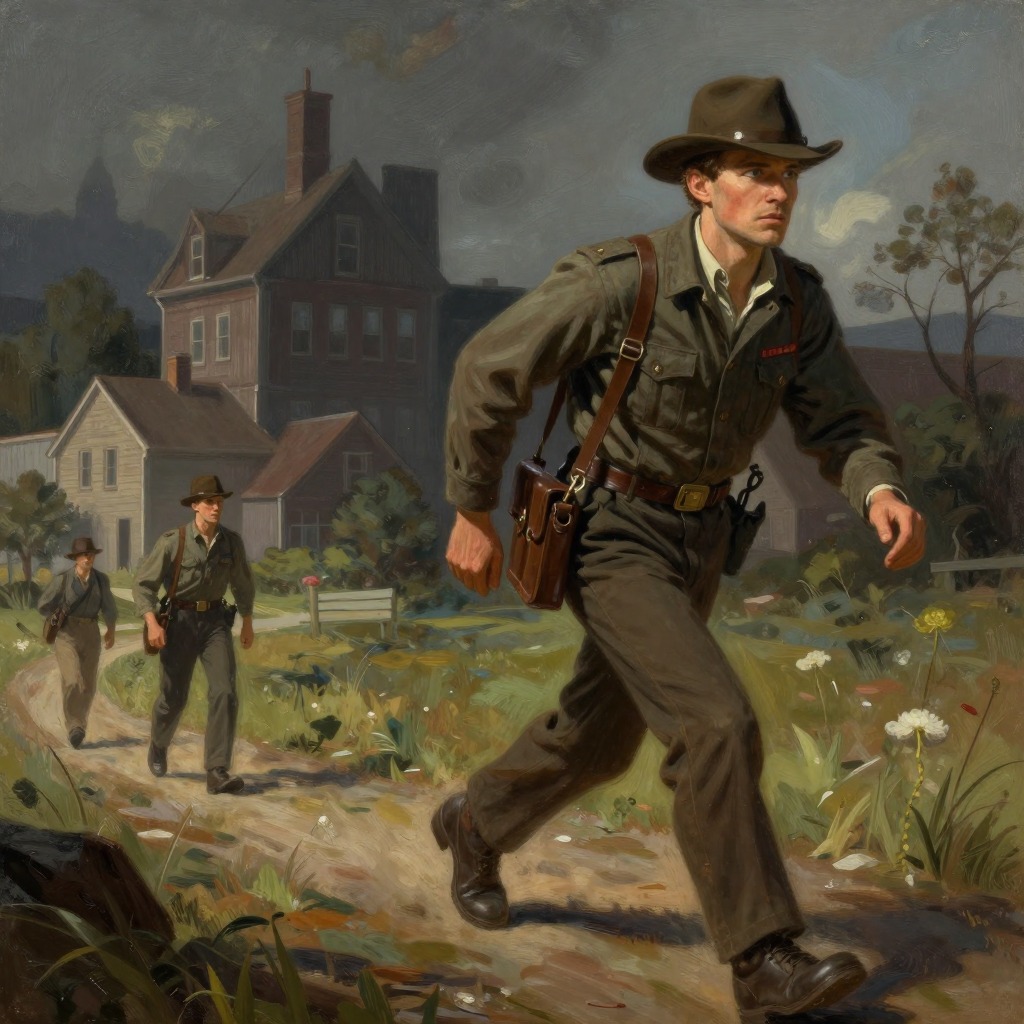
The forest is the only place where Montag can escape the Mechanical Hound and the total surveillance of the city. After the river washes away his scent, he finds the abandoned railroad tracks, a single familiar thing leading into the bramble bushes and the lakes of smelling and feeling and touching . It is here, in the heart of the wilderness, that he discovers a campfire—a fire that is not burning but warming , a fire that gives rather than takes. Around it sit the exiled book-people, men who have chosen the forest over the city, who have become living libraries. Granger, their leader, explains that they are model citizens in their own way, walking the old tracks and lying in the hills at night, letting the city people be . The forest is their sanctuary, a place where they can preserve knowledge, waiting for the war to end and for a time when they might be of use . It is here that Montag, who has been an idiot all the way , is welcomed and given a new identity: he is to be the Book of Ecclesiastes .
Witness to Destruction and Rebirth
The forest also provides the vantage point from which Montag witnesses the destruction of the city. From the riverbank, he sees the bombs fall, a great metal fist over the far city , and feels the concussion knock the air across and down the river, turning the men over like dominoes . The forest itself mourns, the trees above them mourning with a great wind passing away south . In the aftermath, as the men lie gasping like fish laid out on the grass, holding to the earth as children hold to familiar things , the forest becomes a place of stillness and silence, where Montag can finally remember the words of Ecclesiastes and Revelation . It is in this wilderness, after the city has been reduced to a heap of baking-powder , that the men build a new fire and begin to plan for the future, with Granger invoking the myth of the Phoenix, a silly damn bird that burns itself up and is born again . The forest, which had been a place of refuge and transformation, now becomes the seedbed for a new civilization, a place where the remembering will begin.
Thematic Significance
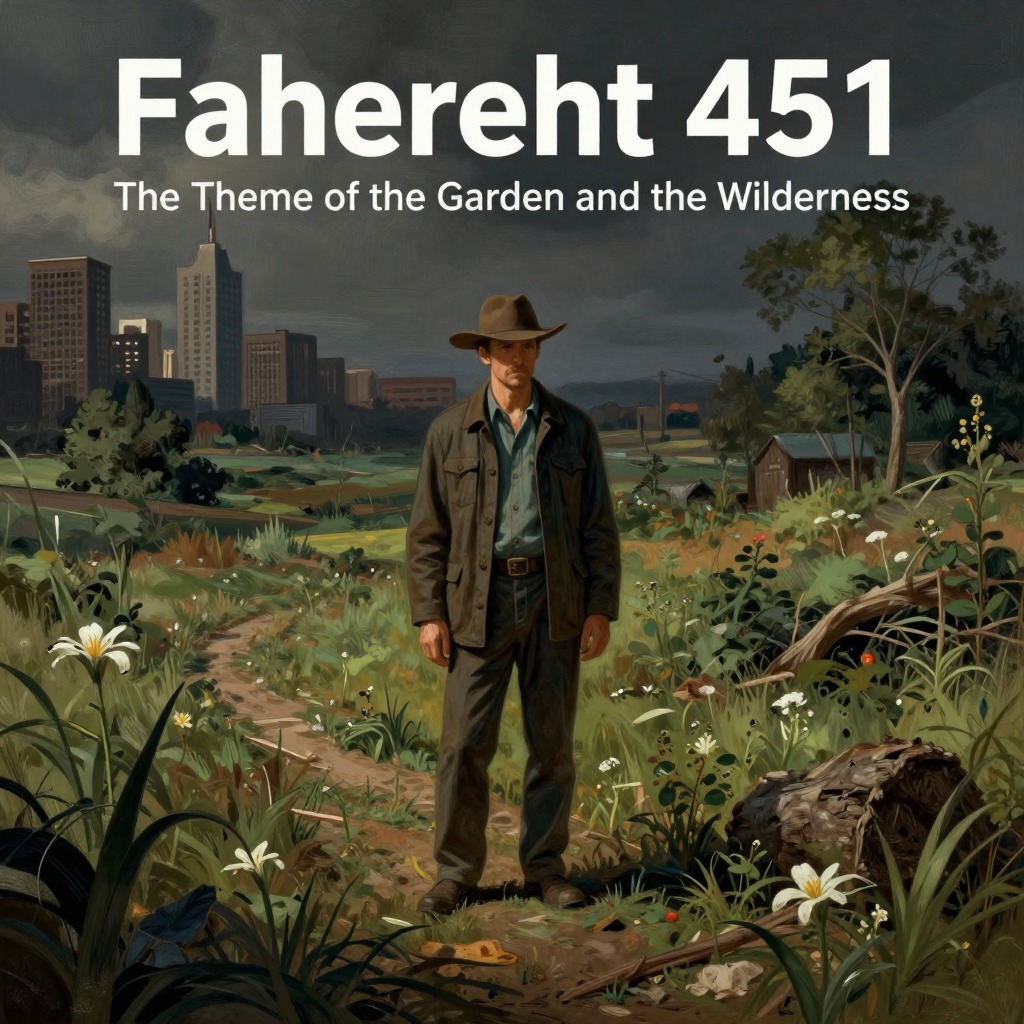
The forest is the novel's most powerful symbol of what has been lost and what might be regained. It represents the natural world that the city has tried to erase—a world of front porches, gardens, and slow time, where people could sit and think . It is the place where Clarisse McClellan, the girl who loved to smell things and look at things , would have felt at home. Montag, walking on the railroad track, is suddenly certain that Clarisse had once walked there . The forest is the antithesis of the parlour walls, the Seashell Radios, and the Denham's Dentifrice jingles that fill the city's air. It is a place of silence, of genuine human connection, and of the kind of deep, unhurried thought that the city has outlawed. In the end, the forest is not just a location; it is a state of being, a necessary counterweight to the burning world, and the only place where the seeds of a future can be safely planted.