the park
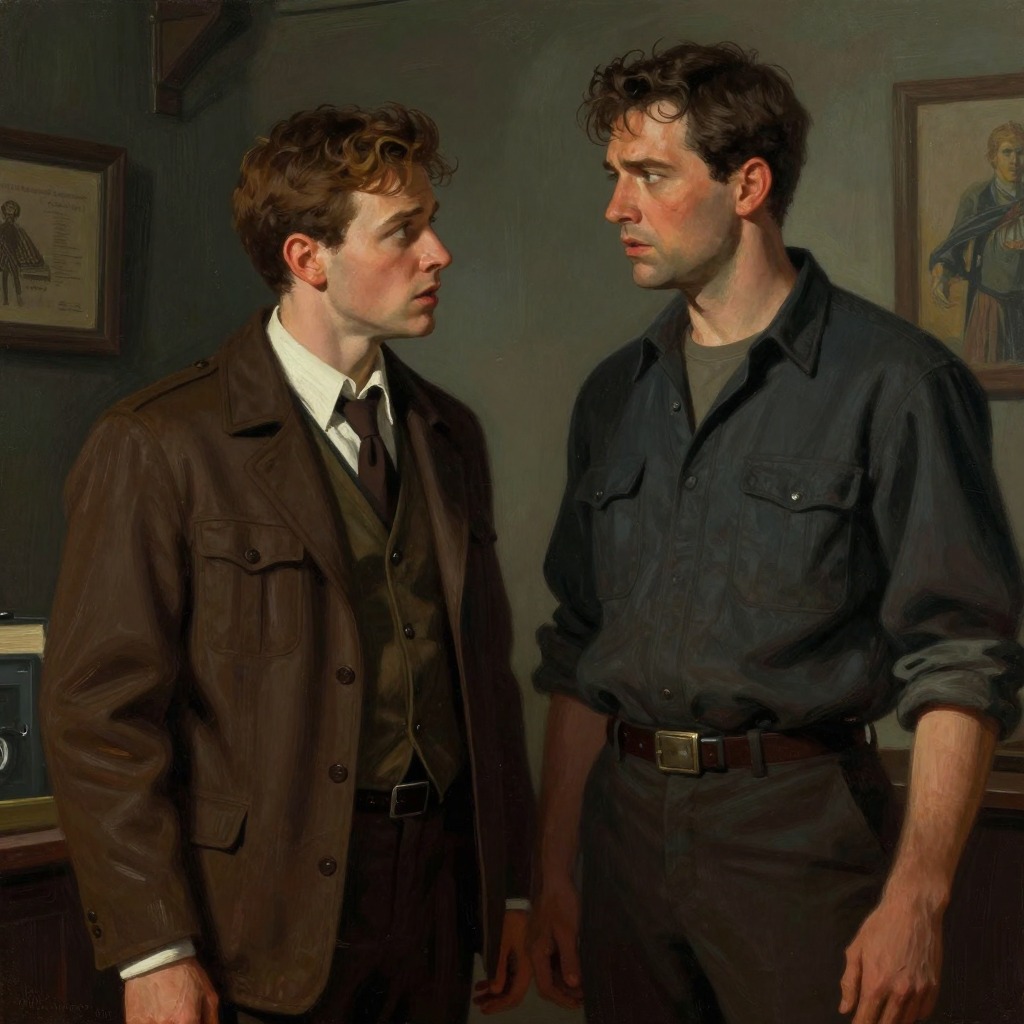
Fahrenheit 451The park is a rare pocket of green soft light in the city, a place where the natural world still asserts itself against the relentless concrete and the screaming jets. It is here, a year before the novel's main events, that Guy Montag encounters an old man in a black suit who will become his most important teacher. The meeting is a strange, quiet affair: the old man, a retired English professor named Faber, leaps up as if to run when Montag approaches, trembling and crying out that he has done nothing. Montag reassures him, and they sit together in the green light without speaking for a moment. Faber, having lost his fear, begins to talk in a cadenced voice, looking at the sky and the trees, and speaks what Montag senses is a rhymeless poem. He grows more courageous and speaks another poem. Faber holds his hand over his left coat-pocket as he speaks, and Montag knows that if he reached out, he might pull a book of poetry from the man's coat. But he does not reach out; his hands stay on his knees, numbed and useless. Faber tells Montag, "I don't talk things, sir. I talk the meaning of things. I sit here and know I'm alive." After an hour of monologue, a poem, and a comment, Faber, trembling, writes his address on a slip of paper, saying, "For your file, in case you decide to be angry with me." Montag, surprised, says he is not angry. This encounter, which Montag later recalls as a memory of "an old man in the park," becomes a touchstone for his growing discontent. The park is also the site of a childhood memory for Montag: once, as a child, he sat upon a yellow dune by the sea in the middle of a blue and hot summer day, trying to fill a sieve with sand, because some cruel cousin had said, "Fill this sieve and you'll get a dime!" The faster he poured, the faster it sifted through with a hot whispering, and he felt the tears move down his cheeks. This memory of futile effort, of trying to hold onto something that slips away, becomes a powerful metaphor for his later struggle to read and retain the words of the Bible on the subway, as the Denham's Dentifrice advertisement blares in his ears. The park, then, is a place of both nascent connection and remembered frustration, a space where the possibility of a different kind of life is first glimpsed and where the difficulty of grasping it is also foreshadowed.
The Meeting with Faber
The park is the setting for the pivotal first meeting between Montag and Faber. A year before the story begins, Montag, still a loyal fireman, sees the old man in the black suit hide something quickly in his coat. The old man leaps up as if to run, but Montag says, "Wait!" The old man trembles and cries, "I haven't done anything!" Montag reassures him, and they sit in the green soft light without saying a word for a moment. Montag talks about the weather, and the old man responds with a pale voice. Faber admits to being a retired English professor who had been thrown out upon the world forty years ago when the last liberal arts college shut for lack of students and patronage. When he finally loses his fear of Montag, he talks in a cadenced voice, looking at the sky and the trees and the green park. He speaks a rhymeless poem, and then another. Faber holds his hand over his left coat-pocket and speaks these words gently, and Montag knows if he reached out, he might pull a book of poetry from the man's coat. But he does not reach out; his hands stay on his knees, numbed and useless. Faber says, "I don't talk things, sir. I talk the meaning of things. I sit here and know I'm alive." After an hour of monologue, a poem, and a comment, Faber, trembling, writes his address on a slip of paper, saying, "For your file, in case you decide to be angry with me." Montag, surprised, says he is not angry. This meeting, recalled later as a memory of "an old man in the park," becomes a touchstone for Montag's growing discontent.
A Place of Memory and Metaphor
The park is also the site of a childhood memory for Montag. Once, as a child, he sat upon a yellow dune by the sea in the middle of a blue and hot summer day, trying to fill a sieve with sand, because some cruel cousin had said, "Fill this sieve and you'll get a dime!" The faster he poured, the faster it sifted through with a hot whispering, and he felt the tears move down his cheeks. This memory of futile effort, of trying to hold onto something that slips away, becomes a powerful metaphor for his later struggle to read and retain the words of the Bible on the subway, as the Denham's Dentifrice advertisement blares in his ears. The park, then, is a place of both nascent connection and remembered frustration, a space where the possibility of a different kind of life is first glimpsed and where the difficulty of grasping it is also foreshadowed.
Narrative Significance
The park functions as a liminal space in the novel, a place outside the controlled environments of the firehouse and the parlour where genuine human connection and intellectual exchange can occur. It is where Montag first encounters the idea that books contain something worth preserving, and where he meets the man who will later guide his rebellion. The park's green light and natural setting contrast sharply with the sterile, fireproofed world of the city, making it a symbol of the life and thought that the firemen's regime seeks to extinguish. The memory of the park, and of Faber, becomes a recurring reference point for Montag as he navigates his crisis of conscience, ultimately leading him to seek out Faber's help and to join the book people in the wilderness.