the railroad tracks
Fahrenheit 451The railroad tracks are the abandoned, rusting railway line that leads out of the city into the countryside, serving as the physical and symbolic path of escape and renewal for Guy Montag after he flees the city and joins Granger's group of book-people. They are the last remnant of a bygone era of travel, now overgrown and unused, yet they become the lifeline that connects Montag to a community of memory and to the possibility of rebuilding a world after the war.
Location and Description
The railroad tracks emerge from the city and rust across the land, through forests and woods, deserted now, by the river. Montag first encounters them in the darkness after his escape from the city, when his foot hits something that rings dully on the ground. He moves his hand on the ground, a yard this way, a yard that, and finds the track. The track is described as the single familiar thing, a magic charm he might need a little while, to touch, to feel beneath his feet, as he moves on into the bramble bushes and the lakes of smelling and feeling and touching, among the whispers and the blowing down of leaves. The tracks are a path to wherever he is going, a rusted line that once carried trains but now lies silent, waiting for those who walk it.
Montag's Journey on the Tracks
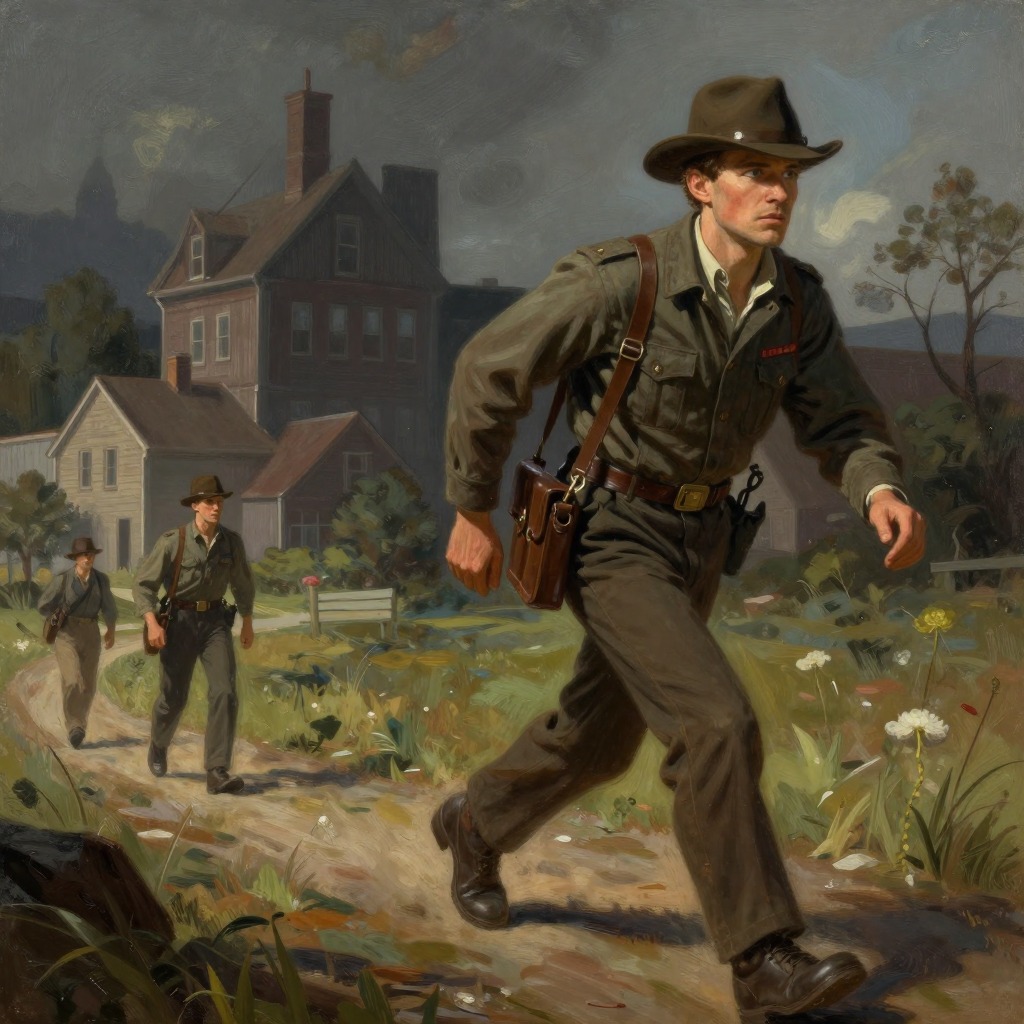
Montag walks on the track after his escape, and he is surprised to learn how certain he suddenly is of a single fact he cannot prove: once, long ago, Clarisse McClellan had walked here, where he was walking now. This imagined connection to Clarisse gives the tracks a personal, almost sacred quality. Half an hour later, cold, and moving carefully on the tracks, fully aware of his entire body, his face, his mouth, his eyes stuffed with blackness, his ears stuffed with sound, his legs prickled with burrs and nettles, he sees the fire ahead. The fire is gone, then back again, like a winking eye. He stops, afraid he might blow the fire out with a single breath. But the fire is there and he approaches warily, from a long way off. It takes the better part of fifteen minutes before he draws very close indeed to it, and then he stands looking at it from cover. That small motion, the white and red colour, a strange fire because it means a different thing to him. It was not burning; it was warming. He sees many hands held to its warmth, hands without arms, hidden in darkness. Above the hands, motionless faces that are only moved and tossed and flickered with firelight. He hadn't known fire could look this way. He had never thought in his life that it could give as well as take. Even its smell is different.
Meeting with Granger and the Book People
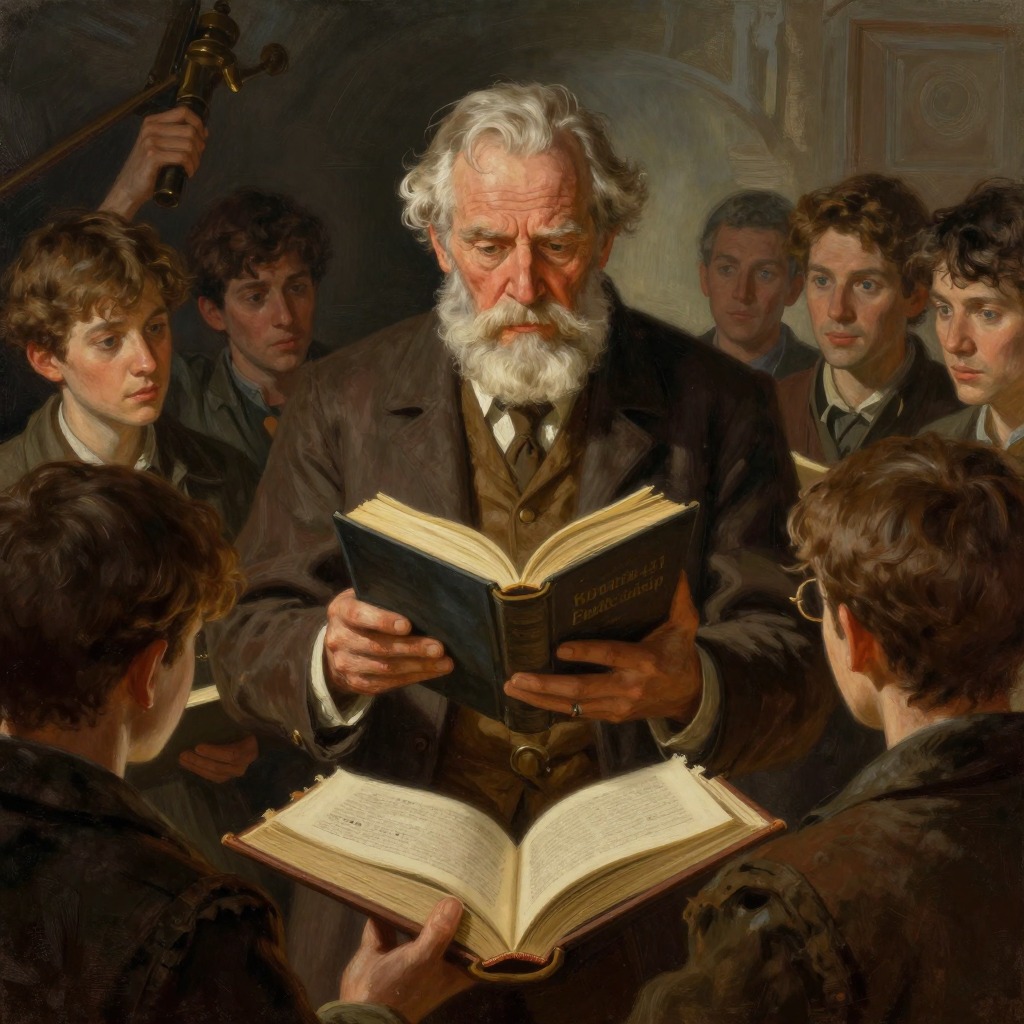
At the fire, Montag meets Granger and the other book-people. Granger knows Montag's name because they have watched the chase on a portable battery TV set by the fire. Granger explains that they figured Montag would wind up south along the river. When they heard him plunging around out in the forest like a drunken elk, they didn't hide as they usually do. They figured he was in the river, when the helicopter cameras swung back in over the city. Granger offers Montag a drink that will change the chemical index of his perspiration, so that half an hour from now he will smell like two other people. With the Hound after him, the best thing is Bottoms up. Montag drinks the bitter fluid. Granger then introduces the other men: Fred Clement, former occupant of the Thomas Hardy chair at Cambridge; Dr. Simmons from U.C.L.A., a specialist in Ortega y Gasset; Professor West, who did quite a bit for ethics at Columbia University; Reverend Padover, who gave a few lectures thirty years ago and lost his flock; and Granger himself, who wrote a book called The Fingers in the Glove; the Proper Relationship between the Individual and Society. Montag says he doesn't belong with them, that he has been an idiot all the way. Granger reassures him that they are used to that, that they all made the right kind of mistakes, or they wouldn't be there. When they were separate individuals, all they had was rage. Granger struck a fireman when he came to burn his library years ago and has been running ever since.
Symbolic and Narrative Significance
The railroad tracks represent the path from the old, burning world to a new one built on memory and knowledge. They are the route by which Montag leaves behind the city of fire and conformity and enters the wilderness where the book-people live. The tracks are also a symbol of the journey itself: a long, slow, deliberate movement away from destruction and toward preservation. Montag walks on the track, and later, when the group moves north, he finds that the others have fallen in behind him, going north. He is surprised, and moves aside to let Granger pass, but Granger looks at him and nods him on. Montag goes ahead. He looks at the river and the sky and the rusting track going back down to where the farms lay, where the barns stood full of hay, where a lot of people had walked by in the night on their way from the city. Later, in a month or six months, and certainly not more than a year, he would walk along here again, alone, and keep right on going until he caught up with the people. The tracks thus become a thread connecting the past (Clarisse, the city, the life he left) to the future (the book-people, the rebuilding of knowledge). They are the physical manifestation of the journey from ignorance to understanding, from isolation to community, from burning to remembering.