Diana and William's Separation
Falling For The CEO: BAD BOY ROMANCEDiana and William's Separation is the decisive rupture in Diana Jones and William King's romantic relationship, but it is not presented as a final rejection. It follows the exposure of two painful truths: Diana concealed that she worked as a tour guide at the Grace Hotel, where William was her brother Connor Jones's boss, and William concealed his marriage to Julia and the betrayal that ended it. Their break gives both characters space to confront the fear, grief, resentment, and distrust that intimacy has brought to the surface. Diana's central condition is that William must heal before they can be together again; her promise to wait turns the separation into both an act of self-protection and an expression of enduring love.
Causes and Background
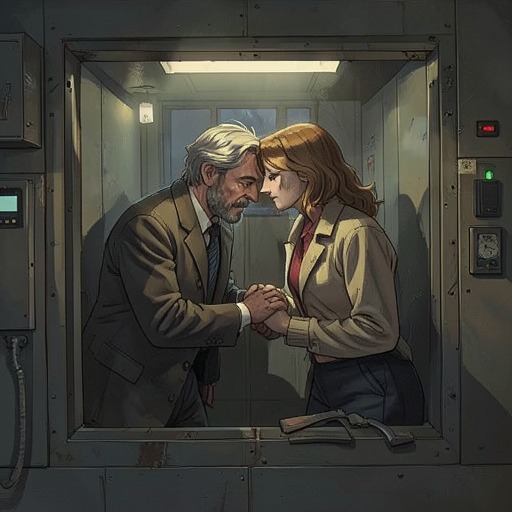
The immediate conflict begins with Diana's concealed professional identity. She explains that she is a tour guide, but deliberately omitted that the work was at the Grace Hotel. She feared that William would think she had misled him in order to keep her job, particularly because he was her brother's employer. For Diana, the omission grew out of panic after she discovered William's identity following their encounter in the elevator. She had already flirted with him, then became afraid that the workplace relationship would make their attraction seem improper or calculated. Her explanation does not erase the deception, but it establishes that the concealment began as defensive fear rather than a plan to manipulate him.
The disclosure nevertheless destroys William's confidence in his understanding of her. He believes Diana allowed him to think she was avoiding a relationship because he was Connor's boss, and he questions whether their entire romance was designed to prevent him from dismissing her. When Diana visits him, she apologizes directly for lying and for hurting him, insisting that she acted to protect herself from being hurt. William responds that he no longer knows whether the person he fell for is real. The separation is therefore rooted in a crisis of identity as well as trust: Diana is simultaneously the woman he loves, Connor's sister, his employee, and the person whose silence has made him doubt all of those roles.
A second cause lies in William's history with Julia. He had remained in the marriage until a doctor's appointment revealed that Julia's pregnancy could not be his; he had been away at a conference during the possible conception period, and the timeline did not fit. After leaving the doctor's office, he packed his bags and contacted a lawyer, and he had not seen Julia since the divorce. Julia first begged him to stay, claiming that she loved him, then blamed him for not giving her enough attention when he refused. William describes this as another revelation of the selfishness he had not seen before the marriage. His account makes clear that betrayal, humiliation, and unresolved anger still govern his expectations of romantic partners.
Course of the Separation
The relationship does not end at the moment of accusation. After Diana's apology, William remains caught between desire and suspicion. He says he does not know whether the woman he loved is the woman standing before him, while Diana insists that he knows her despite wishing the truth were different. The exchange leaves no easy reconciliation: both have spoken honestly, but honesty has exposed damage rather than immediately repairing it.
William later asks Diana to begin again without the lie between them. He explains that he has had time to think about what she said and that her words about loss and self-protection reached his own experience. His request shows movement away from simple condemnation, yet Diana does not treat renewed desire as proof that the underlying problem has disappeared. William can recognize parallels between her grief and his own pain, but he has not demonstrated that he has worked through what Julia did to him.
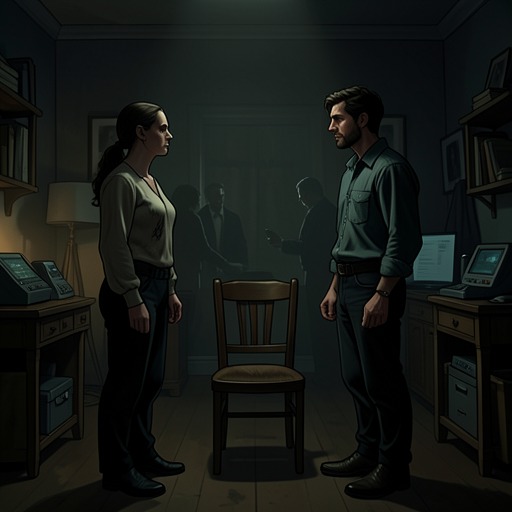
Diana therefore sets a clear boundary. She tells him that she is not Julia, but warns that until he processes the earlier betrayal, he may treat Diana as if she were. She loves him and does not want to lose him, but refuses to remain in a relationship in which she could be punished for another woman's actions. Her decision converts separation into a condition for reconciliation: William must confront his unresolved trauma before their love can become a relationship based on the present rather than a repetition of the past.
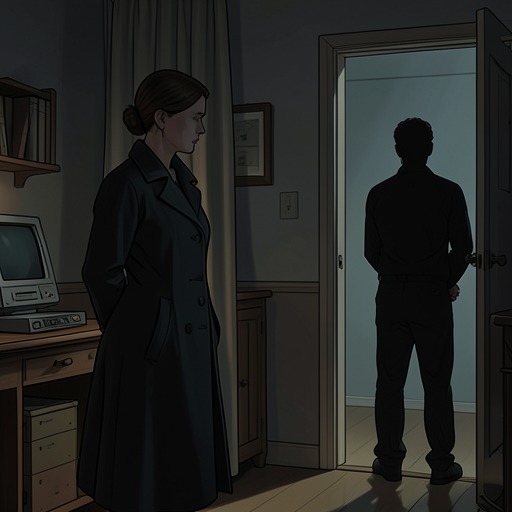
The parting remains physically intimate and emotionally unresolved. Diana kisses William on the forehead and opens the door, attempting to make the decision final even while she is still breaking inside. William does not leave immediately. He kisses her, and she clings to him as though trying to preserve the sensation in memory, but eventually pulls back because the kiss cannot substitute for healing. Before he goes, he asks whether she will wait for him. Diana answers yes. She then closes the door and sinks to the floor in tears, making the cost of her boundary unmistakable: waiting is an act of love, but it also leaves her exposed to indefinite uncertainty.
Consequences and Aftermath
William tells his family that he and Diana are on a break during Sunday lunch. The disclosure is prompted by the emotional pressure of returning to his parents' home, where Tara King runs to him and Gloria embraces him. He initially resists discussing the matter, but the warmth of the family gathering and his sense of guilt eventually overcome that resistance. His statement brings the separation into his family life and gives Gloria an opportunity to challenge him about what happened, rather than allowing him to keep the crisis entirely private.
Diana's life after the break alternates between purposeful activity and emotional withdrawal. Her work had previously rescued her from the depression that followed the deaths of Cora Jones and Derek Jones. Their death occurred immediately before her final first-year examination; although she insisted on sitting the exam, she later lost her scholarship and friendships when she could not return for her second year. Connor responded by taking her to work at the hotel and refusing to leave her house unless she came with him. With help from Kate and the other concierges, Diana discovered that she enjoyed advising guests, researching Cape Town's history and culture, and eventually leading tours. The job enabled her to live again rather than merely survive, so the threatened loss of William also awakens her fear that another source of stability is being taken away.
During the separation, Diana fills her time with work and gardening, but neither activity eliminates her longing. She avoids William at the hotel because she wants both of them to have room to think, even though seeing him is unavoidable and their brief encounters reveal disappointment on both sides. At home in Camps Bay, she restores the neglected garden and sits on the swing that had belonged to the house before her mother lived there. The physical labor gives her a moment of catharsis, while the open view toward the waves contrasts with the emotional confinement she feels. Her sixty-hour workweeks provide distraction, but she recognizes that physical exhaustion is closely tied to the unrest she can evade only temporarily.
The break also exposes the deeper fear beneath Diana's concealments. Six years after her parents' deaths, she still feels neither fully grown nor independent. Connor supported her after the car crash that killed their parents, but he had already built a separate life and eventually returned to it after making sure she was safe. Diana understands that he did what he should have done, yet still experiences his independence, and her parents' unavoidable absence, as abandonment. Her fear that William will leave her repeats this earlier wound. She recognizes that she once would have sacrificed her own judgment simply to avoid being alone, but now she refuses to let that fear control her.
Significance
The separation makes healing an ethical requirement rather than a decorative promise. Diana does not ask William to forget Julia, nor does she accept an apology as a complete repair. She listens to his account, acknowledges the betrayal he suffered, and still insists that suffering cannot excuse his present dishonesty or justify treating her as a substitute for Julia. Her position gives forgiveness a boundary: love may remain, but trust must be rebuilt through responsibility and self-knowledge.
For William, the break distinguishes recognition from recovery. He can understand Diana's fear after hearing her explain the hidden circumstances of their relationship, yet his own unresolved relationship trauma continues to shape his reactions. His request to start over is sincere, but Diana's refusal to resume the romance immediately forces him to face the work that desire alone cannot perform. The event thus interrupts the familiar romantic impulse to let a kiss erase a wound and replaces it with a slower demand for accountability.
For Diana, waiting marks a significant change in her relationship to loss. She still misses William intensely and sometimes wonders whether she has surrendered the best thing that happened to her. Nevertheless, she believes she is doing the right thing by refusing to be with him unless he is ready to be with her as Diana Jones, not as a projection of Julia. She admits that she may move on, but also knows that her love will not simply disappear. The separation's lasting importance lies in this paradox: it is a parting created by love's refusal to accept a damaged version of intimacy, while Diana's promise to wait preserves the possibility of reconciliation without pretending that reconciliation has already been earned.