Diana's Concierge Job Interview
Falling For The CEO: BAD BOY ROMANCEDiana's Concierge Job Interview begins as a practical response to uncertainty at the Grace Hotel but becomes a major revelation in Diana Jones and William King's relationship. Although Diana's position at the Grace Hotel is still secure, William King and Connor Jones encourage her to attend the interview so that she can gain experience and preserve an alternative future. She arrives expecting little from the opportunity, yet the interview's connection with Julia Brown exposes William's hidden marriage and turns professional mobility into an emotional crisis.
Causes and Background
Diana's work as a concierge has grown out of recovery rather than simple career ambition. After the car crash that killed her parents, she lost a university scholarship, withdrew from her second year, and spent months unable to motivate herself. Connor Jones responded forcefully: he brought her to the hotel and refused to leave until she went to work with him. At first she attended mainly to avoid burdening him, but Kate and the other concierges showed her the work, and Diana gradually discovered that she enjoyed communicating with guests and helping them navigate Cape Town.
Her role expanded when guests began asking her to plan excursions and accompany them through the city. Connor Jones arranged a trial period, and the demand became strong enough for him to authorize her to concentrate on customized tours. Diana researched Cape Town's history and culture deeply, and the work restored a sense of life that had been absent during her grief. The Grace Hotel therefore represents more than employment: it is the place where she moved from merely surviving to living again. The possibility of losing that security gives the interview an emotional pressure before the interview itself begins.
The opportunity is also shaped by the uncertainty surrounding the hotel. Diana knows that her job at the Grace Hotel is safe at the time of the interview, so she is hesitant about starting over elsewhere. William and Connor nevertheless urge her to take the opportunity and gain experience. By the evening before the appointment, she has decided that she probably does not want the position. Her life at the Grace Hotel feels complete, especially because William has entered it, and the interview becomes something she can attempt without needing to accept.
Course of the Interview
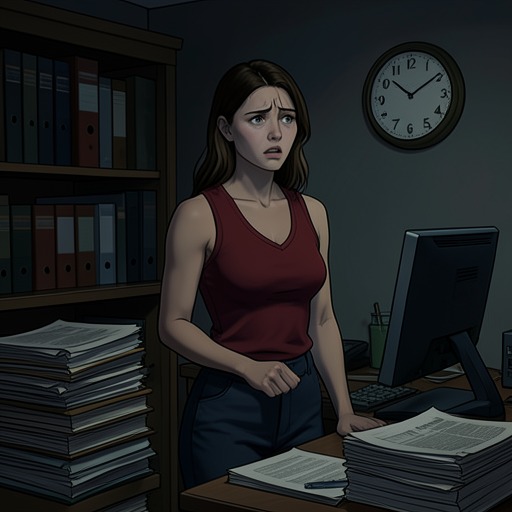
Diana waits nervously in the reception area, sitting despite her fear that her posture will reveal how anxious she is. She intertwines her fingers to stop them from tapping and reassures herself that the appointment is unnecessary because her existing life is satisfactory. Her confidence is complicated by trust in William: she believes that his eyes communicate love, even more strongly than his words, while also recognizing that he distracts her from nearly every other concern.
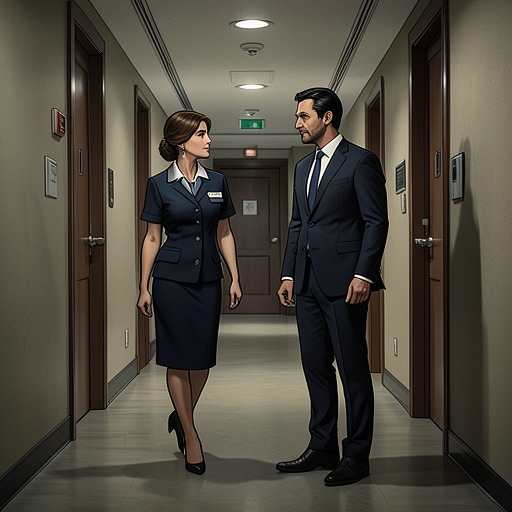
The interview is conducted by Julia Brown with Uma Thornton, the floor manager, and Helga Florence, a concierge already performing work similar to the position being offered. Julia identifies herself as the Human Resource recruitment agent for the Atom Hospitality Group and learns that Diana works at the Grace Hotel. The panel is interested in hiring Diana for comparable concierge duties, but Diana deliberately gives only general information about her current work rather than disclosing every detail of the position.
The questioning is formal and intimidating. Uma and Helga maintain stern expressions, leaving Diana unsure whether they approve of her, while Julia repeatedly offers a wink or an encouraging smile. Diana eventually suspects that the two women are testing her response to pressure in the same way they might test a candidate's response to a difficult guest. Once the interview ends, both interviewers smile, confirming Diana's suspicion that the severity was deliberate rather than hostile. She leaves relieved, and Julia accompanies her from the room.
Julia explains that the apparent severity was probably intended to reveal how Diana would behave when confronted by a challenging guest. Diana acknowledges that the test intensified her nerves but also restores her natural friendliness once it is over. She thanks Julia for making the process easier, while Julia asks her to use the first name Julia rather than the formal title Mrs Brown. Julia promises to contact Diana after the other candidates have been seen, estimating that a decision should come within four weeks unless the process takes longer.
The Interview's Unexpected Disclosure
The recruitment conversation changes when Julia asks whether Diana knows William King. The question is initially framed as obvious professional knowledge because William is the manager at the Grace Hotel, but Julia then clarifies that she wants to know how he is. Diana, surprised by the personal tone, asks why Julia wants to know. Julia answers that her former husband was William King.
The disclosure destroys the ordinary boundaries of the interview. Julia had already mentioned that she once worked for the Grace Hotel and travelled while working in Human Resources recruitment and retrenchment, but she had described the marriage only as part of a casual account of her past. Diana now understands that the apparently friendly interviewer is not merely a former hotel employee or a recruiter. She is the woman connected to William through a marriage, and Julia also has a son who is about to turn five.
The revelation is especially destabilizing because Diana has already experienced confusion about professional and personal identities. William first encountered her without knowing that she was Connor's sister, and she refused him because he was her brother's boss. Later, William discovers from a staff profile that Diana herself is his employee, realizing that her explanation had concealed the more direct conflict of interest. Julia's disclosure adds another concealed role to the same network: William is not only Diana's manager and lover but also Julia's former husband.
Consequences for Diana and William
Diana leaves the interview carrying information that William has not given her. At home, she confronts him about having an ex-wife and a child, explaining that Julia told her about them. William is shocked and denies being a father. His denial does not erase the damage caused by the discovery; instead, it creates a second uncertainty, because Diana has heard Julia's account while William rejects its central implication.
The interview therefore becomes the point at which Diana's confidence in the relationship is tested by incomplete information. Before meeting Julia, Diana had been willing to imagine a future with William and had regarded the new job as unnecessary because her life already felt perfect. After Julia's disclosure, the same professional encounter becomes evidence that William has withheld a history capable of changing Diana's understanding of him.
The event also reverses the apparent purpose of the interview. Diana attends to strengthen her professional options, but the lasting consequence is not a new position. Instead, the interview reveals that her private relationship is entangled with institutional roles, former marriage, parenthood, and the possibility of another secret. The recruitment process opens a door to employment while simultaneously opening the past William had hoped to explain later.
Narrative Significance
Diana's Concierge Job Interview links the novel's workplace-romance plot to its larger concern with truth and trust in romantic relationships. Diana's specialized knowledge of Cape Town is presented as skilled, emotionally sustaining labor: she does not merely list landmarks but interprets history and culture for visitors, helping them see the city through her enthusiasm. Her tour of the Bo-Kaap Museum, including the abolition of slavery in 1834, the area's connection with formerly enslaved Muslims, and the nineteenth-century Muslim-house design of the museum, demonstrates the depth and seriousness of that work. William witnesses the passion with which she presents Cape Town, while guests such as Jasmine and Dorian respond to her attentiveness and expertise.
That professional competence contrasts sharply with the uncertainty produced by hidden identities. Diana can guide visitors through complicated histories, recommend the Bo-Kaap food market, accommodate Dorian's discomfort around people, and receive his thanks for an enlightening tour. Yet she cannot easily orient herself within William's personal history because the relevant facts have not been supplied by him. The interview thus makes a structural contrast between knowledge openly offered to strangers and knowledge withheld within intimacy.
The event also gives Diana a possible future beyond the Grace Hotel at the moment when her relationship with William seems most secure. She does not need the position, and she may decline it, but attending proves that recovery has restored her capacity to choose. Julia's disclosure then shows that independence and emotional trust cannot be kept entirely separate. What begins as a professional exercise becomes the decisive witness scene for William's concealed past, forcing the relationship to confront whether love can survive facts learned from someone else rather than from the person most responsible for telling them.