Grace Cape Town Hotel
Falling For The CEO: BAD BOY ROMANCEGrace Cape Town Hotel is the Cape Town branch of Grace Hotels and Resorts, and its importance lies in the way it turns a corporate workplace into the novel’s central pressure chamber. The hotel is being examined for financial and operational weakness just as Diana Jones’s custom-tour work makes its hospitality distinctive, while William King arrives as the new chief executive responsible for cutting costs. The hotel therefore joins romance to employment: it brings Diana Jones and William King together, gives their relationship an unequal professional structure, and makes every revelation about their identities carry consequences for both love and livelihood.
Nature, Ownership, and Setting
Grace Cape Town Hotel stands at the water’s edge in the heart of Cape Town. It belongs to a larger hotel chain controlled by William King’s family, and William enters the story as the chain’s CEO and new general manager responsible for the Cape Town operation. His appointment follows years of struggle and the severe mismanagement associated with the previous regional manager, Landon Meyer. The branch is described as the second largest among the Grace branches, but its staffing levels are higher than those of comparable hotels, making it vulnerable to a policy of minimizing unnecessary expenses and measures.
The hotel’s public face is lavish. At William’s welcoming event, the banquet hall is dressed with fairy-lights, sparkling chandeliers, and midnight-blue draping; tuxedoed men, women in evening gowns, champagne, and attentive waiters create an atmosphere of wealth and self-importance. William dislikes his father’s richness, yet recognizes that events of this kind keep the hotel’s name before the media while he repairs troublesome operations. The contrast between spectacle and strain is immediate: behind the glamour, tired staff members move through the crowd performing damage control after a power outage.
Corporate Crisis and Management
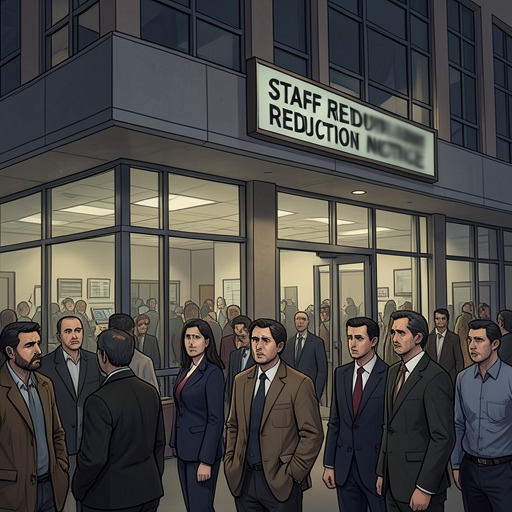
William’s arrival makes Grace Cape Town Hotel an object of formal evaluation rather than simply a place of employment. Connor Jones, the hotel’s regional manager, has worked hard to restore the branch after Landon Meyer’s mismanagement, and he resents the prospect that the incoming general manager will scrutinize the operation he has rebuilt. The review is not merely symbolic. William expects to identify areas needing work, take his strategies to the Board, and begin employee meetings within weeks; those strategies explicitly include letting employees go.
The restructuring threatens the hotel’s sense of community as well as its payroll. Diana Jones knows that her colleagues may face retrenchment and fears that she will be among the first dismissed. Connor Jones has warned that the branch’s unusually large staff makes widespread reductions likely, a prospect that has visibly stressed him. William, meanwhile, approaches the hotel as a manager who must turn the list of problems into an actionable plan. At the welcoming event, he notices exhausted employees compensating for the outage and questions a frightened young worker about when the generator was last checked, intending to investigate the matter when he officially begins on Monday.
The hotel’s crisis also exposes the limits of purely bureaucratic judgment. William’s employee file identifies Diana Jones as lacking the usual qualifications for her position, and the job itself did not exist before she joined the hotel. From a narrow business perspective, that makes her an obvious candidate for dismissal. Yet the testimonials in her file repeatedly describe her as an asset, and William recognizes that she has transformed an improvised position into a service guests actively value. The hotel’s efficiency policy thus encounters a form of labor that is difficult to measure but central to its reputation.
Diana Jones and the Custom-Tour Service
Diana Jones’s place at Grace Cape Town Hotel began in personal crisis. After the car crash that killed her parents, she fell into prolonged disorder, lost a university scholarship, and did not return for her second year. Connor Jones eventually brought her to work at the hotel, at first insisting that she accompany him because he would not leave her at home indefinitely. Kate and the other concierges showed her around, and Diana gradually discovered that she enjoyed communicating with guests and advising them about the city.
Her role developed from ordinary concierge work into a specialized custom-tour service. Guests began asking Diana to join them and explain Cape Town in person, although she initially refused because such tours were not part of her authorized duties. Connor Jones arranged a trial period after he heard how much interest the service generated. Its popularity led him to authorize Diana to focus on it, and she responded by researching Cape Town’s history and culture in depth. The work restored her sense of vitality: she was no longer merely surviving, but living through the city, its visitors, and the knowledge she could share with them.
Diana’s professional commitment is presented as more than sightseeing. She enjoys encountering people from different backgrounds, learning from their stories, and showing them one of the world’s most beautiful cities. Familiar landmarks do not become empty through repetition because each guest sees them anew; their responses allow Diana to fall in love with the city again. This emotional labor—personalizing itineraries, managing different temperaments, and making visitors feel important—becomes an unrecorded part of the hotel’s value.
The service’s success is confirmed by guest testimony. One testimonial praises Diana for making a couple from England feel like a top priority, customizing their tours so they could understand Cape Town’s history, and helping them feel part of the city rather than merely observing it. The guest attributes the memorable trip largely to Diana and the hotel and promises to recommend it to family. Such responses give William a practical reason to retain her even when her formal qualifications do not support her position.
Tours, Heritage, and the Hotel’s Public Mission
A custom tour from the hotel takes Diana Jones, William King, and guests Jasmine and Dorian to the Bo-Kaap Museum. Diana describes the area as one of the most characteristic cultures of Cape Town and uses the museum to connect contemporary color and community life with historical foundations. She explains that when slavery was abolished in 1834, the area became largely occupied by Islamic formerly enslaved people, and that the museum, established more than a century later, was designed according to the form of a typical Muslim home in the nineteenth century.
Diana does not treat this history as disposable background. Although the guests had not specifically requested a history lesson, she insists that understanding what laid the foundation for the community is essential to understanding its colorful culture. She points toward the surrounding colorful houses, allowing the joke about the word “colorful” to coexist with a serious account of slavery, religion, architecture, and cultural continuity. The hotel’s tour product consequently carries a tension: local history is made accessible and meaningful, but it is also packaged as a guest experience that strengthens the hotel’s appeal.
Diana extends the hotel’s service beyond the scheduled tour by recommending the Bo-Kaap food market. She tells the visitors that the food is delicious and that many people there would be willing to discuss the area for their paper. Her method is participatory rather than purely performative: she encourages guests to ask questions, accommodates Dorian’s shyness, and offers to answer questions by email. Dorian, who has struggled to speak in the group, eventually thanks her for a wonderful and enlightening tour and confirms that choosing the hotel was the right decision.
Identities, Romance, and Institutional Consequences
The hotel is also the mechanism through which mistaken identities become dangerous. Diana Jones first encounters William King as an attractive stranger during an elevator entrapment, without understanding that he is her new boss. At the welcoming event, Connor Jones identifies William, and Diana realizes that the man with whom she flirted is the person who has come to reduce the hotel’s staff. When Connor introduces her, she states that he is her brother, but withholds the fact that she herself works for William. Their apparent flirtation therefore shifts from harmless possibility to a conflict involving professional boundaries and job security.
Diana later refuses to pursue the relationship because William is Connor Jones’s boss and, in reality, hers as well. William accepts her hesitation even though he is disappointed. The hotel’s hierarchy has made intimacy ethically and materially unstable: William can evaluate Diana’s employment while becoming emotionally attached to the employee whose file he must eventually review.
William discovers the concealed employment relationship while examining staff records. Diana’s photograph and file make earlier scenes fall into place: her surprise when he appeared in her office and her explanation that she could not date him because he was Connor’s boss had concealed the more direct truth that he was her own boss. William experiences her silence as another betrayal after Julia’s earlier deception, while Diana’s job becomes inseparable from the distrust already shaping their romance.
The hotel also exposes a second hidden identity connected to William. Diana meets Julia, who reveals that she once worked at Grace and had traveled with her husband, then identifies that husband as William King. Later, Diana confronts William with Julia’s claim that he has a child; he denies being a father. These revelations transform the hotel from a backdrop for attraction into an archive of concealed relationships, where employee files, former staff, family ties, and managerial authority repeatedly challenge what the characters think they know about one another.
Grace Cape Town Hotel ultimately functions as both institution and moral test. Its financial crisis demands reduction, but its most valuable service depends on knowledge, emotional attentiveness, and forms of care that formal qualifications cannot capture. Its public luxury conceals exhausted labor, while its custom tours turn the history and living culture of Cape Town into an experience that can produce genuine understanding and commercial distinction. In the romance, the hotel’s hierarchy converts attraction into risk; in Diana Jones’s career, it provides the place where grief becomes purposeful work; and in William King’s management, it forces a choice between treating employees as costs and recognizing the human practices that make hospitality succeed.