Love as Healing
Falling For The CEO: BAD BOY ROMANCELove as Healing is presented as a process rather than a miraculous cure. In the novel, Diana Jones’s love for William King helps restore a life diminished by bereavement and abandonment, while William’s love for Diana forces him to acknowledge the unresolved injury left by his marriage to Julia. Their relationship becomes meaningful not because it prevents pain, but because it makes concealed pain impossible to ignore and creates the possibility of facing it honestly.
Grief, Family, and the Need for Connection
Love first appears as a response to loss. Diana’s parents, Cora Jones and Derek Jones, died in a car crash the day before her final first-year university examination. She insisted on writing the examination and managed to endure the funeral, but after Cora Jones’s coffin and Derek Jones’s coffin were lowered into the ground, the temporary support surrounding her disappeared and she sank into depression. She lost a university scholarship, several friends, and the momentum of her earlier life. The loss was not only practical: although she knew her parents had not abandoned her willingly, she still experienced their death as a devastating form of being left alone.
Connor Jones became the first important agent of her recovery. He recognized that Diana was no longer managing her life and brought her to work at the Grace Hotel, even refusing to leave her house until she agreed to go with him. His intervention initially carried the force of compulsion, but it gave her a structure in which she could begin functioning again. Through the concierges, including Kate, Diana learned that she enjoyed communicating with hotel guests and helping them discover Cape Town. Connor later arranged a trial period for her to plan and lead tours, and the popularity of that work allowed her to concentrate on researching the city’s history and culture. The result was a gradual return to life: she was exploring Cape Town, working with guests, and living rather than merely surviving.
The family histories of Diana Jones and William King make their later romance especially charged. Connor had been abandoned by his mother, Luna Jones, after Luna Jones was diagnosed with bipolar disorder and left following her divorce from Derek Jones. William similarly explains that his mother stayed only until he was ten and now contacts him only on his birthday, if she remembers. Both families therefore contain the wound of a parent leaving, although Diana grew up with two loving parents while Connor and William were shaped by maternal absence. Love in this context is never detached from family memory; it carries the fear that closeness may eventually end in abandonment.
Romantic Love as Emotional Recovery
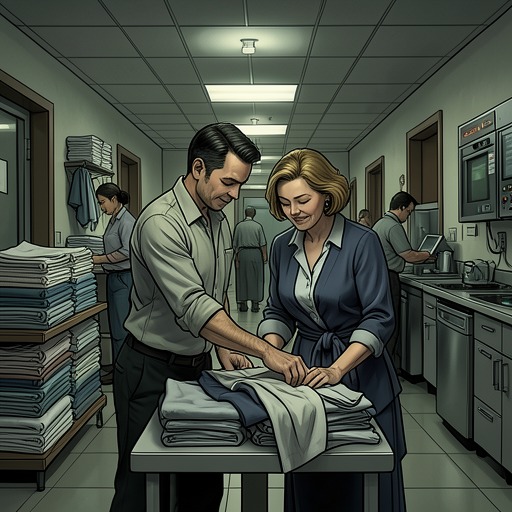
Diana’s relationship with William changes the form of her recovery. After her parents’ death, work had saved her from the deepest depression, but William gives her a different kind of emotional fulfillment. When they leave together after he tells her that he loves her, Diana feels that she has found someone who loves her and whom she loves in return. The relationship seems to fill the gap left by her parents’ death, though the narration carefully preserves the grief: the ache is relieved, not erased. Love therefore functions as companionship within mourning rather than as a replacement for the dead.
The relationship also becomes a test of whether Diana can live without surrendering to her fear of being left. When William withdraws after learning the truth about her position at the hotel, his departure reactivates the older abandonment wound. Diana recognizes that she has sometimes acted from terror rather than judgment, and she wonders whether she has lost the best thing that has happened to her. Yet her response gradually becomes more self-aware. She wants William to return as himself, not merely as someone who can quiet her panic, and she refuses to let fear determine the terms of the relationship.
This change is visible in the contrast between Diana’s earlier dependence and her conduct during the separation. She tells William that she will wait for him, but she does not demand immediate restoration. She continues working long hours, spends a Saturday restoring the neglected garden at her home in Camps Bay, and allows herself to feel both physical exhaustion and emotional longing. She admits that, only a few months earlier, she might not have given William time to heal because she would have been too afraid that he never would. Meeting him has not removed her fear of abandonment, but it has taught her that fear need not control her. Even if the relationship ended, she believes, the love and self-knowledge gained from it would remain valuable.
William King’s Unresolved Wound
For William, love becomes healing only when it leads to recognition. His marriage to Julia ended in divorce, but he had treated the injury as though it were already finished. Diana identifies the pattern: he has been punishing her for what Julia did, even though Diana is a different person. William initially cannot understand why the past still governs his reaction after so much time has passed. His anger at Diana’s concealed employment is therefore connected to more than the immediate deception; it is intensified by his distrust of romantic partners and by the fear of being betrayed again.
Gloria helps him name what he has avoided. During the Sunday family lunch at the home of John King and Gloria, William says that he and Diana are on a break after resisting Gloria’s attempts to make him speak. Gloria tells him that he has not dealt with the pain caused by Julia. He dismissed the marriage’s damage too quickly, using apparent composure to avoid feeling it. Her interpretation does not excuse William’s hurt or his conduct toward Diana, but it gives the hurt a history and a name.
Gloria’s own relationship with John King provides the model she offers William. John King was also damaged by being left by William’s mother while he had to care for William and ensure that the child understood he was not responsible for her departure. Gloria says that John King had nearly closed himself off from love, yet eventually allowed their relationship to develop. Her advice is not that love will magically repair William. It is that he must acknowledge the pain and the wrongdoing, then permit the love he feels for Diana to work upon what he has kept unresolved. Healing requires both emotional truth and another person willing to witness it.
Separation, Honesty, and the Conditions of Healing
The novel distinguishes healing from simple reunion. When Diana confronts William’s reaction, she does not merely ask him to forgive her; she argues that he has not recovered from Julia and that his unexamined trauma has shaped the way he treats her. William’s conversation with Gloria confirms that the separation has exposed this problem. The time apart becomes painful for both of them, but it also creates space in which William can understand that his response was rooted in an old injury rather than solely in Diana’s conduct.
Diana’s own healing also depends on accepting responsibility without reducing herself to a failure. In a confrontation with Connor, she admits that she was afraid for her job and resented needing him to save her. She insists that she must face possible retrenchment on her own if necessary. This moment extends the love-as-healing idea beyond romance: Connor’s care helped restore her, but recovery ultimately requires Diana to develop agency rather than remain permanently dependent on the person who rescued her.
Her decision to attend a concierge interview at another small hotel further demonstrates that recovery includes practical independence. Although her position at the Grace Hotel becomes safe again, she goes to the interview because William and Connor encourage her to gain experience. She may not accept the job, but the important change is that she now has an option. Love has not confined her to one protected arrangement; at its best, it strengthens her ability to choose.
Reconciliation and the Promise of a Shared Future
William’s final appeal makes the concept explicit through action. After reconnecting physically with Diana, he notices that she crosses her arms defensively because she expects further pain from him. Rather than treating her guardedness as an obstacle, he recognizes it as a consequence of his delay and his earlier behavior. He apologizes for the pain he caused, admits that he married the wrong woman, and tells Diana that meeting her awakened feelings he had not experienced in a long time. He understands fully what she means to him only when he believes he may lose her.
His request for another chance is framed as a commitment to a more truthful relationship. He promises that the future will be only between himself and Diana, without the unresolved presence of Julia governing their intimacy. The promise is not simply romantic reassurance: it follows William’s acknowledgment of regret, responsibility, and emotional history. Diana’s tears and visible return of hope show that reconciliation remains conditional on trust being rebuilt, not on the past being denied.
Love as Healing therefore joins two movements. Diana learns to survive love without allowing abandonment fear to dictate her actions; William learns that love cannot be sustained while old betrayal is kept unexamined. Their future is possible because love has become a form of truthful witnessing and mutual risk. It does not remove Cora Jones and Derek Jones from Diana’s grief, erase Connor Jones’s history with Luna Jones, or undo William’s marriage to Julia. Instead, it gives both lovers a way to carry those histories without making them the final authority over the present.