
The Town’s Damaged Animals and People
Fever DreamThe animals and children of the town form a collective portrait of illness, suggesting that exposure has reshaped ordinary life beyond the central families.
increasing Bearing strength in each event
 decreasing
Bearing strength in each eventdecreasingThe Distorted Girl
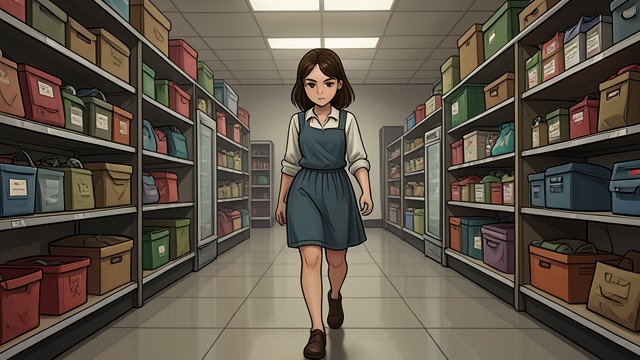
The Distorted Girl
Difference in public
A girl with a shortened leg and enlarged forehead appears in an ordinary store aisle.
Unease becomes local
Amanda’s encounter suggests that bodily difference is present in everyday town life, not hidden away.
The Clinic’s Children
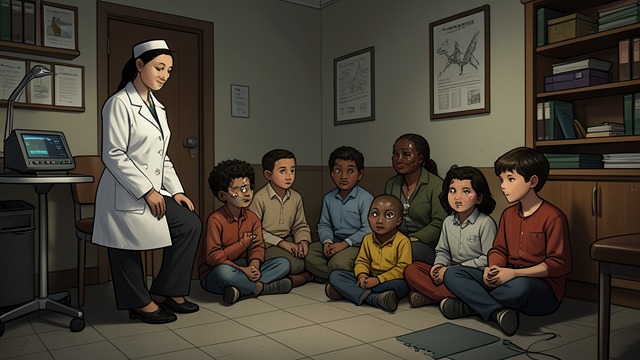
The Clinic’s Children
A room for care
Amanda learns that children regularly come to the waiting room and that many cannot control their bodies.
Care without cure
The room offers routine supervision but no clear explanation for the damage affecting its patients.
The Daily Procession
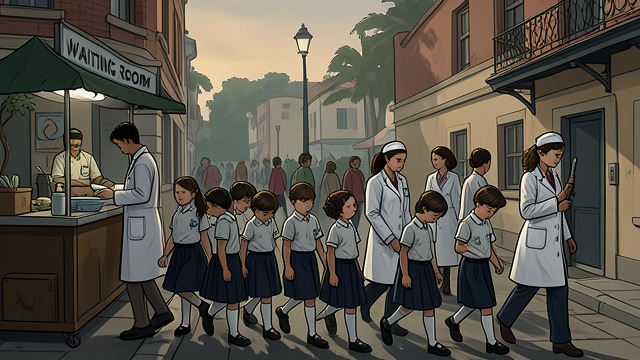
The Daily Procession
Organized vulnerability
Nurses guide groups of children across the street toward the waiting room.
A crisis made ordinary
The procession reveals a town that has adapted to widespread illness without overcoming it.
A Changing Number
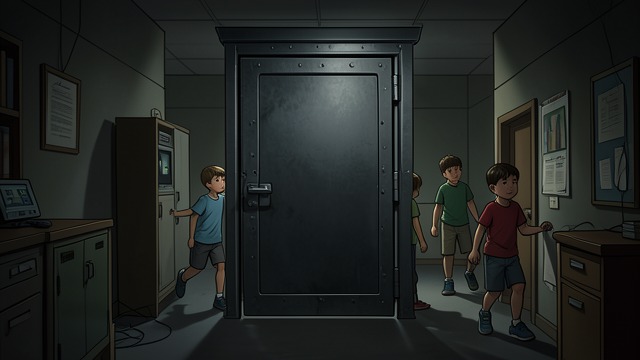
A Changing Number
David’s count
David says the waiting room contains thirty-three children, though their number changes.
Scale without certainty
The figure makes the damage measurable while emphasizing how unstable and poorly understood the crisis remains.
The Larger Scourge
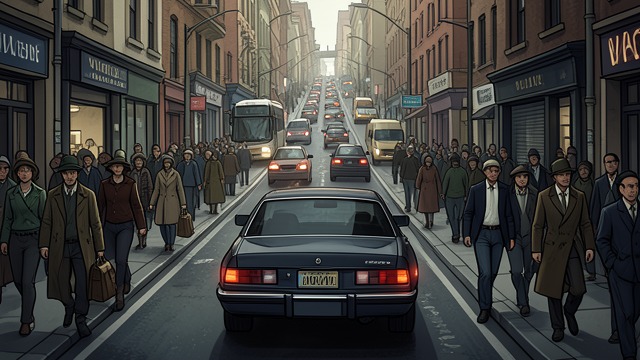
The Larger Scourge
The city approaches
Amanda’s husband drives away through increasingly crowded roads and traffic.
Contamination expands
The closing metaphor presents the disaster as something spreading beyond the rural town, with no secure boundary or easy escape.
During Amanda and Nina’s shopping trip
During Amanda’s confused visit to the clinic
At dawn after Amanda and Nina leave Carla’s house
During Amanda’s failing vision on the boulevard
In the novel’s closing image of traffic
