Amanda’s death
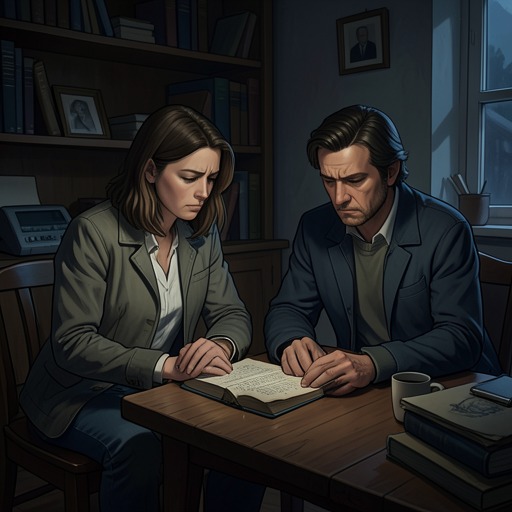
Fever DreamAmanda’s death is the culmination of a poisoning crisis that has separated her from Nina and left her too ill to act. As her body’s fever and pain recur, she learns that Carla is seeking forgiveness for what is happening at the Green House, where Nina has been taken because she may not survive much longer. Amanda’s attempts to reach her daughter collide with the collapse of her own strength; even as death becomes certain, she is still trying to understand the danger and what it means.
Causes and Immediate Circumstances
The death takes place amid a poisoning that Amanda and Nina have suffered, although the supplied account does not establish a specific chemical cause. Earlier evidence links illness in the town to contamination and to animals’ encounters with the local environment: when David was a small child, he drank from a stream where a dead bird lay nearby, and his mother feared for his life after a stallion that had also drunk there became gravely ill. Later, men unload large plastic drums at a shed, and Amanda recognizes the moment as significant. These details establish a recurring pattern of environmental danger, but they do not prove the precise source or mechanism of Amanda’s poisoning.
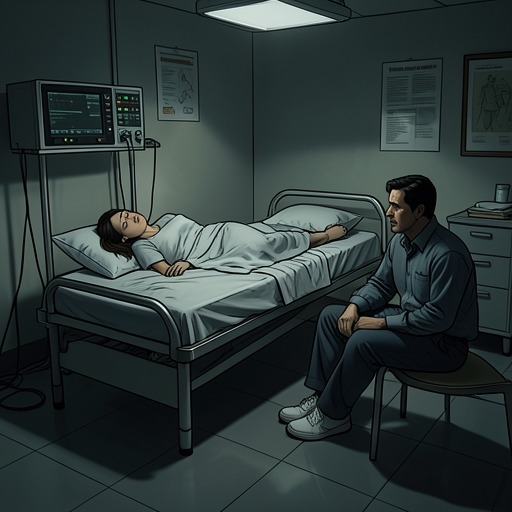
By the time Amanda is in care, the effects of the poisoning come and go. She is given treatment for what staff believe is sunstroke, even as the account identifies her condition as poisoning. Carla is with her, and a nurse says that a doctor is on the way. Amanda’s body remains caught in cycles of fever and pain; the prospect of medical help does not alter the certainty that she will not recover.
The Separation from Nina
Amanda repeatedly asks where Nina is. Carla tells her that Nina was not expected to live many more hours and that she is asking for forgiveness, not Amanda’s consent, for what is happening at the Green House. The revelation reframes Amanda’s frantic questions: she is not merely confused about her daughter’s whereabouts but confronting a decision already underway while she is too weak to intervene.
The distance between mother and daughter is rendered through the recurring idea of a rescue distance, the bond that should allow one to recognize danger and reach the other in time. Amanda thinks that this distance failed when she and Nina were on the lawn among the barrels: she did not see the danger. As Amanda learns that Nina is at the Green House, the distance tightens with such force that she briefly cannot breathe. She wants to get out of bed and rescue Nina, but the fever and the poisoning’s returning effects leave her unable to move.
Carla tries to embrace Amanda, and Amanda struggles to push her away while continuing to call for Nina. The effort marks the shrinking space between knowledge and action: Amanda has learned where her daughter is, but cannot get to her. A nurse enters and says that a doctor is coming; the account immediately makes clear that there is no hope for Amanda. Her worsening condition and Nina’s peril proceed in parallel, with Amanda’s awareness surviving after her physical capacity to respond has nearly disappeared.
The Final Conversation
Amanda’s dying is narrated through a broken exchange with David rather than as a continuous external report. She asks questions, loses her train of thought, and returns to what she cannot settle: Nina’s location, the meaning of the danger, and whether she did something wrong. David’s prompts and answers shape what she can attend to, while the repeated question of what is important gives the dialogue its governing pressure. Earlier, David insists that the event is not really about worms but about poison and contamination, and that Amanda has already told him several times how she came there. The conversation’s repetitions make her death feel less like a single instant than an ordeal revisited as understanding falters.
Near the end, Amanda asks whether she is dying. David tells her that only seconds remain, but that she might still understand what matters; he says he will push her forward so she can listen to his father. Amanda is thus brought to the threshold of death not with a resolution about Nina, but with the promise of another voice and another part of the story. Her attention is redirected even as her life is ending.
Death and Narrative Significance
The last exchange moves from the rescue distance to the maternal bond Amanda fears will break. She insists that the rope connecting her to Nina cannot break because she is Nina’s mother and Nina is her daughter; then she recognizes that it has broken. The image gives emotional form to the separation she cannot overcome. David says there is very little time left and asks whether she is dying; the answer is yes, and he urges her to listen to his father.
Amanda’s final words to David ask him to identify what is important, after which silence settles and the narrative describes the ordeal as ending. Her death therefore closes the conversation without answering the question she has pursued. Its significance lies in that unresolved ending: Amanda’s attention remains fixed on Nina and on the possibility that the danger was missed, while the narrative carries her forward toward the account of David’s father. The early story of the sick stallion and the poisoned stream, the later arrival of the plastic drums, and Amanda’s recognition that she failed to see danger around Nina form a pattern of warnings and consequences; they deepen the context of her death without establishing a complete explanation for it.