Carla and David’s mother-son relationship
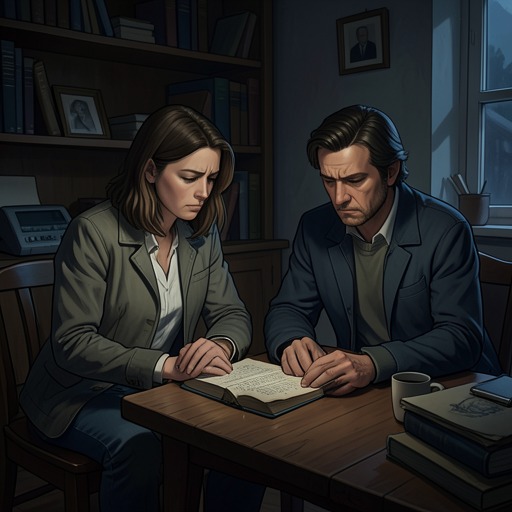
Fever DreamCarla and David’s mother-son relationship is defined by love under the pressure of a profound transformation. Carla names David as her son, yet after his poisoning and a migration that divides the poison between two bodies, she struggles to recognize the person who returns to her. Her account makes motherhood both an intimate bond and an obligation that survives the loss of certainty about who a child has become.
Identity and Rupture
Carla’s connection to David is first established plainly: when asked whether David is hers, she nods. But she immediately complicates that answer, describing him as someone who was hers and is not hers anymore. The repetition makes the rupture unmistakable. David remains her son by history, but Carla no longer experiences the relationship as an uncomplicated claim of belonging.
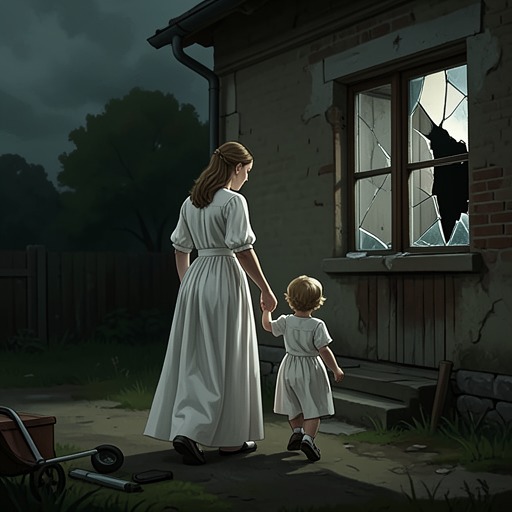
The story does not present that break as a simple rejection. Carla tells Amanda about leaving the house with David while his father, Omar, is occupied in an argument over a horse. She goes to the Green House seeking a way to save her son. The urgency of that decision places Carla’s later estrangement alongside an earlier act of care: she risks acting without knowing what the intervention will make of David, because the alternative is losing him.
Poisoning and the Attempt to Save David
At the Green House, Carla is told that David’s body may not withstand the poisoning and that he could die. The proposed migration would move David’s spirit into a healthy body, carrying part of the poison with it. Divided between two bodies, the poison might become survivable. The procedure is uncertain, and Carla is told that David would not be the same afterward.
The migration also imposes a lasting ethical burden. Carla is told she cannot choose the family receiving David’s spirit and will not know where he has gone. An unknown spirit will enter David’s sick body; each spirit will leave something in the other. Even if David is freed from that body, Carla will remain responsible for it, whatever happens. The rescue therefore offers no clean separation between saving her son and accepting consequences she cannot control.
After the procedure, David has difficulty climbing into a chair and looks at his hands. The woman who conducted the migration says it has gone better than expected: the poison has been divided, and David will survive in both bodies. Carla’s response is a strained, openly false smile and a description of the returned David as a monster. The scene holds two outcomes together: the rescue succeeds, but survival does not restore the familiar relationship.
Living with the Changed David
In the days after the migration, David’s body is feverish and delirious. Carla says the fever begins to subside only on the fifth day, and that he takes a long time to speak again. When he does, his speech has changed. He repeatedly answers ordinary questions with the phrase “That is not important,” even when Carla asks whether he is eating or cold, or tells him to go to bed. The words are not proof of what has happened inside him, but their unfamiliarity makes the change concrete for his mother: she hears a son who sounds as though he is learning to speak again.
Carla suggests that David may have picked up the phrase from the woman at the Green House, or that it may be part of the shock of his fever. Amanda offers these possibilities too, but neither explanation resolves Carla’s central uncertainty. Her concern is not only whether David survived; it is whether the person who survived can still be recognized as the child she knew. The repeated answer also echoes the story’s larger struggle over what deserves attention: Carla’s altered son is a pressing personal mystery, even as Amanda and David’s conversation insists that other matters are more important.
Care, Recognition, and Responsibility
Carla’s story is framed by the mother-daughter bond between Amanda and Nina, whose danger makes Amanda calculate the rescue distance separating her from her child. Hearing what happened to David intensifies Amanda’s awareness of how vulnerable a mother can be when she cannot reach her child in time. The parallel does not make the two situations identical, but it carries Carla’s experience forward: care is measured in action, proximity, and the possibility of irreversible loss.
Later, as Amanda becomes gravely ill, Carla asks for her consent to act quickly. She tells Amanda that Nina may not have many hours left and asks forgiveness for what is happening at the Green House. Amanda realizes that the request is not truly for consent but for forgiveness. The migration that once saved David has become the means Carla reaches for in another emergency, and the earlier promise of responsibility for a changed body now shadows the present crisis. Carla and David’s relationship thus remains unresolved: his survival did not return their former bond, but it established the model of care, uncertainty, and responsibility that governs Carla’s later decisions.