Carla’s house
Fever DreamCarla’s house is a family home on a dirt road, bordered by the remains of the land where Omar kept horses. It gathers the novel’s intimate history of Carla, Omar, and David into a setting where Amanda and Nina’s present-day crisis becomes inseparable from Carla’s past. Its ordinary rooms promise shade and refreshment, but the graves outside reveal what the house has been concealing: Carla’s continuing search for David, and the lethal stakes of her belief that his spirit may be found in another child.
Setting and Family History
Carla’s house was once her parents’ home. When Carla became pregnant, Omar moved his horse-breeding operation to the property, where he fenced off land for mares, built a corral for foals, planted alfalfa, and eventually constructed a stable. Carla recalls Omar then as a smiling man who hoped success in racing would allow them to improve the house; she particularly wanted carpeted floors. The property thus began as both a family inheritance and the site of Omar’s ambitions for a horse-breeding business.
The business included valuable animals and arrangements with their owners. Omar borrowed a stallion for several days, with a quarter of the eventual sale price of the foals going to the stallion’s owner. Carla recalls that well-cared-for foals could sell for 200,000 to 250,000 pesos, and that Omar once watched a borrowed stallion closely as it covered the mares. This attention to the horses becomes part of the house’s painful family history: while Omar was occupied with the stallion, David, then a toddler, accompanied Carla as she searched for it after it disappeared from view.
The house and yard also carry the legacy of David’s altered behavior. After his earlier illness, he sometimes vanished from his room at night, and Omar and Carla went out searching for him. Omar eventually began locking David in his room overnight. David would pound on the door and call Carla by her name rather than calling her Mom. These details make the home more than a backdrop: it is where the family’s efforts to manage fear hardened into confinement, and where the relationship between Carla and David became marked by distance.
Amanda and Nina’s Arrival
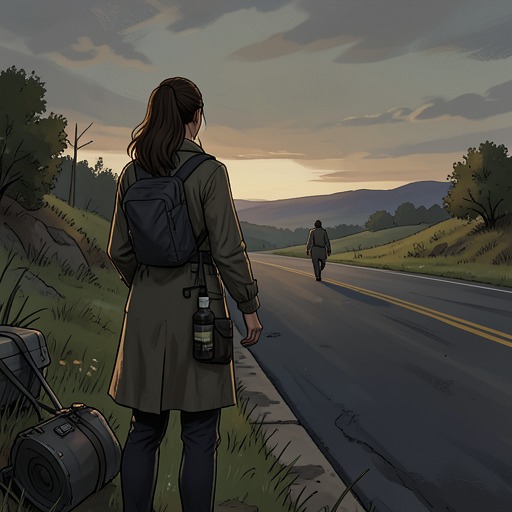
When Amanda enters the property with Nina, the yard is dusty and the horse fences remain, but no animals are visible. Carla has carried Nina from the car toward the house, and Amanda follows despite wanting to take her daughter away. She is exhausted, thirsty, and seeking relief from the heat; her recurring calculation of the distance between herself and Nina makes the decision to follow feel at once like ordinary reliance on Carla and a new risk.
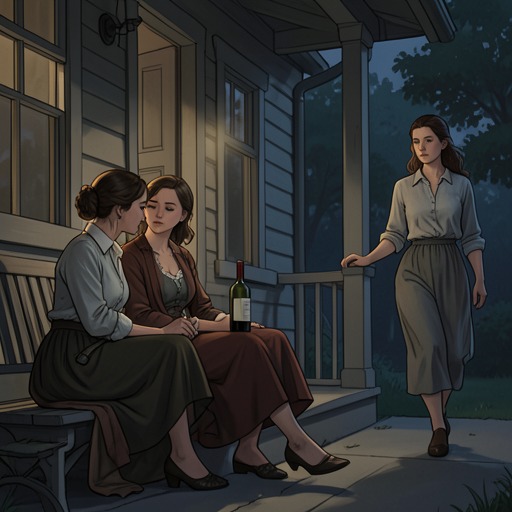
Inside, the house is dim and sparsely furnished, with a wicker sofa, piled plastic boxes, decorative objects, and a plastic-strip curtain at the front door. Carla prepares iced tea, and the gesture appears to offer straightforward hospitality. Amanda, however, sees the graves outside before she can drink. There are twenty-eight. Their presence changes the meaning of the domestic scene: the tea and the quiet room sit beside an outdoor record of deaths, and Carla knows Amanda has noticed it.
The Graves and Carla’s Search
Carla explains that she misses David and has checked on children his age, following them without their parents’ knowledge and speaking to them face to face. The graves are connected to this search, though the evidence does not establish the identity of every person buried there. Their number gives Carla’s grief a visible, material presence, while her account makes clear that she has continued looking for David among other children.
The house’s rural setting is also linked to the family’s earlier experiences of disappearance and fear. David’s nighttime absences had led Carla and Omar to search outside with a flashlight; on one occasion Omar took a knife. Carla remembers keeping close to him in the darkness, listening for sounds. The empty horse enclosures, the yard graves, and the house’s closed domestic spaces therefore belong to a history in which care repeatedly takes the form of searching, watching, and trying to prevent another loss.
The House as a Threshold
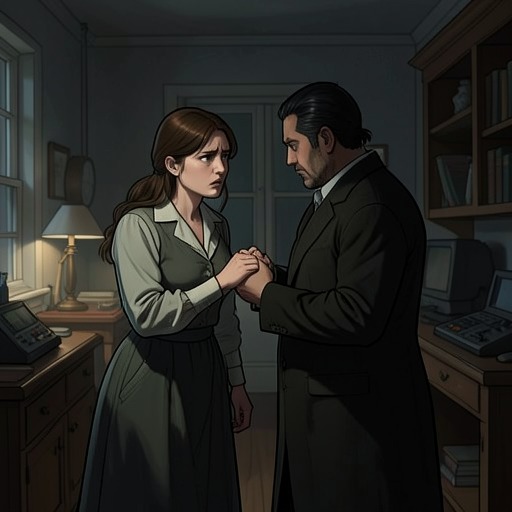
Carla’s house becomes the place where Amanda’s immediate need for shelter intersects with Carla’s plan concerning Nina. Carla brings Nina inside and says they should rest, while Amanda’s concern grows as she notices the grounds and the graves. Later, Carla asks for Amanda’s consent to act quickly, but Amanda understands that the request is really for forgiveness: Carla is already seeking a way to reach her “real David,” and Nina is in danger. The house is thus not simply a refuge from heat; it is the setting in which hospitality and threat occupy the same space.
The narrative’s movement between conversation and recalled events intensifies that instability. Carla’s memories of the horse business and David’s childhood emerge as Amanda tries to understand the present, while David’s voice interrupts her account and insists that certain facts are not important. The repeated contest over what deserves attention contrasts with the concrete clues in and around the house: the old animal enclosures, the shut bedroom door in Carla’s memory, the graves, and Nina’s arrival. Carla’s house holds these layers together, making it a domestic setting whose apparent ordinariness cannot contain the history—and danger—within it.