David’s soul migration
Fever DreamDavid’s soul migration is the attempted rescue that divides a fatal poisoning between two bodies, preserving David’s life while bringing an unknown spirit into his sick body. In Carla’s account, the intervention succeeds, but survival is not restoration: David returns in a different body, and Carla must confront both the limits of what she knows and the obligation she has accepted toward the body left behind.
The diagnosis and the choice
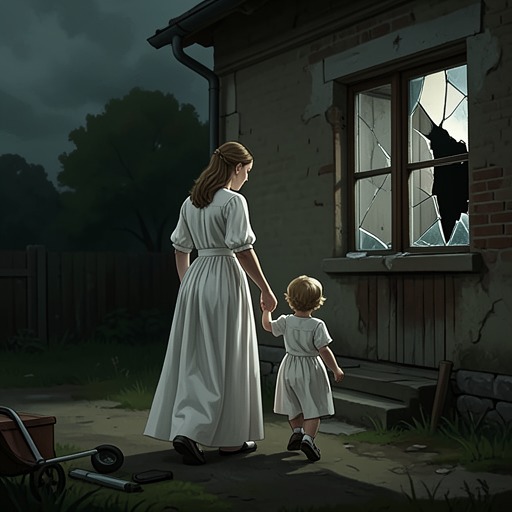
Carla recounts that, after she brought David to the woman’s house, the woman first gave her water and waited for her to calm down. As David played nearby, arranging decorative miniatures from the television table in a line, the woman examined him closely. She declared that the horse was already dead, although Carla had not mentioned the horse, and said David had only hours, perhaps a day, before he would need help breathing. Her diagnosis was poison attacking his heart. She then told Carla that David’s body would not withstand it and that he would die unless they tried a migration.
The proposed procedure offered a chance rather than a guarantee. If David’s spirit could be moved into another body in time, some of the poison would go with him; divided between two bodies, the poison might be overcome. The woman’s explanation gave Carla a possible way to save her son, but it did not promise that the attempt would work. As David grew weaker, Carla agreed to do whatever was necessary.
Rules and responsibilities
The woman could not choose the family into which David would go and would not know where he had gone. She also warned that migration had consequences: a body could not contain two spirits, and no body was without one. David’s spirit would enter a healthy body, while an unknown spirit would enter David’s sick body. Something of each spirit would remain in the other, so David would not be the same and Carla would have to accept his new being.
The exchange did not release Carla from responsibility for the sick body. The woman stressed that, even without David’s spirit in it, Carla would remain responsible for that body, whatever happened. The choice therefore involved more than consenting to a rescue: Carla had to accept an outcome whose destination she could not know, whose effects would alter her son, and whose obligations would continue after his spirit had left.
The procedure and its return
Carla carried the nearly unconscious David to a room at the end of the hall. The woman set a large, low washbasin in the middle of the darkened room, bringing water in a bucket, then returned with a spool of thin hemp rope and a handheld fan. After taking David from Carla, she told her to wait in the kitchen and not move around the house: during a migration, only things prepared to move should be in motion. Carla waited for what she estimated was about two hours, without drinking the tea or moving from the wall.
When the woman came back, she called David to follow her to his mother. Carla heard unfamiliar, hesitant footsteps, with the woman stopping to wait after every few steps. David appeared flushed and sweating, leaning on the wall and then the table for support. Carla noticed marks around his wrists, which the woman associated with the rope, and explained that the procedure had to ensure only the spirit left: the body had to stay. She also said yawning was an effect of migration and that David needed to yawn to let it go.
The woman told Carla that the migration had gone better than expected: part of the poison had been taken away and, divided between two bodies, it would lose its battle. She confirmed that David would survive, both in his original body and in his new one. The rescue thus changed the terms of the crisis. David’s death was averted, but the two-body outcome made survival inseparable from an exchange Carla could neither direct nor fully understand.
Carla’s recognition and the event’s frame
Carla does not describe welcoming the returning David. When he struggled to climb into a chair, she could not bring herself to help him; she watched his hands and the marks on his wrists instead. After the woman confirmed that both David and the person in the new body would survive, Carla looked at Amanda with a false smile and identified the child before her as her new David, calling him a monster. The contrast between the woman’s account of a successful rescue and Carla’s rejection of the result keeps the cost of the migration in view: saving David’s life has not made his changed identity easy for his mother to accept.
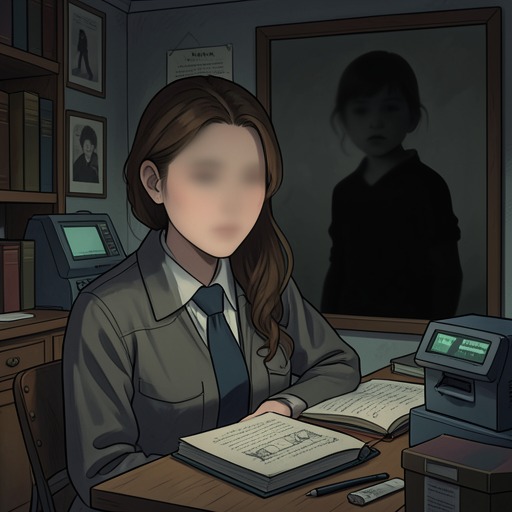
The event reaches the reader as Carla’s recollection, told to Amanda while Nina is nearby. Carla’s pauses, her exhaustion, and the remembered wait place the supernatural procedure inside an intimate account of a mother being forced to decide under the pressure of her son’s impending death. The migration’s decisive result is double: David survives, and an unknown spirit occupies his former body. Yet the woman’s warning that Carla remains responsible for that body prevents the exchange from resolving into a simple miracle. Rescue creates a continuing duty as well as a new David whom Carla must learn to face.