Omar
Fever DreamOmar, Carla’s husband and David’s father, is presented through a sharp contrast between his former life as a horse breeder and the fearful, withdrawn parent he becomes. The horses that once defined his work and ambitions also mark the growing estrangement within his family and, by their eventual absence, the changed landscape of the story.
Identity and Early Life
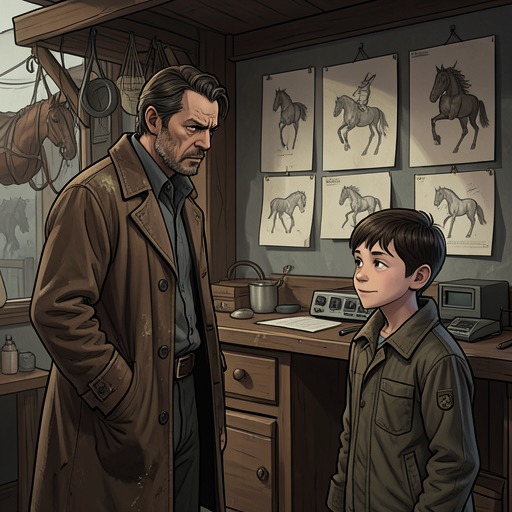
Carla remembers Omar as a different man when they met: he smiled and bred racehorses. His business depended on arranging the use of a good stallion and raising foals for sale. After Carla became pregnant, he moved his horses to the land around their home, which had belonged to her parents. He imagined that success would make them wealthy enough to renovate the house; Carla, in particular, wanted carpeted floors.
The breeding operation was carefully organized. Omar fenced off land for the mares, built a corral for the foals, planted alfalfa, and later set about building a stable. Under the arrangement he described to Carla, the stallion’s owner received a quarter of the sale proceeds. A well-bred, properly cared-for foal could sell for 200,000 to 250,000 pesos. These details establish that the horses were not simply a pastime: they were the basis of Omar’s work and his hopes for the family’s future.
Family and Estrangement
Omar’s relationship with David is marked by distance and unease. Carla says Omar sometimes described David as unlike a normal boy, said that having him in the house made him uncomfortable, and avoided sitting at the table with him or speaking to him. At night, David sometimes left his room without the adults knowing. Omar was frightened by these absences, and the parents began listening for sounds and searching for the boy together.
The family’s response changed over time. Omar eventually began locking David in his room at night and letting him out in the morning before leaving. When David struck the door, he called for Carla by name rather than calling her Mom; Carla connects this form of address to the altered relationship between them. The episode presents Omar’s fear not as a passing reaction but as part of a household routine that deepens the separation between father and son.
The Horses and the Family’s Crisis
An earlier incident reveals how strongly Omar’s attention was bound to the horses. When a borrowed stallion went missing, he had been monitoring it closely, tracking how often it mounted each mare. Carla discovered the horse was gone and went searching with the young David, eventually finding it drinking at the stream. Omar had remained absorbed in the animal’s breeding work, while Carla’s account emphasizes her own realization that she had been worrying about the horse instead of her son.
Years later, Omar woke Carla before dawn and told her that the horses were in trouble. His terse announcement frightened her, particularly because she understood it against the background of his earlier anxieties about David and the family’s restless nights. The horses therefore connect the two strands of Omar’s life: his former livelihood and the accumulating crisis at home. The evidence does not establish the full outcome of this particular alarm, but it records a change in tone from the confident breeder who once guarded a valuable stallion to a man whose words signal fear.
Change and Narrative Significance
Carla sums up Omar’s transformation by contrasting the smiling man she met with the person he has become. In Amanda’s account of a later encounter, he passes by in his pickup without returning a wave, a small public gesture that reinforces Carla’s description of his withdrawal. His change is conveyed through such concrete absences—less conversation, less warmth, and a family life increasingly organized around vigilance.
Near the end of the supplied account, Omar tells Amanda’s husband that he used to work with horses, then asks whether he can hear his horses now. The question places his former identity beside their present absence. The exchange does not explain what happened to them, but it makes their silence consequential: Omar’s work and earlier ambitions remain part of his self-understanding even after the horses no longer answer the scene around him. Through him, the story links family estrangement with the disappearance of the animals that once shaped his daily life.