Omar and David’s father-son relationship
Fever DreamOmar and David’s father-son relationship is defined less by intimacy than by distance, fear, and unanswered questions. Omar lives with David and Carla, but Carla recounts that he is uncomfortable with David, rarely speaks to him, and sometimes describes him as abnormal. His attention to the horses, and his choice to contain rather than investigate what he cannot explain, leave the relationship shadowed by the household’s wider crisis. At the end, David appears before his father and Amanda’s husband, and Omar can acknowledge his presence without explaining what has become of him.
Uneasy Life in the Household
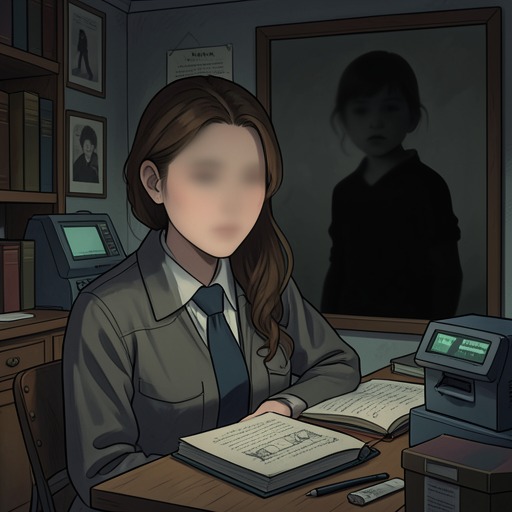
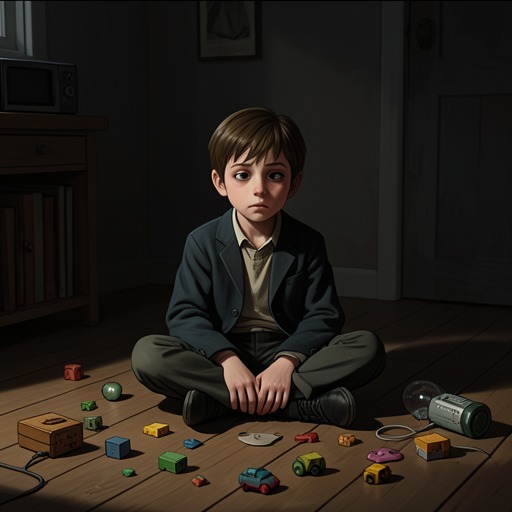
Carla describes a home in which Omar has difficulty accepting David as an ordinary son. He does not want to sit at the table with him and hardly speaks to him. At night, David sometimes disappears from his room and from the house, alarming both parents. Omar and Carla go looking for him; Omar walks ahead with a flashlight, while Carla stays close behind. On one occasion Omar takes a knife, and later he begins locking David in his room at night, opening the door again in the morning before leaving.
The change in their routine does not resolve the estrangement. David bangs on the locked door and calls for Carla, but no longer calls her Mom; he calls her by her name. The detail places Omar’s household authority alongside a damaged family intimacy: the child is physically contained, yet his words register a deeper separation from the people who are supposed to care for him. Carla’s account presents Omar’s fear as real, but also shows how fear leads to a restrictive response rather than renewed closeness.
David’s Illness and Omar’s Priorities
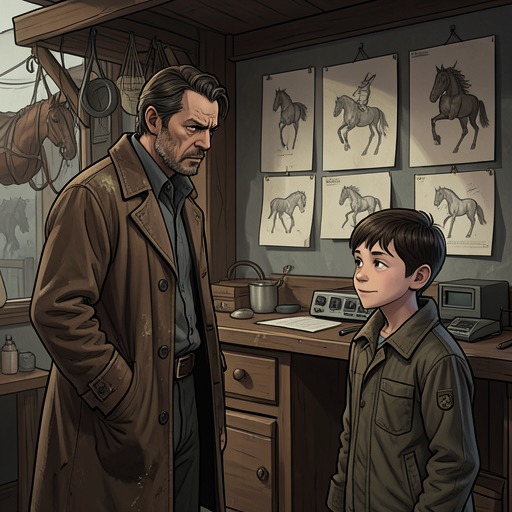
The horses repeatedly draw Omar’s attention at moments when David’s needs are also at stake. In Carla’s recollection, Omar wakes her early one morning, pale and rigid, and says only that something is wrong with the horses. His alarm is especially striking to her because Omar has sometimes spoken harshly about David, including saying that David makes him uncomfortable, while his concern for the horses is immediate and forceful.
Amanda later asks whether Omar knew about the buried Ducks and Mr. Geser’s dog. Carla says that Omar knew something: he saw the mounds where the Ducks had been buried and asked about them. But he had asked no questions when David became ill after the incident involving the woman in The Green House. Carla thinks he suspected something and preferred not to know, though she also allows that he may simply not have been interested. She says he was more concerned about losing his borrowed stallion. The contrast does not establish that Omar understood the cause of David’s condition; rather, it shows how his attention settles on the horse while the danger to his son remains uncertain and largely unspoken.
A Relationship Without an Explanation
Years later, David’s difference remains difficult for the family to name. Carla describes how, after his fever passed, he was slow to speak again and gradually began using a small number of words. One answer in particular unsettles her: when asked why he is not eating, whether he is cold, or whether he should go to bed, he replies, “That is not important.” Carla says the phrase is frightening because it is unlike the way David spoke before. Amanda suggests it might have come from something he heard in The Green House or from the shock of his illness, but neither suggestion resolves what happened to him.
The novel’s exchange between Amanda and David repeatedly distinguishes what the speakers want to pursue from what they insist matters. When Amanda questions whether the story of a spirit migration is credible, the reply is, “That’s your opinion. It’s not important.” Later, when she tries to locate the meaning of David’s changed life in the events surrounding the poisoning and contamination, she is told that they have already discussed those events and that she has told the story of how she arrived four times. These exchanges do not provide Omar with an account of his son’s transformation. They instead establish the larger pattern in which David’s condition, and the family’s attempts to interpret it, exceed what anyone can confidently explain.
The Final Encounter
In the closing scene, David appears in the kitchen while Amanda’s husband is speaking with Omar. The visitor notices that David looks different, including his gaze and the spots on him, but still recognizes that this is David. Omar does not present an explanation. He says there is nothing he can tell the visitor, then pours another mate without offering him any. The exchange leaves the father as a witness to the same uncertainty that has shaped his earlier relationship with his son.
Omar points out that David has started tying things together. More objects in the living room are joined or hanging from rope, a pattern the visitor sees as an attempt, in David’s own way, to do something with the house’s poor condition and its contents. David waits quietly, then runs out through the front door. Omar tells the visitor to come, and the two men follow him outside. After looking around as if for David, Omar recalls that he used to work with horses and asks whether the visitor can hear them now. The question returns the relationship to the unresolved absence of the horses, but it does not settle what Omar knows about David. The ending gives father and son a shared space of recognition without reconciliation or explanation.