Rescue distance
Fever DreamRescue distance is Amanda’s term for the changing space between her and Nina, at once a practical calculation of how quickly she could reach her daughter and a measure of their attachment. The expression develops from an inherited family rule into a way of reading danger, care, and helplessness: Amanda can shorten the distance, but she cannot make it a guarantee of rescue.
Definition and Inheritance
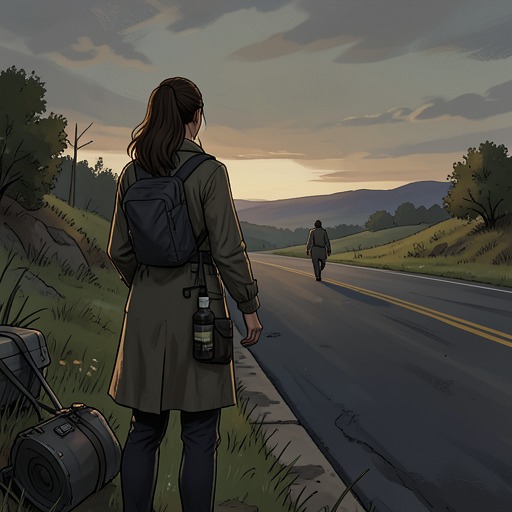
Amanda describes rescue distance as the variable distance separating her from Nina. She habitually calculates how long it would take to reach her daughter if danger arose; when Nina is near a pool, for instance, Amanda imagines the time needed to get out of the car and reach her. She says she spends half the day measuring it, while acknowledging that she still takes risks. The term turns vigilance into a kind of arithmetic, an attempt to make possible danger measurable and response manageable.
The calculation comes from Amanda’s own childhood. She recalls her mother telling her, “I want you close,” and, “Let’s stay within rescue distance.” The warning that something bad would eventually happen accompanied that instruction: closeness was presented as preparation for a future emergency. As an adult and a mother, Amanda repeats the inherited rule in a new relationship, translating her mother’s protective language into her own routine of watching over Nina.
A Distance That Changes
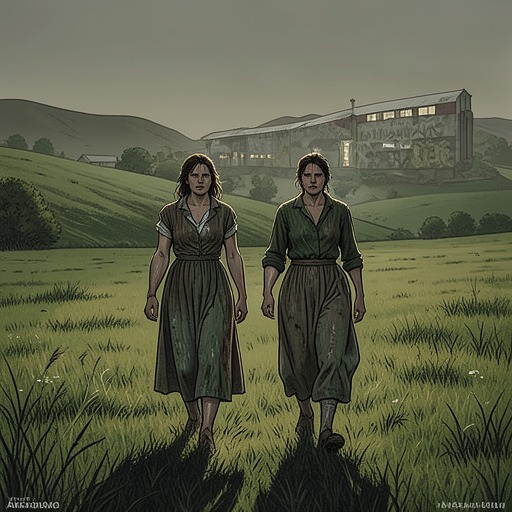
Rescue distance is not simply a physical measurement. During the first hours at Amanda and Nina’s vacation house, Amanda wants Nina close and checks the house for possible hazards: its exits, splintered areas of floor, and creaking stairs. She shows these to Nina, who is described as obedient rather than fearful. By the second day, however, the invisible thread between them loosens, allowing Nina more independence. Amanda’s account makes the distance responsive to circumstance: it can expand when she feels able to let Nina go and contract again when a new worry takes hold.
Carla’s account of what happened to David changes Amanda’s sense of the threat around her. While Nina runs around the house after asking whether Carla has left, Amanda enjoys her daughter’s energy but grows anxious. The conversation has drawn the rope between mother and daughter taut again, and Amanda says the rescue distance is shorter. Her attention turns from the immediate scene to questions about how Nina might be at risk and what has happened to David. The term binds present caretaking to the story Amanda is trying to understand, even as David directs her away from what he considers unimportant.
The changing distance becomes perceptible in Amanda’s encounter with Carla. Carla appears unsure whether to approach her, and Amanda feels the rope pull taut with frightening clarity. This shift anticipates the moment when Nina’s wet clothes are dismissed as dew and Amanda recognizes that the event has begun. The expression gives the unfolding danger a structure before Amanda can fully understand it: the distance changes, but her ability to identify what is happening does not necessarily change with it.
Limits of Protection
The idea’s central contradiction becomes clearest when Amanda asks how close a mother must be to save her child. At one point she says she is sitting ten inches from Nina and insists that there can be no rescue distance at all. Yet she remembers that Carla had been only steps away when a stallion escaped and Amanda nearly died. Physical nearness, then, is not the same as control over events. The distance can describe proximity and readiness, but it cannot promise that danger will be seen or stopped.
The expression also reaches beyond Amanda’s calculations. Carla recounts that the woman at the Green House proposed moving David’s spirit to another body in time, in the belief that some of the poison might move with him. That proposal makes rescue depend on an uncertain transfer and its consequences, rather than on a caregiver’s ability to remain close. Rescue distance and the story of migration meet at the same limit: a parent may try to save a child, but cannot control what survival will demand or what will be lost along the way.
The Rope at the Crisis
As the crisis involving Nina unfolds, rescue distance becomes an inward, bodily metaphor rather than a practical estimate. Carla takes Amanda’s hands and asks for her consent, but Amanda says she will remain in her own body. Carla then tells her that Nina may not have many hours left. Amanda understands that Carla is asking for forgiveness for what is happening at the Green House, not simply for permission. She wants to get Nina out, but she is told she will be unable to move for a while. The distance between mother and daughter becomes painfully consequential precisely when Amanda cannot act on it.
Amanda returns to the rope as she questions whether the poison is everywhere and whether she has done something wrong as a mother. She recalls the lawn and the barrels, where the rescue distance failed: she did not see the danger. The phrase does not settle the question of blame. Instead, it holds together her attempt to protect Nina, her recognition that she failed to detect a threat, and her fear that the harm may be part of something larger than her own decisions.
At the end of the supplied account, Amanda insists that the rope cannot break because she is Nina’s mother and Nina is her daughter. The claim asserts the permanence of their relationship, not the success of Amanda’s protective calculations. Rescue distance has travelled from a rule inherited from Amanda’s mother, through everyday acts of supervision, to a measure of the bond under threat. Its final force lies in the gap between emotional certainty and practical power: Amanda can affirm the connection, even when she cannot ensure that closeness will save Nina.