Rural Emergency Clinic
Fever DreamThe Rural Emergency Clinic is the local medical facility to which Amanda and Nina are taken after Amanda begins to feel unwell. Its staff examine and treat them but misread their condition as the effects of too much sun, sending them home with pills and advice to rest. The clinic’s reassuring judgment contrasts with Carla’s earlier experience of a suspected poisoning and becomes part of the delay before Amanda recognizes that she and Nina are poisoned.
The clinic and its place in the emergency
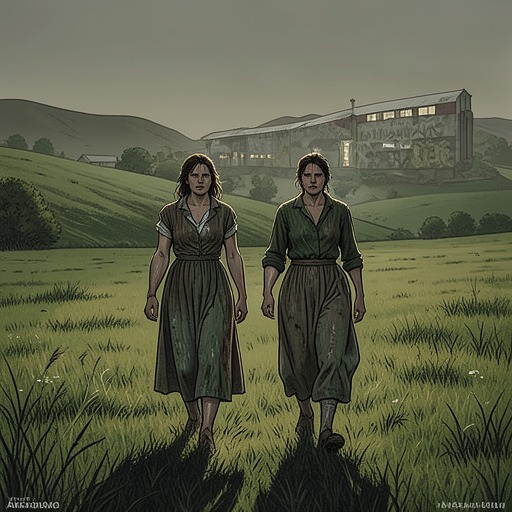
The Rural Emergency Clinic is reached during a journey that Amanda experiences through heat, nausea, muffled sound, and growing disorientation. She remembers Carla no longer being in the driver’s seat, then opening the car door and helping her out. Amanda sees herself walking but is uncertain whether she is moving under her own power; the approach to the clinic is rendered as a break in her ordinary sense of control rather than as a straightforward arrival.
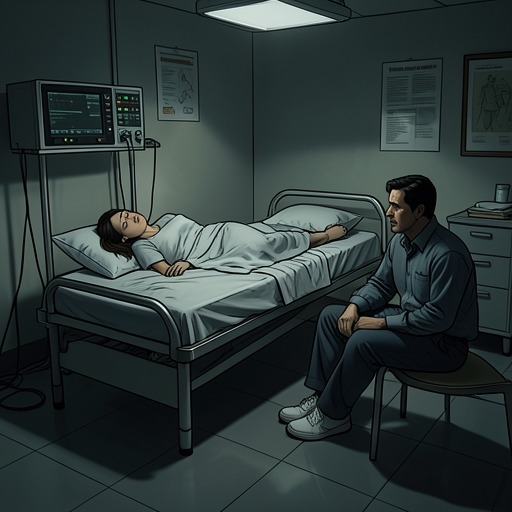
Inside, a nurse leads Amanda into a small room and checks her blood pressure, temperature, throat, and pupils. She asks whether Amanda’s head hurts. Amanda thinks that it does, but Carla answers for her before she can manage to speak. When Amanda confirms the pain, it is described as intense and extending from the nape of her neck to her temples. Nina is with them, and her voice about the drawings helps steady Amanda as the examination proceeds.
The scene makes the clinic a place where symptoms are observed but not correctly interpreted. Amanda’s trouble communicating is consequential: Carla voices the headache, while Amanda’s own attention is fragmented by pain and confusion. The nurse’s examination gives the encounter the form of medical assessment, yet the subsequent diagnosis does not account for what is happening to them.
Misdiagnosis and return home
The nurse tells Amanda there is no need to worry and attributes her condition to having spent too much time in the sun. She advises rest at home and says Amanda should not be afraid. The nurse opens the drawers, takes out a blister pack of pills, fills two cups of water from the fountain, and gives one pill and one cup of water to each of them. Amanda wonders whether Nina is being given the same medication as she is.
The clinic’s initial visit ends quickly: Amanda, Nina, and Carla leave for home about half an hour after arriving. The abrupt transition is underlined by the narration itself, which notes that the journey to the clinic had been followed step by step, whereas the visit is passed over as though nothing important occurred. That compression reflects the false reassurance of the assessment, not a resolution of the danger.
Back at the house, the effect of the pills comes and goes, and Nina seems somewhat better. The family’s temporary relief rests on the nurse’s sunstroke explanation. Later, Amanda explicitly recognizes that she and Nina are poisoned and asks why they are being given treatment for sunstroke. The clinic’s diagnosis is thus shown to be mistaken, while the intermittent nature of their symptoms makes the error harder to dispel at once.
Carla’s prior knowledge of poisoning
The clinic’s failure gains force beside Carla’s memory of an earlier emergency involving her son, David. When a valuable stallion disappeared, Carla found it drinking from the stream and recovered it. David had knelt in the water, soaked his shoes, and sucked water from his fingers; nearby, Carla saw a dead bird. The next morning the stallion was gravely ill, with swollen features and difficulty whinnying. Carla feared that David had consumed whatever had poisoned the horse and believed that waiting for a rural doctor might leave too little time to save him.
Carla took David to the Green House, where the woman there identified poison and warned that David might soon need help breathing. She offered a way to move David’s spirit to another body, which Carla accepted as the only available chance to save him. This earlier crisis does not establish the chemical source of either episode, but it explains why Carla takes the present danger seriously and why the clinic’s ordinary sunstroke diagnosis cannot settle her fears.
The contrast is also a contrast in available knowledge and action. In the earlier crisis, Carla acts on the connection she sees between the sick horse, the stream, and David’s exposure, seeking help beyond the clinic because she believes time is short. In the present episode, the clinic’s staff provide an official explanation and medication, but neither identifies the poisoning. The narrative places lived observation beside institutional judgment without making the clinic’s examination itself proof of what caused the illness.
Consequences and narrative significance
The consequences of the clinic’s reassurance extend beyond the initial journey home. Amanda’s condition continues to fluctuate, and her account becomes increasingly fractured as she tries to make sense of where Nina is and what has happened. When Carla later learns that Amanda has been brought back to the clinic, seven hours have passed since Amanda fainted, and more than a day has passed since the poisoning. The passage of time sharpens the consequences of the earlier dismissal without claiming that the clinic alone caused every later event.
Carla believes the danger is connected to a wider sequence: children in the waiting room, the deaths of horses, a dog, and ducks, and the child who remains in her house but is no longer her son. She blames herself, fearing that the earlier transfer of David’s spirit changed something invisible. The account establishes her belief and guilt, not a confirmed explanation for the deaths or for the poisoning. At the clinic, however, Amanda and Nina’s symptoms have already been interpreted as sunstroke, leaving this broader pattern unrecognized by the medical staff.
The Rural Emergency Clinic therefore functions as more than a stop for treatment. It is the point at which Amanda and Nina receive care that looks reassuring but fails to name the danger, while the narrative’s divided perspectives expose the gap between visible symptoms, a patient’s impaired ability to report them, and the explanation offered by an authority figure. Against Carla’s earlier urgency about David, the clinic’s dismissal makes the central peril especially stark: in a place where poisoning is suspected, an ordinary diagnosis can consume time without resolving the threat.