Worms
Fever DreamWorms are both a bodily metaphor and a narrative riddle: an image through which poisoning is felt before its cause or exact beginning can be securely named. The word returns across a fragmented conversation and accounts of contaminated water, animals, and illness, linking physical sensation to the novel’s larger effort to locate the moment when harm began.
First Appearance and the Search for a Beginning
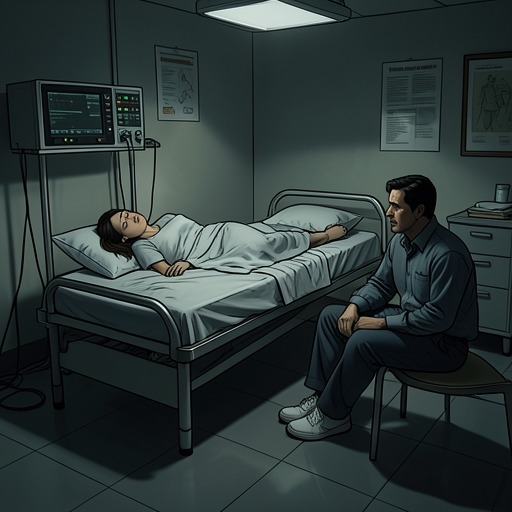
The image appears in a dark exchange between a questioner and a boy, whose words are murmured into the other speaker’s ear. Asked what kind of worms he means, the boy clarifies that they are not worms inside the body, but another kind, “all over.” The distinction leaves the image unsettled: it sounds bodily, yet the conversation insists that it points beyond a literal infestation.
The questioner cannot move, and the sheets bunch beneath the body as the conversation turns from naming the worms to waiting. The boy says that they must be patient and find the exact moment when the worms come into being, because that moment matters to everyone. This makes the image a method of inquiry as much as a description: the task is to trace an origin, even when the people speaking cannot yet see clearly what they are trying to understand.
From Metaphor to Contamination
The conversation later revises its own terms. Asked whether the story is about worms, the speaker explains that it is not: the feeling is like worms in the body at first, but the subject is poison and contamination, matters that have already been discussed repeatedly. The image therefore conveys how an exposure is experienced rather than identifying a specific organism or substance. The repeated explanation also suggests that the account is being revisited, while the speaker struggles to accept that it has already been told.
Carla’s account of David’s childhood provides a concrete antecedent for this association. After finding a missing stallion drinking from a stream, she discovers David kneeling beside it with his shoes soaked and his fingers in the water. A dead bird lies nearby. The next morning the stallion is gravely ill, its face swollen, and Carla fears that whatever it drank, David drank too. The episode connects water, an animal’s sudden illness, and the possibility of danger to a child, but it does not name a poison or establish a chemical diagnosis. Its importance lies in the pattern Carla recognizes and in the urgent fear it provokes.
The Moment of Exposure
The search for a precise beginning recurs when a truck arrives as Carla is trying to take the others to Omar’s abandoned stables. Men wearing long plastic gloves unload large plastic drums, carrying them from a full truck toward a shed. One drum is left alone in the doorway. The narrative marks this scene as a point of recognition: the question of contamination now has a visible setting and material object, although the scene itself does not fully explain the contents, their destination, or the exposure pathway.
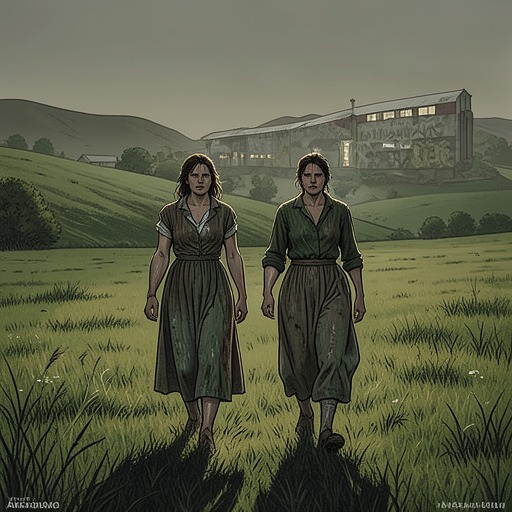
Elsewhere, Amanda’s account returns to the instant she identifies as the beginning. She tests whether Nina’s clothes are wet, then tells her the moisture is dew and will dry as they walk. The exchange is immediately followed by the declaration that this is the moment and that this is how it starts. The contrast between an ordinary explanation and the narrator’s insistence on a consequential beginning gives the scene its force. Yet the words do not, on their own, specify exactly what enters Nina’s body or prove the mechanism of exposure; they register the moment as decisive within the effort to reconstruct events.
Symptoms, Repetition, and Recognition
As Amanda drives, glare from the asphalt and pipes along the boulevard troubles her eyes. She lowers the visor and searches the glove compartment for sunglasses, while describing the difficulty of driving and the stinging sensation in her body. She asks whether the feeling is worms. The answer confirms the comparison, describing it as minuscule worms across the body, and links the scene to the danger that Nina will soon be alone in the car. Amanda fears that this may be the last time she sees Nina, making the image part of a perception of imminent separation as well as bodily illness.
The motif returns when Amanda gets out of the car and rubs her eyes, still feeling as though something is in them. Asked how she is, she says she feels more normal; then, as the last woman passes, the familiar sensation resurfaces. Her answer that it feels like worms ties the eye irritation back to the earlier bodily description without turning the metaphor into a literal diagnosis. The repetition makes the sensation recognizable even as the account’s chronology and the precise circumstances of exposure remain difficult to hold together.
The novel also places a direct account of poisoning beside a mistaken medical explanation. Amanda says that she and Nina are poisoned, while the woman from the emergency room gives them medication for sunstroke. That mismatch sharpens the gap between what the characters understand about their condition and the treatment they receive. Together with the earlier fear over David and the stream, these scenes make the worms an organizing image for a danger that is felt in bodies, suspected in the environment, and repeatedly reconstructed rather than resolved by a single clear explanation.
Narrative Function
Worms bind otherwise separate moments: a boy’s cryptic words, Carla’s memory of David at the stream, the arrival of plastic drums, and Amanda’s recurring physical sensations. The image keeps the plot’s central inquiry active—when did the poison enter the story, and how can that moment be recognized?—while distinguishing what the characters feel from what they can establish about cause. Its recurrence turns the search for the origin of contamination into a structural refrain: each apparent answer brings the reader back to the body, the environment, and the uneasy need to begin again.