Aegon III Assumes Personal Rule
Fire & BloodAegon III Assumes Personal Rule marks the end of the regency and the beginning of Aegon III’s rule in his own right. On his sixteenth nameday, as his advisers debated a year-long Royal progress designed to present him to his subjects, the young king entered the council chamber and took the chair at the head of the table. He dismissed the regents, rejected the journey and its accompanying festivities, and sent his Hand, Torrhen Manderly, back to White Harbor. The change in government was decisive, but not conciliatory: within moments, Aegon had turned one of his most devoted servants into an enemy.
The planned progress
The proposal began with Manderly, who believed that peace and spring offered an opportunity for the king to be seen across the realm as he came of age. Aegon, he reasoned, was tall and comely, while Queen Daenaera Velaryon could bring the warmth that the solemn king lacked. A public visit, in Manderly’s view, would help the people know their ruler and encourage their affection for him. The regents agreed, and the planned journey was to last a full year, carrying the royal couple to lands that had never before received a king.
The itinerary was ambitious. From King’s Landing the party would travel to Duskendale and Maidenpool, then sail to Gulltown and visit the Eyrie. From there they would go north, stopping at the Three Sisters and White Harbor before continuing to Winterfell, with a possible visit to the Wall. The return south was to take them along the kingsroad to the Neck, through the Twins and Riverrun, and westward to Casterly Rock. Manderly also proposed visits to both the Blackwoods and the Brackens, whose rivalry made equal attention politically important. The journey was conceived not simply as a celebration but as a way to make royal presence felt across the kingdom.
Preparations had already absorbed the Hand and the regents. Lists of lords and knights wishing to accompany the king were repeatedly drawn up and revised; horses, armor, wagons, wheelhouses, and banners were readied, while ravens carried requests for royal visits throughout the Seven Kingdoms. The question of who would travel with the party was unsettled: Rhaena’s wish to accompany it on her dragon was politely deflected, while Baela declared she would come whether invited or not. Even the couple’s clothes were arranged to display the realm’s opposing colors: when Daenaera wore green, Aegon would wear his customary black; when she wore Targaryen red and black, he would don a green cloak.
The council confrontation
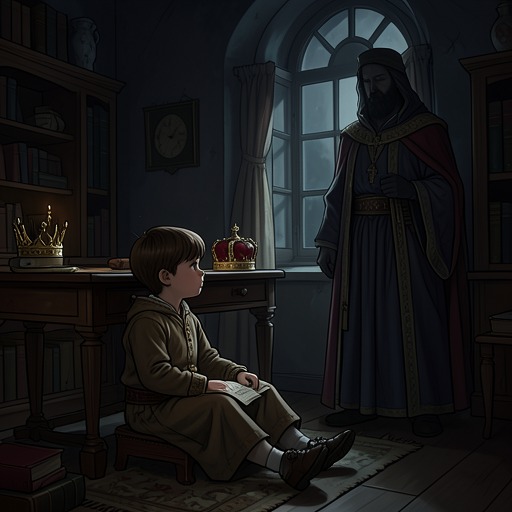
Aegon’s nameday was meant to culminate in a great feast in the throne room, with the ancient Guild of Alchemists promising displays of pyromancy. But while it was still morning, the king entered the council chamber where Manderly and the regents were debating whether Tumbleton should be included in the journey. Four Kingsguard accompanied him, as did Sandoq the Shadow, veiled and silent with his great sword. His presence unsettled the gathering; even Manderly, a large and forceful man, briefly lost his tongue.
Aegon asked Manderly how old he was. When the Hand answered that the king was sixteen that day and a man grown, Aegon replied, “I shall. You are sitting in my chair.” Manderly rose, trying to return the discussion to the progress. Aegon instead declared, “There will be no progress,” explaining that he would not spend a year on horseback, sleeping in unfamiliar beds and exchanging courtesies with lords whom he suspected might welcome his death for profit. Anyone seeking an audience, he said, could find him on the Iron Throne.
The setting made the transfer of authority visible. The council had been planning Aegon’s movements and public image; now the king occupied the chair from which they had governed and made their plans subject to his decision. The account records that the coldness of his tone shocked the men present. Manderly nevertheless persisted, arguing that the tour would win the smallfolk’s love. Aegon answered that he intended to give them peace, food, and justice, and proposed that the feast be halted, the lords sent home, and its food given to the hungry. His answer rejected not only the proposed journey but also the idea that public display and courtly hospitality should be the means by which he earned popular affection.
The dismissal of the regents and Hand
Aegon then turned from the cancelled plans to the government itself. He thanked the three regents for their service and declared that he had no further need of them. When Manderly asked whether the king would still need a Hand, Aegon said that a king should choose his own. He acknowledged that Manderly had served him well, including in the service of his mother, but pointed out that it had been the lords, rather than Aegon himself, who selected him. He instructed Manderly to return to White Harbor.
Manderly accepted the dismissal, though not in a spirit of reconciliation. He removed his chain of office and set it on the council table, then complained that he had not drunk decent ale since arriving at the castle. Less than a fortnight later, he sailed north with a small party of sworn swords and servants. Mushroom, who had grown fond of the older man, chose to accompany him rather than remain at court. The ship was called the Jolly Salt, but Manderly’s mood was anything but jolly: he resented the king’s brusque treatment and regarded the destruction of the progress as a humiliating personal affront.
The beginning of personal rule
The event brings a long-prepared public celebration to an abrupt stop and replaces the regents’ authority with the king’s own. Aegon’s coming of age had been framed as an occasion for travel, ceremony, and carefully coordinated appearances; he instead made it a moment of refusal. He would not let the regents determine how he met the realm, and he would not retain a Hand chosen by others simply because that man had served him before. His stated priorities—peace, food, and justice—set a practical standard against the proposed spectacle, although the account does not describe the policies by which he would achieve them.
That assertion of independence carried an immediate cost. Manderly had been an active supporter of the journey and a devoted servant, yet Aegon’s dismissal and the manner in which it was delivered turned their relationship into a lasting grievance. The regency therefore ended not with a gradual easing of its influence, but in a single council encounter that exposed the king’s authority and its capacity to estrange those who had exercised power on his behalf. The account marks this transition as the start of the rule of the Broken King: the regents’ government ended, and Aegon’s personal reign began.