Aegon III's wedding and coronation
Fire & BloodAegon III's wedding and coronation united a royal marriage with the transfer of power to a child king: Aegon married Jaehaera, then took the crown and named those who would govern and protect him until he came of age. Held in 131 AC amid the unsettled aftermath of the Dance of the Dragons, the ceremonies offered a public image of dynastic reunion while their arrangements exposed the political compromises beneath it.
Setting and date
With the Dragonpit still largely in ruins, the wedding could not be staged beneath its dome. Instead, it took place outdoors atop Visenya’s Hill, where towering grandstands gave the nobility a clear view. The date was the seventh day of the seventh moon of 131 AC, regarded as auspicious; Septon Eustace recorded that the day was cold but sunny. The High Septon of Oldtown performed the marriage rites himself.
The gathering filled King’s Landing. Visitors had arrived from across the realm and from across the narrow sea, and inns and stables were full; a sprawling encampment outside the walls housed those who could find no room within the city. The crowd included people who had fought on opposite sides only a year earlier. Despite the tense, forced fellowship, street violence was limited: three men were killed. The account suggests that exhaustion with war may have helped keep the peace.
The marriage and coronation
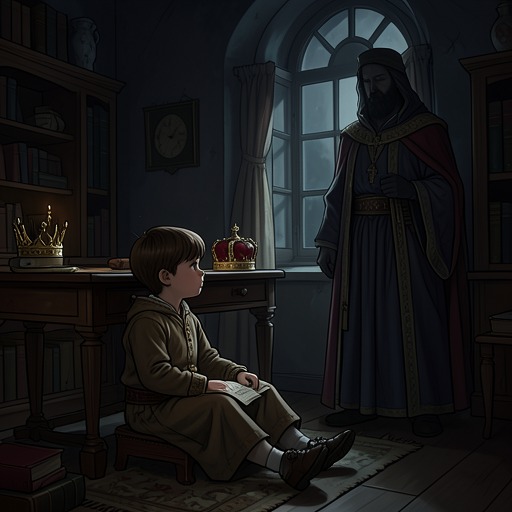
After the wedding, Aegon and Jaehaera were carried in an open litter through streets packed with cheering spectators and up to the Red Keep. There Aegon was crowned Aegon of House Targaryen, the Third of His Name, King of the Andals, the Rhoynar, and the First Men, and Lord of the Seven Kingdoms. His crown was a simple, unadorned circlet of yellow gold. Aegon then placed a crown on Jaehaera’s head, making the child bride queen as well as his wife.
The ceremony joined two children whose families had belonged to the opposing factions in the civil war. Its dynastic promise was conspicuous, but the new king’s youth sharply limited what the marriage and coronation could accomplish by themselves. Aegon was only ten, and his first act as king was therefore to appoint the people who would defend him and rule in his stead until he came of age.
A spectacle marked by absence
The wedding was described as the grandest spectacle the Seven Kingdoms had seen since Aegon II’s coronation in the Dragonpit. Yet the comparison also emphasized what the new reign lacked. There were no dragons, no flight around the city walls, and no dramatic arrival at the castle. The Dragonpit’s ruined state was a practical reason for holding the wedding elsewhere; the absence of dragons also marked a stark contrast with earlier Targaryen ceremonies, in which dragons had made royal power visible in the sky and over the crowd.
Another absence drew notice: Alicent Hightower, Jaehaera’s grandmother and the Dowager Queen, was not present. The account does not explain why. Her absence stands against the image of familial reconciliation projected by the marriage, leaving a visible gap in a ceremony meant to bind the royal house together.
The regency and its compromises
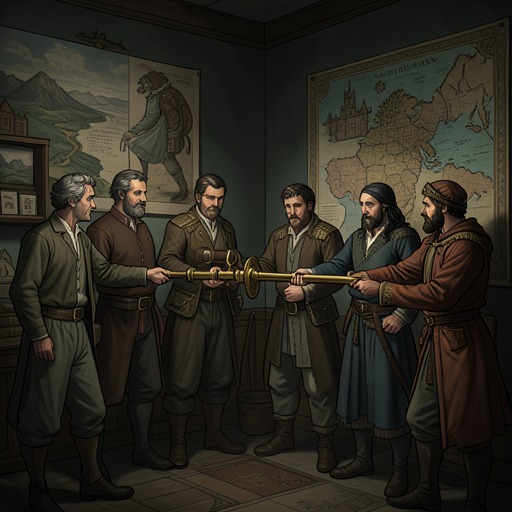
Aegon’s appointments combined former opponents in the institutions that would govern the realm. Ser Willis Fell, the sole survivor of Viserys’s Kingsguard, became Lord Commander of the Kingsguard, with Ser Marston Waters as his second; the remaining places were filled by men from the other faction. Tyland Lannister, recently returned from Myr, became Hand of the King, while Leowyn Corbray was named Protector of the Realm. The king’s regency council included Jeyne Arryn, Corlys Velaryon, Roland Westerling, Royce Caron, Manfryd Mooton, Torrhen Manderly, and Grand Maester Munkun, newly chosen by the Citadel.
The settlement was not inclusive of every prominent figure. Cregan Stark was reportedly offered a place among the regents but refused, while Unwin Peake and several other notable lords and leaders were omitted. Septon Eustace reports that Peake alone was truly angered by his exclusion. Thus the day concluded not with the young king governing independently, but with a negotiated distribution of authority. The marriage supplied a symbol of unity; the regency appointments determined how that unity would be managed.