Aegon Targaryen the Younger
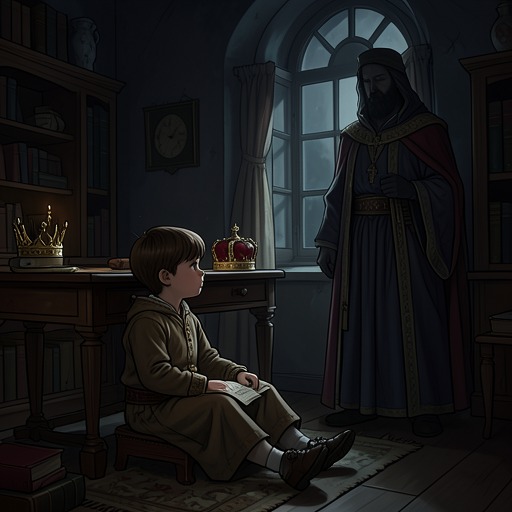
Fire & BloodAegon Targaryen the Younger is the son of Rhaenyra Targaryen and Daemon Targaryen whose childhood passage to safety was overtaken by the war around him. At nine years old, he was sent across the narrow sea with his brother Viserys Targaryen, but the ship carrying them was captured by the Triarchy. Aegon reached Dragonstone on Stormcloud, his young dragon, which died soon afterward. The escape saved the boy but ended his brief prospect of flight: he had never ridden before, and would never ride again.
Identity and Place in the Succession
The chronicles distinguish him from the other prince named Aegon by calling Rhaenyra’s son Aegon the Younger and Queen Alicent’s son Aegon the Elder. This naming matters in a conflict fought over rival claims to the Iron Throne: Aegon the Younger belongs to Rhaenyra’s branch of House Targaryen, while the other Aegon is her opponent’s son. The distinction is not merely a convenience for the histories. It locates the child within the succession struggle that made even a journey to fosterage a matter of war and security.
His place in that struggle was shaped by his parents’ position. Rhaenyra was contesting the crown, and Daemon’s earlier visits had made friends for him in Pentos. When Jacaerys Velaryon sought a safe home for his young half-brothers, he approached the prince of that city, who agreed to foster Aegon and Viserys until Rhaenyra had secured the throne. The arrangement depended on political connections reaching across the narrow sea; it was intended to remove the children from danger without severing them from their mother’s cause.
The Voyage to Pentos
In the waning days of 129 AC, the two boys boarded the cog Gay Abandon. Aegon went with Stormcloud, while Viserys carried his dragon’s egg. The Sea Snake sent seven warships as an escort, a substantial protection for a passage that nonetheless carried the princes directly into the Triarchy’s attack. Their departure therefore held two meanings: it was a family’s attempt to protect its children, and a strategic movement through waters contested by the forces opposing Rhaenyra.
The danger materialized when the Triarchy’s fleet swept into the Gullet. The escorting ships were sunk or captured, and Gay Abandon was taken. The capture separated the brothers and turned a planned fostering into a crisis. Viserys could not escape the ship; Aegon’s survival depended on Stormcloud, a dragon he had not yet ridden. The boy’s first flight was thus not a chosen step toward power or adventure, but an emergency escape from a captured vessel.
Escape and Loss
Aegon arrived at Dragonstone clinging to Stormcloud. The dragon had been gravely wounded while carrying him away, and died within the hour. The account emphasizes the cost of the escape without making it a victory: Aegon returned alive, but his dragon did not. His first experience in the air was also his last, leaving him without the means of flight that marked so many members of his family and mattered so greatly in a war fought by dragonriders.
The episode also exposed the limits of the plans made for his safety. The prince of Pentos had agreed to shelter the boys, and seven ships had been assigned to guard their passage, yet neither diplomatic hospitality nor naval escort could guarantee their arrival. Aegon’s escape was a narrow exception to the capture of the ship, not evidence that the danger had passed. Viserys remained a prisoner, while Aegon returned to the island from which the brothers had been sent away.
Return to Rhaenyra’s Court
After Rhaenyra possessed King’s Landing, the city, and the Iron Throne, and felt secure enough to summon her sons, ships sailed from Dragonstone carrying Aegon the Younger and members of her household. She made him her cupbearer so that he would remain near her. The position placed the child within the queen’s immediate court and gave his return a different character from the failed passage to Pentos: he was no longer being sent away for protection, but brought close to his mother as she established her rule.
That closeness did not undo what the voyage had taken. Aegon was again beside Rhaenyra, but Stormcloud was dead, and the boy who had fled the captured cog would not fly again. His path through these events is defined less by independent action than by the decisions adults made around him—fostering him abroad, escorting him through a contested sea, and then keeping him at the queen’s side. The contrast between those arrangements gives his brief account its particular weight: in a dynasty whose power was bound to dragons, a child could survive the crossing only through a dragon’s sacrifice, and return to court without the mount that had carried him there.