Alysanne Targaryen
Fire & BloodAlysanne Targaryen, remembered as the Good Queen, helped make Jaehaerys I’s long reign more than a matter of royal command: she connected the Crown to women and communities often left outside its formal councils, and her influence helped turn attention into policy. A skilled political listener and marriage broker, she also became a forceful critic when her husband’s decisions threatened their daughters or passed over a woman in the succession. Her public authority grew through counsel, travel, and personal commitment, while loss and disagreement increasingly shaped her private life.
Identity and Early Life
Alysanne was the daughter of Aenys I and Alyssa Targaryen and the younger sister of Jaehaerys. Born in 36 AC, she was the couple’s fourth child and third son’s younger sister; her arrival followed the births of Viserys and Jaehaerys. Princess Rhaena was said to have placed a dragon egg in Alysanne’s cradle, as she had done for Jaehaerys two years earlier. The stories held that the eggs became Silverwing and Vermithor, dragons whose names would remain closely connected to the royal family’s history.
Alysanne was five when Aenys died. She attended his funeral on Dragonstone with her brothers Viserys, then twelve, and Jaehaerys, then seven. Their mother, Alyssa, sang a dirge, and Aenys’s dragon Quicksilver lit the pyre; Vermithor and Silverwing were also recorded as adding their fire. The children’s early lives thus unfolded amid both the ceremony of Targaryen rule and the instability of a royal family losing its king.
Marriage and Partnership with Jaehaerys
At the wedding festivities in King’s Landing, Alysanne had only recently turned thirteen. With Queen Regent Alyssa occupied by preparations and Rhaena absent, Alysanne hosted the wives, daughters, and sisters of the visiting lords. For seven days and nights she moved among different groups of noblewomen, showing them the Red Keep, sailing on Blackwater Bay, and riding through the city. The account presents this early public role as a test she met with remarkable competence.
When Alysanne learned she was to marry Jaehaerys, a youth ten years her senior whom she scarcely knew and was rumored not to like, the record preserves no account of what she thought. It records instead that she went directly to him. After their wedding, Jaehaerys and Alysanne shut the castle gates and made Dragonstone their refuge during his minority. They were seldom apart: they shared meals, talked late into the night about their childhood and the challenges ahead, fished and hawked, visited dockside inns, read together, and studied with Dragonstone’s maesters. They prayed with Septon Oswyck and flew around the Dragonmont, at times as far as Driftmark. Their partnership was both personal and practical, founded in daily companionship as well as shared responsibilities.
When Jaehaerys began to rule, Alysanne attended the small council. Some councillors initially objected privately, but her learning, judgment, and intelligence soon made her a welcome participant. She had no formal authority to enact laws, issue decrees, or pass sentences; her power lay in the influence she exercised over the king. The distinction mattered: what became known as her laws depended on persuasion and royal action, not on a separate legal office held by the queen.
Counsel, Alliances, and Public Work
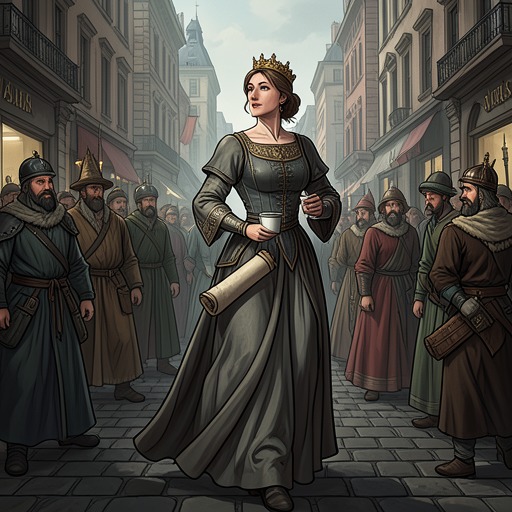
Alysanne’s political influence extended beyond the council chamber. Jaehaerys wanted her beside him on his first royal progress, though her pregnancy made him cautious about the demands of travel. They began at Stokeworth and Rosby, then continued north along the coast to Duskendale. While the king visited Lord Darklyn’s boatyards and went fishing, Alysanne held the first of her women’s courts. These audiences welcomed women and girls of every rank, who could bring their fears, concerns, and hopes directly to the queen. The courts became a recurring feature of royal progress, creating a channel for petitions that did not depend on access to the king’s male-dominated council.
That practice carried particular weight on the royal visit to the North. Alysanne convened a women’s court in Theomore Manderly’s own hall, an unprecedented gathering there, attended by more than two hundred women and girls. Her approach was expressed in the principle that a queen must know how to listen. At Castle Black, she listened to the Night’s Watch and addressed the practical problem of maintaining the Nightfort, which was too large, crumbling, and costly to heat. When Lothor Burley explained that the Watch could not afford a replacement, Alysanne pledged her own jewels to pay for a smaller castle farther east. Her intervention joined attention to local needs with a direct commitment of royal resources.
She also used influence to confront customs that harmed women. After hearing of the continued exercise of the lord’s right of the first night, Alysanne urged Jaehaerys and his councillors to end it. She acknowledged that she had known the custom existed in earlier times but had not understood that it endured; hearing of a girl in Mole’s Town had made the matter impossible for her to ignore. Jaehaerys later abolished the privilege. In 52 AC, he also promulgated the Widow’s Law after Alysanne’s advocacy: it protected a surviving widow’s place, income, clothing, and servants, while preventing a man from disinheriting children by an earlier wife in favor of a later wife or her children.
Alysanne’s work in alliance-building reached beyond royal policy toward the great houses. She took pride in arranging marriages and brokered hundreds of unions between lords and ladies from distant parts of the realm, seeking to bind regions together through kinship. That public success did not spare her difficulty within her own family. Finding matches for her four younger children—Vaegon, Daella, Saera, and Viserra—became a prolonged struggle. It brought conflict with the children, especially her daughters, widened the distance between Alysanne and Jaehaerys, and caused her such grief that she considered leaving her marriage to spend the rest of her life with the Silent Sisters.
Family Grief and Estrangement
Daella’s death marked a painful turning point. Alysanne blamed herself, Lord Arryn, and the Eyrie’s maester, but above all she blamed Jaehaerys for insisting that Daella marry and choose a husband by the end of the year. Alysanne argued that her daughter had not been old or strong enough to bear a child and that the family should not have pressed her into marriage. The episode turned disagreement over her children’s futures into a deeper rupture between the king and queen.
The losses accumulated. Maegelle, a septa, stayed with her mother for the remainder of one year, and the shy seven-year-old Gael became Alysanne’s constant companion, even sharing her bed at night. Alysanne also secretly disobeyed Jaehaerys’s order against keeping watch on Saera, engaging agents to report on her daughter across the Narrow Sea. Their accounts placed Saera in Lys, still at a pleasure garden and attracting admirers while dressed as a novice of the Faith. Alysanne’s concern persisted despite the estrangement and the king’s prohibition.
In the dispute over the succession after Aemon’s death, Alysanne opposed Jaehaerys’s decision to grant Dragonstone to their son Baelon. Aemon’s daughter Rhaenys was an adult, married to Corlys Velaryon, and pregnant when her father died; naming Baelon passed over both her and, possibly, her unborn son. Alysanne challenged the idea that a woman’s sex made her unfit to rule, telling Jaehaerys that a ruler needed a good head and a true heart, not a male body. She left King’s Landing on Silverwing and flew to Dragonstone. The king and queen remained apart for two years, an estrangement recorded as the Second Quarrel. Her departure made visible the personal cost of a succession choice that contradicted her convictions.
Final Years and Legacy
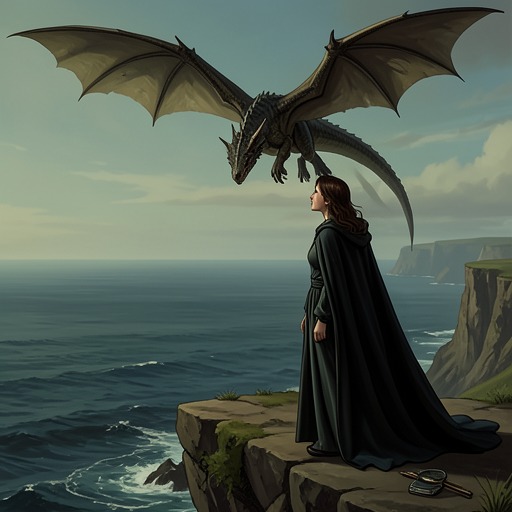
Alysanne’s last decade brought further bereavement and physical decline. After Aemon’s death she grew thin and frail, worn by childbirth, travel, and grief. In 95 AC she fell on the serpentine steps and broke her hip; afterward she walked with a cane. Her hearing weakened until she could no longer follow much of what was said at council, and she became too unsteady to fly. Silverwing’s last flight with her had taken place in 93 AC; when Alysanne climbed down from the dragon, she wept. The loss of flight marked not only a physical limit but the end of an activity that had long joined her to the royal family’s dragons and to the journeys she had shared with Jaehaerys.
Alysanne died on Dragonstone on the first day of the seventh moon in 100 AC, aged sixty-four, a century after Aegon’s Conquest. In her final days she reflected on the deaths of her children, writing that the Mother Above must have loved them more than any mother could, since she had taken so many away. Her legacy rests in the contrast between influence and formal power: she could not legislate in her own name, yet her listening, counsel, journeys, and advocacy helped bring women’s petitions and protections into the work of the Crown. Her life also shows the limits of that influence. She could persuade a king and shape a realm’s policies, but she could not prevent family losses or keep political disagreement from dividing her marriage.