Assembly of Lords of 136 AC
Fire & BloodThe Assembly of Lords of 136 AC was a major gathering convened to settle who would govern for the underage Aegon III. It exposed how difficult it was to rebuild royal administration after the Dance: the assembled nobles could not agree on regents, so they resorted to drawing lots, while their choice of Hand balanced political acceptability against practical demands. Though it was never formally constituted as a Great Council, the assembly became the largest gathering of nobles in the Seven Kingdoms since 101 AC.
The summons and gathering
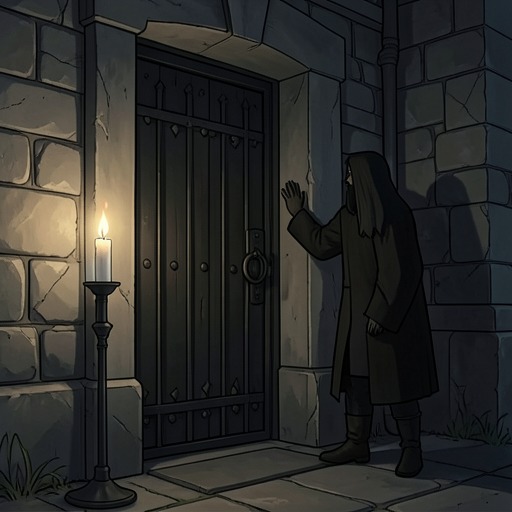
The assembly followed the collapse of Thaddeus Rowan’s position as Hand. After a moon’s turn brought little improvement in Rowan’s condition, Grand Maester Munkun persuaded Aegon III to relieve him. Rowan left for Goldengrove intending to return when his health recovered, but died on the road with two of his sons. Munkun then served as both regent and Hand for the remainder of the year. Because the accused conspirators were high lords and anointed knights, he did not consider it his place as a maester to judge them; they remained imprisoned while the realm awaited a new Hand.
As the old year gave way to the new, lords answered the king’s summons to King’s Landing. The gathering was not a Great Council in name or formal constitution, but its scale recalled the assembly at Harrenhal in 101 AC. The capital filled with visitors, bringing business to its innkeepers, merchants, and sex workers. The crowd was politically broad but unevenly represented: most attendees came from the crownlands, riverlands, stormlands, and Vale. Johanna Lannister sent a cousin and three bannermen for the west; Torrhen Manderly sailed from White Harbor with forty knights and cousins; and Lyonel Hightower and Samantha Hightower arrived from Oldtown with six hundred followers.
The Vale’s representation reflected a recent change in its politics. Oakenfist and Bloody Ben Blackwood had compelled the Gilded Falcon, the Mad Heir, the Bronze Giant, and their supporters to submit to Joffrey Arryn as their liege. Isembard Arryn and other Vale figures therefore attended with Oakenfist, alongside Joffrey himself. Unwin Peake brought the largest retinue: a thousand of his own men and five hundred sellswords. His display of force stood out at a gathering ostensibly called to restore stable government.
Deadlock over the regency
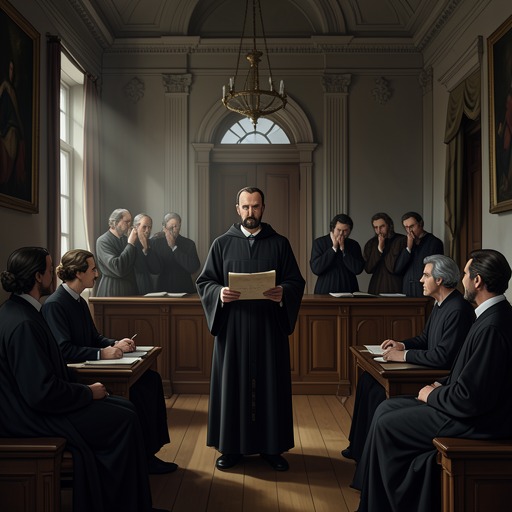
The lords met beneath the empty Iron Throne, but Aegon did not attend. Their task was to select new regents to rule until he came of age. More than a fortnight of discussion produced no agreement. Disputes over candidates reopened old grievances, and the wounds left by the Dance had not healed: powerful lords had accumulated too many enemies, while lesser houses were dismissed as poor or weak. The assembly’s scale had brought many interests into one place, but it had not made those interests easier to reconcile.
With agreement out of reach, Munkun proposed that three regents be chosen by lot. Prince Viserys added his support, and the proposal was adopted. The lots fell to Willam Stackspear, Marq Merryweather, and Lorent Grandison, men described as unremarkable and unlikely to provoke strong opposition. Their selection was therefore less a triumph for any faction than a way to break the deadlock without awarding the regency outright to one of the competing powers.
Selecting the Hand and distributing offices
The choice of Hand mattered too much for the lords to leave it to the new regents. Some, chiefly from the Reach, urged Unwin Peake’s return to the office, but Prince Viserys opposed that choice, arguing that his brother would prefer a younger man less likely to fill the court with traitors. Alyn Velaryon was considered too young, as were Kermit Tully and Benjicot Blackwood. The assembly instead chose Torrhen Manderly, Lord of White Harbor, whose relative unfamiliarity to the southern lords meant he had few enemies south of the Neck. Unwin Peake was a notable exception, with a long memory of past slights.
Manderly accepted the office but made clear that managing the Crown’s money would require expertise. He asked for someone capable of dealing with Lyseni creditors and their bank. Oakenfist then proposed Isembard Arryn, the Gilded Falcon of the Vale, for that financial role. The choice linked the new Hand to a trusted administrator while bringing a prominent Vale figure into the government. To appease Peake and his supporters, Gedmund Peake the Great-Axe was named lord admiral and master of ships. Oakenfist reportedly welcomed the appointment, distinguishing Peake’s willingness to pay for ships from his own preference for sailing them.
The assembly also filled two security posts. Ser Raynard Ruskyn became Lord Commander of the Kingsguard, and Ser Adrian Thorne was chosen to command the gold cloaks. Thorne’s appointment carried particular significance: he had been captain of the Lion Gate and was the only one of Lucas Leygood’s seven captains not accused of involvement in the conspiracy.
Ratification and aftermath
The settlement still required the king’s seal. Aegon III approved it the following morning without objection, then withdrew again to his chambers. The assembly had supplied the realm with regents, a Hand, a financial administrator, and commanders for the royal guard and city watch, but its decisions did not immediately draw the young king into public government.
Torrhen Manderly’s first task as Hand was to preside over the trials of those accused of poisoning Gaemon Palehair and plotting treason against the king. Forty-two people had been accused; by the time the trials began, sixteen had fled and eight had died, leaving eighteen to face judgment. The proceedings lasted thirty-three days. Viserys attended throughout, while Aegon came only on three days when sentences were pronounced and showed little interest in the other cases. Thus the assembly’s practical consequence was not simply a new set of offices: it put the stalled prosecution of the conspiracy into the hands of a new government, even as the king remained withdrawn from the work of rule.