Baela Targaryen
Fire & BloodBaela Targaryen, twin daughter of Daemon Targaryen and Laena Velaryon, stands out among the royal generation for treating freedom as something to practice, not merely claim. A dragonrider, an adventurer, and a conspicuous presence at court, she repeatedly defied those who tried to contain her. The death of her dragon Moondancer did not end that pattern: Baela survived the encounter that killed the young dragon, intervened in the fates of men around her, and ultimately chose her own husband despite the regents’ objections.
Identity and Family
Baela was born in Pentos in 116 AC, the first of Daemon and Laena’s trueborn children. She and her twin sister, Rhaena Targaryen, were small and sickly as infants, but grew stronger before travelling with their mother to Driftmark. Their names linked them to their parents: Baela was named for her father, while Rhaena was named for her mother. Both girls had silver-white hair and purple eyes, and their birth joined two generations of Targaryen family ties to the Velaryons.
The twins grew up amid the close connections between Dragonstone and Driftmark. Their parents often visited Princess Rhaenyra Targaryen, who became fond of Laena, and the women sometimes flew together on their dragons. In 118 AC, Rhaenyra betrothed her eldest sons, Jacaerys Velaryon and Lucerys Velaryon, to Baela and Rhaena. The children were very young: Jacaerys was four, Lucerys three, and the twins two. The betrothal placed Baela within Rhaenyra’s family and political circle, although it did not determine the course of her later relationships.
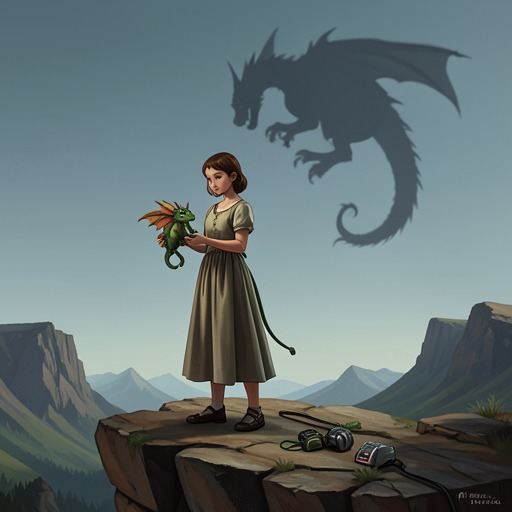
Baela’s connection to dragons was central to her life. Her slender, pale-green dragon, Moondancer, was still too small to carry her when Baela insisted she would fight beside Jacaerys. Later, after she had begun riding Moondancer, flying became the activity she loved above all others. The dragon was not simply a royal possession or a means of war: Baela’s repeated flights, and her grief-struck presence at Moondancer’s death, make the bond a defining part of her story.
A Fearless Life on Dragonstone
At fourteen, Baela was described as wild and willful, more boyish than ladylike, and very much her father’s daughter. She was short and slim, but the accounts emphasize that she knew little fear and loved dancing, hawking, and riding. As a younger girl she had been reprimanded for wrestling with squires. Later, her daring behaviour around boys and servants troubled the adults responsible for her. When a kitchen scullion crossed a boundary with her, Ser Robert ordered severe punishment for him; Baela’s tearful appeal persuaded him to spare the boy.
Her appetite for risk was not limited to the castle yard. Once she had learned to ride Moondancer, she flew every day, ranging across Dragonstone and over the sea to Driftmark. When rumours and uncertainty arose about events beyond the mountain, Baela proposed investigating for herself. She argued that Moondancer’s youth and speed would let her outfly the Cannibal, but Ser Robert forbade the attempt and ordered the garrison to keep her within the castle. Baela tried to disobey that very night and was confined to her chambers. The episode captures the conflict that recurs throughout her life: those around her see danger and impose limits; she sees a reason to go and tests the limits anyway.
That independence also shaped her relationships. Baela refused to leave Jacaerys during the war and said she would fight beside him, although Moondancer was not yet large enough to bear her. She announced that she wished to marry him at once, but no wedding followed. One account says Jacaerys did not want to marry before the war ended; another claims that he had already married Sara Snow, a mysterious bastard from Winterfell. The record leaves the betrothal’s outcome uncertain, but makes Baela’s loyalty to Jacaerys clear.
Moondancer and the Fall of King Aegon II
After Rhaenyra took King’s Landing, Baela remained on Dragonstone while her twin was in the Vale as a ward of Lady Arryn. Baela’s life there ended in fire and blood when King Aegon II returned to the island. She had been confined, but escaped when men came to take her prisoner: she climbed out of her chamber window, crossed rooftops and walls, and reached the yard before her pursuers. Though the castle’s dragons were guarded, she knew routes through Dragonstone that the newcomers did not. She freed Moondancer and put a saddle on her.
When Aegon flew Sunfyre down over Dragonmont, expecting the castle to be secure, Baela rose to meet him. In the darkness before dawn, Moondancer used her speed to avoid Sunfyre’s attacks and strike at the larger dragon. Sunfyre was badly hurt, but a blast of flame caught Moondancer; the two dragons continued fighting as they fell. Aegon leapt from his saddle before reaching the ground and survived with shattered legs. Baela stayed with Moondancer through the fall, then managed to free herself from the saddle and crawl away. When Alfred Broome moved to kill her, Marston Waters intervened, and Tom Tangletongue carried her to the maester. Moondancer died of her injuries.
Sunfyre died in Dragonstone’s outer yard on the ninth day of the twelfth moon of 130 AC. Aegon, grieving the dragon that had been his glory, ordered Baela brought from the dungeons for execution. He changed his mind only when his maester reminded him that her mother was the daughter of Corlys Velaryon. He then threatened Alyn Velaryon: unless Alyn came within a fortnight to pay homage, Baela would lose her head. Her survival thus became part of the king’s attempt to compel the Velaryons’ submission.
Loyalty, Advocacy, and Marriage
When Corlys Velaryon negotiated with Aegon, he sought pardons for himself and the supporters of Rhaenyra, a marriage between Aegon the Younger and Princess Jaehaera, and Baela’s immediate release. Corlys framed reconciliation as a way to join a realm split by war. Baela’s imprisonment was therefore one of the matters bound up with the settlement, rather than a private concern separate from the politics around her.
Baela later used her own standing to protect others. During the upheavals around Queen Dowager Alicent’s capture, some of the men who had freed Baela from imprisonment were at risk of punishment for killing guards. Baela pleaded for them and declared that she would defend the men who had saved her. Her intervention persuaded Cregan Stark to spare them. The episode echoes her earlier appeal for the kitchen scullion: in both cases, she used her voice to keep another person from suffering a punishment ordered by a powerful authority.
After the war, Baela and Rhaena became the royal family members most visible to the people. King Aegon rarely left the Red Keep, and his young queen stayed in her apartments; the twins rode out to hunt and hawk, gave alms, received envoys and visiting lords, and attended the few feasts. Baela’s fame did not make her more compliant. At sixteen, she was lean and quick beside Rhaena’s slender, graceful manner. She kept her silver hair cropped short for riding and repeatedly slipped away from her ladies. Her escapades included horse races on the Street of the Sisters, swims in the Blackwater Rush, drinking with the gold cloaks, and wagers at the rat pits of Flea Bottom.
The regents concluded that Baela could not be accepted as Aegon’s heir, particularly after she fled the castle and crossed Blackwater Bay to Driftmark. She escaped through a window, changed clothes with a washerwoman, walked out through the front gate, and hired a fisherman to take her across the water. At Driftmark she sought out Alyn Velaryon and told him her troubles. A fortnight later, they married at the sept on Dragonstone: Baela was sixteen and Alyn nearly seventeen. The regents treated the marriage as confirmation of their fears and turned instead to Rhaena as a possible heir, provided she married. Baela’s flight had defeated their immediate control over her, even as it narrowed the succession path they were prepared to support.
A Public Life Beyond the War
Baela’s later life continued to combine family, public duty, and resistance to confinement. She and Alyn had a daughter, whom Baela named Laena after her mother. When the Velaryon fleet sailed on a later campaign, Baela went to Dragonstone to comfort her widowed twin and to ensure that Rhaena did not attempt to avenge her husband herself on Morning. The account also records that Baela and Alyn quarrelled before his voyage over talk concerning Princess Aliandra of Dorne, but reconciled, as they had before. Baela remained on Driftmark, pregnant with their second child.
When plans were made for the king’s nameday and royal progress, Rhaena’s wish to join the journey on her dragon was quietly deflected. Baela, by contrast, declared that she would come whether or not she was wanted. The small act of defiance reprises the pattern established on Dragonstone: royal rank and political expectation could direct Baela’s circumstances, but did not reliably secure her obedience. Her public importance rested not on holding the throne, but on being visible, difficult to control, and willing to act for people she considered her own.