Baelon Targaryen
Fire & BloodBaelon Targaryen, called the Spring Prince and later Baelon the Brave, was the younger brother of Aemon Targaryen and the son of Jaehaerys Targaryen and Alysanne Targaryen. A knight, dragonrider, and able royal Hand, he became his father’s chosen heir after Aemon’s death. Baelon’s sudden death before he could take the Iron Throne reopened the question of succession: the Great Council of 101 AC chose his son Viserys, a decision that established a consequential precedent for the crown.
Birth and Childhood
Baelon was born in 57 AC, two days after white ravens had announced the arrival of spring. He was named for one of the Targaryen lords who had ruled Dragonstone before the Conquest, himself a second son, and was immediately known as the Spring Prince. Smaller than his older brother Aemon at birth, Baelon was nevertheless described as louder and more vigorous; his wet nurses remarked on his powerful appetite.
His sister Daenerys was four years old and Aemon two when Baelon arrived. As the boys grew, Grand Maester Benifer watched their relationship with concern, mindful of the earlier enmity between the sons of Aegon Targaryen. In contrast to that history, Aemon and Baelon became exceptionally close. Once Baelon could walk, he followed Aemon everywhere and imitated him. When Aemon received a wooden sword for his training, Baelon was considered too young to join him, so he made a sword from a stick and charged into the yard anyway. Their master-at-arms laughed at the younger boy’s determination.
Baelon carried his stick-sword even to bed, to the frustration of his mother and her attendants. He was also markedly more at ease around dragons than Aemon. On his first visit to the Dragonpit, he struck Balerion on the snout. The incident earned him a reputation for either bravery or recklessness, and the name Baelon the Brave endured alongside his earlier title.
A Brother’s Companion
As boys, Aemon and Baelon trained together, and their closeness developed into a spirited rivalry. Aemon was taller and stronger; Baelon was quicker and fiercer. Their contests attracted crowds that included household knights, squires, servants, washerwomen, maesters, septons, and stableboys. At Aemon’s investiture as Prince of Dragonstone in 62 AC, the brothers were already regarded as fast friends and evenly matched opponents.
Aemon’s later advancement did not loosen Baelon’s attachment to him. When Aemon became a knight and dragonrider, Baelon followed those milestones at a younger age. In 73 AC, at sixteen, Baelon travelled to Old Oak for seven days of jousting. Disguised as the mystery knight called the Silver Fool, he defeated Lord Rowan, Ser Alyn Ashford, the Fossoway twins, and Ser Denys, Lord Oakheart’s heir, before Ser Rickard Redwyne unmasked and defeated him. Redwyne then knighted him.
Baelon stayed only long enough to attend the feast before hurrying back to King’s Landing to become a dragonrider. He had already chosen Vhagar, who had not been ridden since the death of Queen Visenya twenty-nine years earlier. The great dragon carried him across Blackwater Bay to Dragonstone, where Baelon surprised Aemon and his dragon, Caraxes. His repeated habit of following his brother was more than a courtly joke: their shared training and achievements made their partnership a visible feature of the royal family.
Marriage and Family
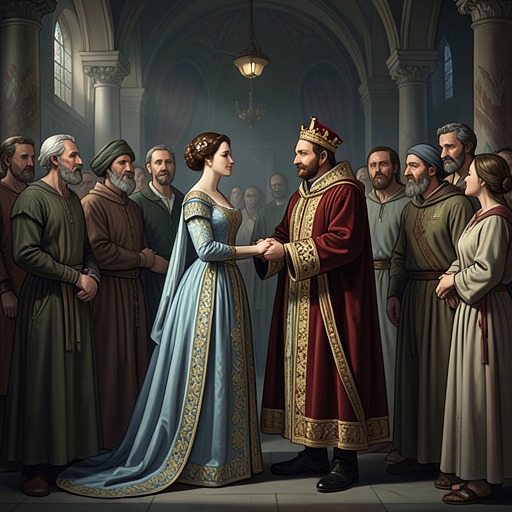
In 75 AC, eighteen-year-old Baelon married his eldest sister, Princess Alyssa, who was fifteen. The marriage joined two Targaryen siblings, and the evidence presents their union as lively and openly affectionate rather than ceremonially distant. Baelon’s family life also made him the father of three sons. Viserys and Daemon were still living when Baelon died; their descent from the king’s younger son would later matter to the dispute over the Iron Throne.
The royal family’s position in the succession appeared secure while Aemon and Baelon both lived. Aemon was the acknowledged heir, while Baelon was his capable younger brother; together they were often described as an heir and a spare. Their rivalry in the training yard did not obscure the affection between them, and the later record of Baelon’s response to Aemon’s death makes clear how central that bond remained to him.
Heir, Hand, and Avenger
In 92 AC, Aemon was killed on Tarth by a crossbow bolt intended for the Evenstar, Lord Cameron. Baelon flew to the island on Vhagar and joined the response against the Myrish forces. The Myrish ships burned, and the forces of Lord Cameron and Lord Boremund Baratheon attacked from the mountains. Baelon took part in the fighting with Dark Sister. When he returned to King’s Landing with Aemon’s body, the crowds hailed him as a hero; in private, he wept in his mother’s arms. The victory could punish the attackers, but it could not restore his brother.
King Jaehaerys named Baelon Prince of Dragonstone and heir to the Iron Throne after Aemon’s death. The choice was popular: the commons loved Baelon, and many lords considered him the obvious successor. In 99 AC, after the death of Septon Barth and a brief, unsuccessful appointment of Ser Ryam Redwyne as Hand, Jaehaerys also made Baelon Hand of the King. Baelon performed the work admirably. Though less scholarly than Barth, he was considered a good judge of men and gathered loyal subordinates and counsellors around him. The realm’s confidence in his future rule rested on both his public service and the regard in which he was held.
Death and Succession
In 101 AC, while hunting in the kingswood, Baelon complained of a stitch in his side. His pain worsened after he returned to the city, and he became bedridden. Grand Maester Runciter eased his fever and suffering, but Baelon’s condition continued to deteriorate. He died on the fifth day of his illness in the Tower of the Hand, with Jaehaerys seated beside him and holding his hand. After examining the body, Runciter recorded the cause of death as a burst belly.
Baelon’s death left the king bereaved and the succession once again without a clear heir. His sons Viserys and Daemon survived him, but the claims of Aemon’s daughter Rhaenys, her daughter Laena, and her son Laenor also entered the debate. Rhaenys was Aemon’s only child and was pregnant when he died; choosing Baelon had already passed over her and, possibly, her unborn child. After Baelon’s death, Jaehaerys called the Great Council of 101 AC. The assembled lords chose Viserys by a reported margin of more than twenty to one. The council’s decision was widely treated as establishing that a woman could not inherit the Iron Throne, nor could a male descendant inherit through a woman. Baelon never ruled, but his death transformed the succession from an apparently settled line into a question whose resolution shaped the monarchy thereafter.