Cregan Stark
Fire & BloodCregan Stark was Lord of Winterfell from the age of thirteen and became one of the defining northern figures of the Dance of the Dragons and its aftermath. His brief appearance in the struggle for the Iron Throne had lasting consequences: he bound the North to Prince Jacaerys Velaryon’s cause, then came south after the war to insist that the killing of King Aegon II be answered as treason. Known in later years as the Old Man of the North, Cregan was a young lord when these choices established his reputation for resolve, stern justice, and loyalty to his promises.
Lord of Winterfell
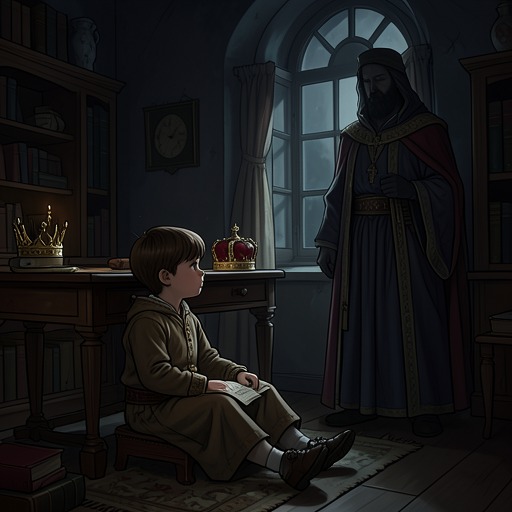
Cregan inherited Winterfell in 121 AC, when he was thirteen and his father, Lord Rickon, died. His uncle Bennard governed as regent during his minority. When Cregan reached sixteen in 124 AC, Bennard did not readily surrender power, and the young lord chafed under his uncle’s continued rule. In 126 AC, Cregan acted decisively: he imprisoned Bennard and Bennard’s three sons and took the government of the North into his own hands.
Soon afterward Cregan married Arra Norrey, a beloved companion since childhood. She died in 128 AC while giving birth to their son and heir, Rickon, named for Cregan’s father. The loss shaped the circumstances in which Jacaerys later found him: a young ruler already responsible for the North and a widowed father preparing his people for winter.
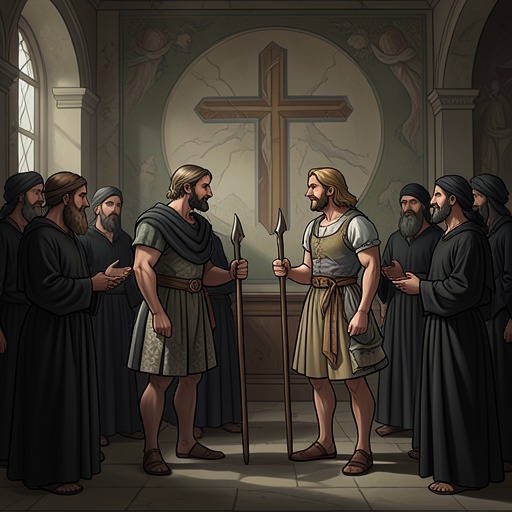
Cregan was twenty-one when Jacaerys arrived at Winterfell in 129 AC. Autumn was advanced; snow lay deep, a cold wind came from the north, and Cregan was occupied with preparations for the coming winter. He nevertheless welcomed the prince warmly. The visit was brief, in part because the cold and snow made Jacaerys’s dragon, Vermax, ill-tempered, but it produced an alliance whose terms reached beyond the immediate war.
The Pact of Ice and Fire
Accounts differ about the personal character of Cregan and Jacaerys’s meeting. Munkun’s True Telling says they took to one another because Jacaerys reminded Cregan of a younger brother who had died. They drank, hunted, and trained together, then swore brotherhood in a blood-sealed oath. Septon Eustace instead describes a visit during which Jacaerys tried to persuade Cregan to abandon the old gods and accept the Seven. The chronicler’s account of their friendship offers a different picture from Eustace’s religious dispute, but both place the prince at Winterfell seeking Cregan’s allegiance.
Mushroom adds a much more sensational story involving Sara Snow, described as a bastard daughter of Cregan’s late father. According to this account, Jacaerys took Sara as his wife in Winterfell’s godswood before a heart tree, and Cregan’s anger eased after hearing that vows had been exchanged. The history rejects the marriage story as implausible: Jacaerys had long been betrothed to his cousin Baela, and a secret northern marriage would have broken that solemn agreement. Whether Sara existed and whether the prince had an affair cannot be established from the competing accounts. The story is therefore distinct from the documented political compact and should not be treated as its basis.
The agreement itself, called the Pact of Ice and Fire by Grand Maester Munkun, was to be sealed by a future marriage between the houses. Cregan’s son Rickon was then a year old. Jacaerys was unmarried and childless, but it was expected that he would have children once his mother took the Iron Throne. Under the pact, Jacaerys’s firstborn daughter would be sent north at seven to be fostered at Winterfell until she was old enough to marry Cregan’s heir. When Jacaerys departed, he had secured Cregan and the North for his mother’s cause. The pact outlasted the immediate negotiations as a promise Cregan would later come south to honor, even though Jacaerys and his mother were dead.
The march south and the demand for justice
During the final phase of the war, Cregan led a large northern host south through the Neck toward King’s Landing. The chroniclers disagree about its size: Septon Eustace gives twenty thousand, while Munkun records eight thousand. By the time Cregan arrived, the city had briefly celebrated the prospect of peace after Aegon II’s death. That interval, later called the False Dawn, ended when the northmen appeared. Their numbers and fearsome reputation unsettled the city, while Cregan’s age and authority impressed the younger riverlords who had helped bring the war to a close.
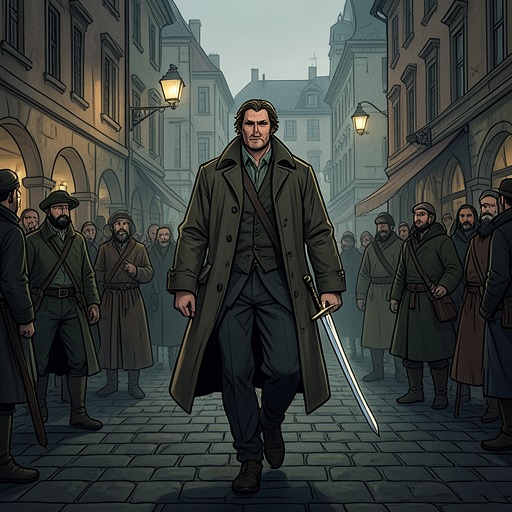
Cregan came to fulfill his pledge to Jacaerys, but his purpose was not limited to confirming an alliance. When Lord Corlys Velaryon welcomed him with the news that the war was over and the king was dead, Cregan challenged the circumstances of Aegon’s death. He suspected that Corlys, who had served Rhaenyra as Hand and later sat on Aegon’s council, had helped poison the king. Cregan accused him of taking part in regicide and ordered his arrest. His men entered the council chambers, disarmed the guards, and dragged the aged Sea Snake to the dungeons; Larys Strong, Grand Maester Orwyle, Ser Perkin the Flea, Septon Eustace, and many others were also detained.
Cregan’s severity extended to the political settlement. He argued that the war could not be considered finished while the defeated had not submitted and the principal strongholds of Aegon II’s supporters remained beyond the new regime’s control. He proposed continuing the campaign against Storm’s End, Oldtown, and Casterly Rock, and rejected Corlys’s appeal to grant terms to the boys and infants who had inherited those seats. For Cregan, leaving former enemies in place risked renewed vengeance; for Corlys, further war would only extend a conflict that had already consumed too many lives. Cregan also rejected the claim that the riverlords’ victory had settled matters, pointing to the possibility that envoys sent across the narrow sea might return with sellswords.
The dispute exposed a larger divide. Cregan saw the war’s end as contingent on securing the realm against another challenge; Corlys and the Lads favored peace and reconciliation. Cregan’s accusation that Corlys had poisoned Aegon transformed that political disagreement into a demand for accountability. The accusation was not merely rhetoric: Cregan treated the king’s death as high treason and insisted that those responsible could not escape punishment because the fighting had stopped.
The Judgment of the Wolf
As Hand of the Uncrowned King, Cregan received the authority needed to judge suspected participants in Aegon II’s murder, since one lord had no right to execute another lord. He did not claim the Iron Throne or sit upon it during the proceedings. Instead, he held court on a plain wooden bench beneath it, hearing the accused one by one while the other leaders stood aside.
Septon Eustace was released for lack of proof. Orwyle, by contrast, had confessed under torture to delivering poison to Larys Strong; Cregan found him complicit, reasoning that Orwyle had chosen not to ask what the poison was for. Ser Gyles Belgrave was condemned for either placing the poison in the king’s wine or allowing the crime through negligence or deliberate ignorance. Three Kingsguard who had been present when Aegon died were also sentenced, although their role in the plot could not be proved; the Kingsguard absent from the city were judged innocent.
Cregan’s judgments reached beyond the leading conspirators. Twenty-two lesser figures were found to have played a part in the murder, among them Aegon’s litter-bearers, herald, wine-cellar keeper, and the servant responsible for keeping the king’s flagon full. The men who killed the king’s food taster and those responsible for the deaths of Tom Tangletongue and his father were also condemned. Many were gutter knights, sellswords, or masterless men-at-arms, and several claimed they had acted on Ser Perkin’s orders. Cregan rejected Perkin’s appeal to an earlier pardon, citing the squire’s shifts of allegiance and role in helping drive Rhaenyra from the city.
Not every prisoner received the same sentence. Lady Baela’s plea saved the men who had freed her from imprisonment, though they had killed guards in the process. Cregan had condemned the men who seized Dowager Queen Alicent and killed her guards, but allowed Baela to protect her rescuers. His willingness to make that exception complicates the image of a judge unmoved by all appeals: he could be inflexible about the king’s murder and still respond to a direct plea from someone whose life the accused had saved.
Corlys and Larys, the two principal figures at the center of the conspiracy, were finally brought before Cregan. Corlys did not deny his part, maintaining that he had acted for the realm and would do so again. Larys neither confirmed nor denied the accusations, while Orwyle’s testimony and Perkin’s statement implicated him. Cregan declared both men guilty of murder, regicide, and high treason, and sentenced them to death. Larys stood without defenders. Corlys, however, had supporters, including Baela and Rhaena, who reminded Aegon that Corlys’s actions had helped save them. The young king intervened to spare the Sea Snake and restored him to his offices and honors, including a seat on the small council. Cregan’s judgment was therefore not the final word in Corlys’s case.
Execution, departure, and the North
On the morning appointed for the executions, the condemned were brought in chains to the Red Keep’s outer ward. As Septon Eustace prayed, rain fell. Cregan drew Ice, the Valyrian greatsword of House Stark, in keeping with the northern practice that the person who passed sentence must wield the sword himself. The proceedings changed when Ser Perkin asked to take the black rather than die. Cregan granted the request, honoring the North’s regard for the needs of the Night’s Watch. The other prisoners immediately made the same request, and many were spared to serve at the Wall, including Orwyle and three Kingsguard.
The reprieve did not save everyone. Larys Strong and Ser Gyles Belgrave were executed, and their heads were mounted at the gates of the Red Keep. Larys’s death ended the male line of House Strong. Cregan’s intended campaign of executions thus gave way, in large part, to service in the Night’s Watch, while the leading condemned men who did not receive the king’s intervention still died. The final judgment of Cregan’s brief tenure was shaped both by his insistence on punishment and by the northern custom that made the black an alternative to the sword.
Cregan’s service as Hand lasted only briefly. The day after the executions, he returned his chain of office to Prince Aegon and left for Winterfell. He could have remained Hand or sought the regency until the young king came of age, but he had little interest in the south. With winter approaching, he returned to the place and responsibilities that defined his rule.
In 132 AC, Cregan married Alysanne Blackwood. The journey to Winterfell by Benjicot Blackwood’s party took three times longer than expected as winter deepened. Snowstorms cost the riders half their horses, and outlaws attacked the carts three times, taking much of the food and all the wedding gifts. Despite the hardships of the journey, the wedding was splendid: Cregan and Alysanne pledged their troth before the heart tree in Winterfell’s godswood. Rickon, four years old and the son of Cregan’s first wife, sang to his new stepmother at the feast.
Winter’s hardships remained a practical burden on Cregan’s rule. Famine spread through the North, and he later borrowed a large sum from the Iron Bank of Braavos to buy food and seed for his starving smallfolk. When a force of three thousand wildlings led by Sylas the Grim overwhelmed the Night’s Watch at Queensgate and spread through the Gift, Cregan rode from Winterfell to hunt them down with the Glovers of Deepwood Motte, the Flints and Norreys of the hills, and a hundred rangers of the Watch. By the spring of 135 AC, the Iron Islands war had ended, but the North’s recovery still required urgent aid.
Character and narrative significance
Cregan’s story turns on the difference between a promise made in wartime and the responsibilities that survive it. The Pact of Ice and Fire began as a compact between a northern lord and a prince seeking support for his mother. After Jacaerys’s death, Cregan nevertheless came south to honor his pledge. He then refused to treat victory as a sufficient substitute for justice, even when the other leaders wanted the Dance to end in reconciliation.
That resolve made him both an ally and an obstacle. His presence gave force to the demand that Aegon II’s murder be investigated, and his authority made formal judgments possible. At the same time, his plan to continue the war and his willingness to imprison powerful men threatened to reopen a conflict the realm could barely endure. His severity was neither limitless nor politically absolute: Aegon could spare Corlys, Baela could protect her rescuers, and the custom of the Night’s Watch turned many death sentences into another form of service.
Cregan’s departure is as important as his arrival. He did not convert his brief command into a bid for lasting southern power. He returned to Winterfell, where a young heir, a new marriage, approaching winter, famine, and threats beyond the Wall demanded his attention. The contrast between the court’s struggle over guilt and succession and the North’s immediate need for food and defense gives his arc its distinctive shape: Cregan is remembered as a hard judge, but the duties that finally drew him home were those of a northern lord.