Death of Jaehaera
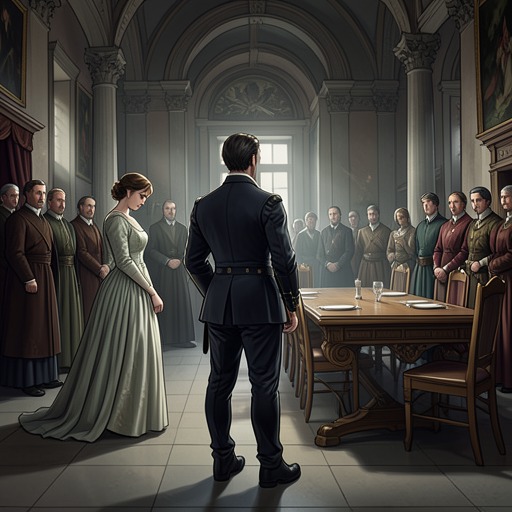
Fire & BloodThe Death of Jaehaera ended the life of the ten-year-old queen, the last surviving child of Aegon II, and left the court facing an immediate question: had she taken her own life, or had someone killed her? The account supplies no conclusive answer. Instead, it follows grief as it turns into rumor, then sets those rumors against the political advantage that might have followed her death.
Death at Maegor’s Holdfast
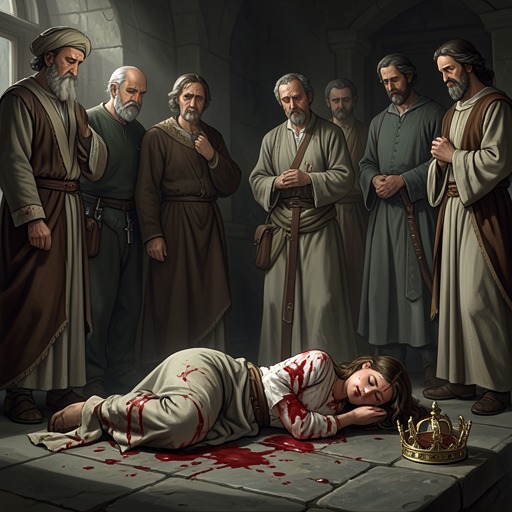
On the twenty-second day of the ninth moon of 133 AC, Jaehaera died after falling from a window in Maegor’s Holdfast. Her death recalled that of her mother, Helaena, who had died in a similar way. The parallel gave the tragedy an unsettling familiarity, but it did not establish that the two deaths had the same cause. Jaehaera was ten, queen of the Seven Kingdoms, and the last surviving child of Aegon II.
The people of King’s Landing mourned her intensely. Though she had kept largely to the Red Keep since receiving her crown, many remembered her wedding and the brave, beautiful little girl they had seen then. Grief drew people into septs, taverns, and brothels, where mourning mingled with speculation. The city’s sorrow was not proof of what had happened; it was the setting in which uncertainty quickly became public accusation.
A Child Seen Through Rumor
The account describes Jaehaera as lonely and prone to weeping, but says she had seemed content in her chambers with her maids and ladies, her kittens, and her dolls. Those details sharpened the question of why she would have gone to the window, without resolving it. Some people connected her death to Lady Rhaena’s miscarriage; others suspected jealousy over the child Lady Baela was carrying. Still others believed Jaehaera had loved the king but received little affection from him. These were competing explanations circulated by observers, not established accounts of her thoughts or motives.
The possibility of murder spread alongside the suggestion of suicide. People compared Jaehaera’s death to Helaena’s and wondered whether both queens had been killed. That suspicion produced no identified killer or proof. Rather, it widened the range of possible culprits and made the queen’s isolation, her place in the royal household, and the succession all part of the public discussion.
Suspects and the Succession
Several people came under suspicion. A Kingsguard knight was traditionally stationed at the queen’s door, leading to speculation that he could have entered her room; some went further and imagined that Aegon III himself might have ordered her death because he wanted another wife or resented the daughter of the king who had killed his mother. The account presents those claims as rumors, not as evidence against the king.
Jaehaera’s companion Cassandra Baratheon was also blamed by some. She was the eldest of the Four Storms and had been briefly betrothed to Aegon II near the end of his life; she may previously have been considered for Aemond Targaryen as well. Her detractors alleged that disappointment had made her bitter and that she resented caring for the queen. That accusation, too, is reported as hostile speculation rather than demonstrated involvement.
Suspicion also fell on members of the household. A bedmaid had stolen two of Jaehaera’s dolls and a pearl necklace. A serving boy had once spilled soup on the queen and been beaten for it. Both were questioned and declared innocent, though the boy died during questioning and the girl lost a hand for theft. A septa was taken away after having been heard to argue that Jaehaera should not have children. The spread of accusations—and the severe treatment of those questioned—shows how the search for certainty could inflict further harm without producing proof.
The account’s later political reading points toward Unwin Peake, then Lord Regent and Hand of the King, but carefully distinguishes suspicion from certainty. Peake had opposed the prospect of a woman inheriting the Iron Throne. Aegon III had no children, and Jaehaera seemed unlikely to provide an heir; the king’s half-sisters therefore remained important to the succession. Rhaena’s pregnancy had ended in miscarriage, leaving Baela’s unborn child as the remaining immediate possibility of a new generation through the king’s half-sisters. If Jaehaera were gone, Aegon could marry again and perhaps have an heir of his own. That circumstance supplied a possible political motive, not proof that Peake arranged her death.
An Unresolved Death and Its Aftermath
Mervyn Flowers, Peake’s bastard brother, had been the Kingsguard knight posted at Jaehaera’s door that night. The account considers the possibility that Flowers might have allowed someone else to reach her, perhaps a person acting at the Hand’s behest. Mushroom’s suggestion that intermediaries such as Tessario the Thumb or one of the Fingers could have been involved remains conjecture. The narrative expressly refuses to treat these possibilities as established fact: Jaehaera may have taken her own life, and, if she was murdered, the true circumstances are unknown.
Seven days after her body was committed to the flames, Peake visited the grieving king with Grand Maester Munkun, Septon Bernard, and Marston Waters of the Kingsguard. They told Aegon that he must remarry for the good of the realm and that a new queen had already been chosen. The timing gave the earlier suspicion a political consequence: Jaehaera’s death was followed swiftly by an effort to replace her in the marriage that could shape the succession. Yet that sequence cannot settle who caused her death. The event’s lasting force lies in the gap between a child’s unexplained end and the court’s readiness to turn that end into a question of power.