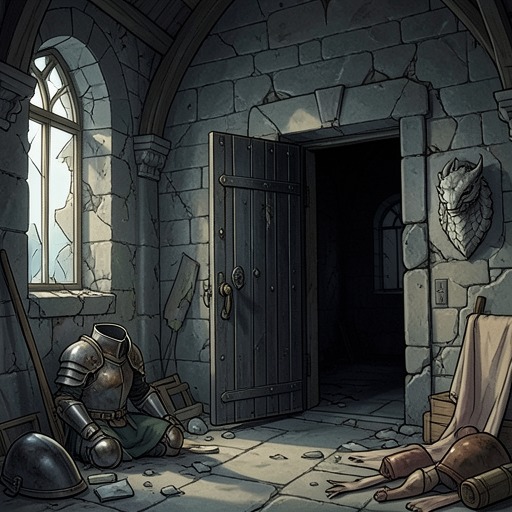
Dragonstone Changes Hands
Fire & BloodThe fall of Dragonstone returned the ancestral seat of House Targaryen to Aegon II, but did not deliver an easy or unqualified victory. A small garrison and a traitor inside the castle let his men take it in less than an hour; Baela Targaryen’s escape and aerial challenge then turned the expected triumphant arrival into a costly encounter that left both king and dragon gravely diminished.
The island and its divided claimants
Dragonstone had long been Rhaenyra’s seat and stronghold. Its high Valyrian walls and the protection of the Sea Snake’s ships made it appear difficult to seize, but its defenses were weakened when Rhaenyra took her best men to King’s Landing. The garrison she left behind was small and largely composed of men considered of limited use: older soldiers, inexperienced recruits, men recovering from wounds, and others whose loyalty or courage was in doubt. Ser Robert Quince commanded them.
The castle’s importance was not merely strategic. Rhaenyra had been crowned there after Ser Steffon Darklyn arrived with the stolen crown of Jaehaerys the Conciliator. Before three hundred witnesses, Prince Daemon placed that crown on her head, and she named Jacaerys her heir and Prince of Dragonstone. Her coronation asserted a rival claim to the Iron Throne; taking the island therefore meant seizing not only a fortress but the seat from which that claim had been proclaimed.
Aegon’s own coronation had invoked a different royal inheritance. In King’s Landing, Ser Criston Cole crowned him with the iron-and-ruby crown associated with Aegon the Conqueror, while Queen Alicent crowned Helaena. The contrast between the crowns and the rival ceremonies made Dragonstone’s capture another contest over which version of Targaryen kingship would prevail. For Aegon, reclaiming the island meant recovering his family’s ancestral seat; for Rhaenyra’s supporters, its defense meant holding the place where her queenship had been publicly affirmed.
Betrayal and the sudden capture
Ser Alfred Broome, a prominent member of Dragonstone’s garrison, turned against Rhaenyra in exchange for a promise of lordship, lands, and gold if Aegon regained the throne. His long service gave him knowledge of the castle’s defenses and of which guards might be bribed or persuaded, and which would need to be removed or confined. The attack succeeded through this intimate knowledge rather than a prolonged assault on Dragonstone’s walls.
During the hour of ghosts, men Broome had influenced opened a postern gate. Ser Marston Waters, Tom Tangletongue, and their followers entered unseen. One group seized the armory; another took the loyal guards and the master-at-arms into custody. Marston surprised Grand Maester Gerardys in the rookery, preventing him from sending warning by raven. Broome led the men who entered Quince’s chambers and killed the castellan as he tried to rise from bed. In less than an hour, the attackers had taken control of the castle.
Baela’s capture was the plan’s one significant failure. When men came to take her, she escaped through her bedroom window and made her way across rooftops and down walls into the yard. The attackers had secured the stable where the dragons were kept, but Baela had grown up on Dragonstone and knew routes through the castle they did not. Before her pursuers caught her, she had freed Moondancer and saddled the young dragon.
Aegon’s arrival and the dragon fight
Aegon came to Dragonstone expecting a triumphant entry into a castle held by his own men. He flew Sunfyre over the smoking peak of Dragonmont and descended toward the stronghold, believing Rhaenyra’s loyalists had been killed or captured. Instead, Baela rose to meet him on Moondancer. Though Moondancer was young and much smaller than Sunfyre, the king’s dragon was already impaired: his wing had healed badly after the Battle of Rook’s Rest, limiting his ability to fly, and he had recently been wounded fighting Grey Ghost.
In the darkness before dawn, the dragons fought above the castle. Moondancer’s speed allowed her to evade Sunfyre and strike at him, while Sunfyre’s greater size and strength kept the contest dangerous for both riders. Their struggle ended when they fell into the yard. Moondancer died from the encounter; Sunfyre survived, but collapsed after trying to rise. Baela stayed with her dragon through the fall, then freed herself and crawled away. When Broome moved to kill her, Marston intervened, and Tom Tangletongue carried her to the maester.
Aegon had leapt from his saddle before the dragons struck the ground and shattered both legs. His victory thus brought him the castle, but left him in great pain, while Sunfyre could never fly again. The dragon remained in the yard, feeding first on Moondancer and later on sheep supplied by the garrison. Aegon refused Grand Maester Gerardys’s offer of milk of the poppy, declaring that he would not take it again and did not trust the maester’s treatment.
Rule restored, and its price
With Dragonstone in Aegon’s hands, the remaining royal household faced a new danger. At the king’s command, Gerardys was executed, a reprisal that made the new regime’s treatment of Rhaenyra’s servants unmistakable. Aegon also ordered that enough of the maester’s remains be preserved for his half-sister to see when she returned. The capture was therefore followed not by reconciliation but by deliberate intimidation and preparation for Rhaenyra’s arrival.
Not long afterward, as Aegon lay in the great hall of the Stone Drum with his broken legs bound and splinted, a raven arrived from Duskendale. It reported that Rhaenyra would be returning aboard the Violande. Aegon ordered Broome to arrange a suitable welcome. The castle had changed hands, but the conflict it embodied had not ended: the seizure placed Rhaenyra’s ancestral stronghold under her rival’s control and set the stage for their next confrontation.
Dragonstone’s capture reverses the meaning of the island’s earlier coronation. A site where Rhaenyra had been acclaimed by her supporters became the base from which Aegon could await her return. The reversal was achieved by a compromised garrison and an insider’s knowledge, not by the invulnerability its walls and ships had seemed to promise. Its price was written across the victors as well as the defeated: Aegon held the seat, but could not walk without great pain, and Sunfyre would never fly again.