First Dornish War
Fire & BloodThe First Dornish War was Aegon Targaryen’s unsuccessful attempt to bring Dorne under his rule by force. Beginning in 4 AC and lasting until 13 AC, it exposed the limits of the conqueror’s military power: his armies could take castles and declare victory, but could not make the Dornish lords submit or hold the territory they had occupied. The war’s decisive contest was therefore not a single battle, but a prolonged struggle over supply, presence, and the meaning of victory.
Causes and Opening Campaign
After the submission of the Three Sisters and the Iron Islands, Dorne alone remained outside Aegon’s rule south of the Wall. He first sent high lords, maesters, and septons to Sunspear to persuade Princess Meria Martell to join his realm. Negotiations lasted for most of a year but achieved nothing. The war’s beginning is generally dated to 4 AC, when Queen Rhaenys Targaryen returned to Dorne aboard Meraxes. She burned the Planky Town, setting its boats alight until burning wreckage choked the mouth of the Greenblood. The town’s inhabitants fled into the river; fewer than a hundred died, most by drowning rather than dragonfire. The attack nevertheless marked the shedding of first blood.
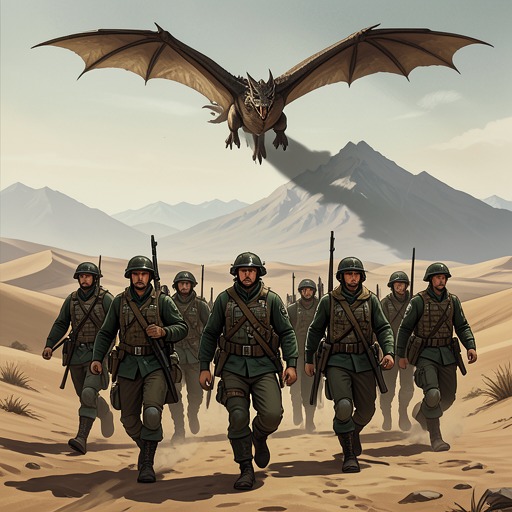
Aegon entered Dorne by two routes. Orys Baratheon led a thousand selected knights up the Boneway, while Aegon marched through the Prince’s Pass with an army of thirty thousand, including nearly two thousand mounted knights and three hundred lords and bannermen. The numbers suggested overwhelming force, but the Dornish did not offer the pitched battle the invaders expected. They withdrew, burned crops, poisoned wells, and abandoned watchtowers in the Red Mountains. In the high passes, Aegon’s vanguard encountered a barrier of rotting, shorn sheep carcasses. By the time the army emerged from the Prince’s Pass, it was already short of food and fodder.
The terrain and supply crisis shaped the campaign. Aegon divided his forces, sending Lord Harlan Tyrell south toward Hellholt while he turned east to besiege Lord Fowler at Skyreach. The invaders hoped the approaching winter would ease the desert heat and make water more plentiful, but the sun remained relentless and the waterholes along Tyrell’s route had been poisoned. His army lost a quarter of its men and almost all its horses before reaching Hellholt, which had been abandoned. Orys’s column, meanwhile, was trapped in the Boneway: horses struggled on narrow, stepped mountain roads, defenders rolled boulders down from above, and archers attacked as the column crossed the river Wyl. A rockfall blocked the retreat. Orys and a dozen other lords were spared for ransom and taken captive by Wyl of Wyl.
Aegon had more success in the east. He stormed Skyreach, took Yronwood after a brief siege, and received the surrender of the Tor’s steward. At Ghost Hill, Lord Toland sent a challenger whom Aegon killed, only for the king to learn that the man had been Toland’s fool, not his champion. The lord himself had disappeared. When Aegon reached Sunspear on Balerion, Princess Meria was gone as well. Rhaenys had taken several settlements, receiving the obeisance of old women and children but finding no enemy to fight. The missing lords and princess had made conquest difficult to distinguish from a passage through emptied territory.
Occupation and Reversal
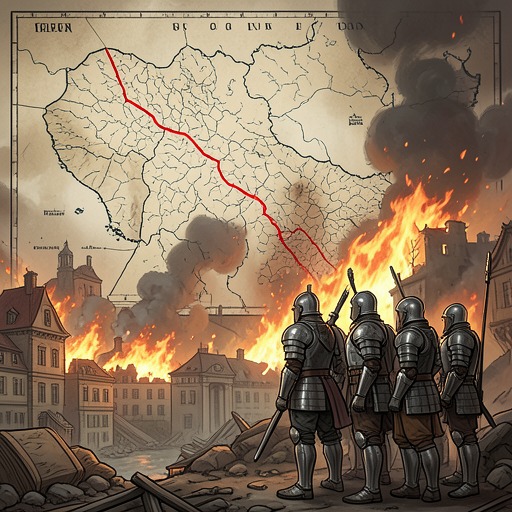
At Sunspear, Aegon declared Dorne part of his realm and its former lords rebels and outlaws. He offered rewards for their heads, named Jon Rosby castellan of Sunspear and Warden of the Sands, and appointed stewards and castellans to govern the other captured lands and castles. Then he and his host departed west through the Prince’s Pass. The declaration did not secure the country: within a fortnight of the army’s departure, Dornish forces had retaken Skyreach, Yronwood, the Tor, and Ghost Hill, killing their royal garrisons. The king’s appointees were captured and subjected to prolonged torment. Rosby was seized when the Dornish retook Sunspear and thrown from the Spear Tower by Meria herself.
Tyrell remained at Hellholt after Aegon withdrew, but the position could not provide a stable base. The Brimstone River was sulfurous, and its fish sickened his men. Qorgyle spearmen attacked foraging parties from the west, while the Vaiths did the same from the east. After news reached him of Rosby’s death, Tyrell set out across the sands, intending to take Vaith, move east along the river, retake Sunspear and the shadow city, and avenge Rosby. Somewhere east of Hellholt, he and his entire army disappeared; none was ever seen again. The intended occupation had become a series of isolated holdings, vulnerable as soon as the main host moved on.
A Prolonged War and Its End
Aegon did not accept the reversal as final. The war continued for another seven years, though after 6 AC its pattern was increasingly one of atrocities, raids, and retaliations, interrupted by long lulls, short truces, and murders and assassinations. Its duration did not bring a decisive battlefield victory. Instead, the record presents a conflict in which each side could inflict losses but neither a royal proclamation nor a temporary military advance ended Dornish resistance.
In 7 AC, Orys Baratheon and the other captives were ransomed back to King’s Landing for their weight in gold. They returned without their sword hands, cut off by Wyl of Wyl so that they could not again take up swords against Dorne. Aegon retaliated by flying Balerion against the Wyls’ mountain strongholds, reducing six keeps and watchtowers to molten ruins. Yet the Wyls survived in caves and tunnels beneath the mountains, and their lord lived for another twenty years. The attack destroyed their fortifications without eliminating the people who had taken refuge in the landscape.
The fighting also reached beyond the mountain passes. In the dry year 8 AC, Dornish raiders crossed the Sea of Dorne aboard ships supplied by a pirate king from the Stepstones. They attacked six towns and villages on the southern shore of Cape Wrath and set fires that spread through half the rainwood. The raid carried the conflict into the Stormlands and answered earlier devastation with further destruction.
The First Dornish War ended in 13 AC. The surviving account does not settle precisely what brought the peace: the contents of a letter from Princess Deria are unknown, and later explanations range from a personal appeal to a record of the war’s dead. Grand Maester Clegg proposed that Prince Nymor might have threatened the life of Aegon’s six-year-old son and heir, Aenys, by promising to hire the Faceless Men of Braavos if peace were refused. The chronicle leaves that possibility unresolved rather than presenting it as established fact.
Reputation and Significance
Meria Martell had achieved what Harren the Black, the Two Kings, and Torrhen Stark had not: she had defeated Aegon and his dragons. That outcome did not produce a single shared judgment. North of the Red Mountains, many of Aegon’s subjects scorned the Dornish methods, turning the phrase Dornish courage into a mocking synonym for cowardice and describing Meria’s resistance as dishonorable. Survivors and the families of the fallen promised that the conflict would have a reckoning, though vengeance would wait for a later generation.
The contrast between military conquest and political control defines the war’s significance. Aegon could seize castles, devastate strongholds, and install governors; the Dornish repeatedly withdrew, denied his armies supplies, and returned when his forces left. The war ended without Dorne’s submission, and, although Aegon remained on the Iron Throne for another twenty-four years, it was his last war. Its ending left both the claim of victory and the promise of future vengeance unsettled.