First Succession Dispute: Baelon Named Heir to the Iron Throne
Fire & BloodThe First Succession Dispute: Baelon Named Heir to the Iron Throne began with the death of Prince Aemon in 92 AC and King Jaehaerys’s decision to name Aemon’s younger brother, Baelon, as his successor. Because Aemon’s daughter, Rhaenys, was pregnant when her father died, the choice did more than replace one heir with another: it passed over both a living woman and the possibility of her unborn child. The king’s decree was popular with many, but it divided his family and exposed how much the succession depended on custom, perceived fitness, and the sex of the claimant.
Aemon’s Death and Baelon’s Appointment
Aemon, Prince of Dragonstone and heir to the Iron Throne, was killed on Tarth by a Myrish crossbow bolt aimed at the man beside him. The sudden loss broke what had seemed a secure succession. Aemon and Baelon had been regarded as an able pair of princes, an heir and a spare, and their affection had endured alongside a healthy rivalry. Baelon went to Tarth and avenged his brother by driving the Myrmen into the sea. When he returned to King’s Landing, cheering crowds hailed him as a hero. Jaehaerys then named him Prince of Dragonstone and heir to the Iron Throne.
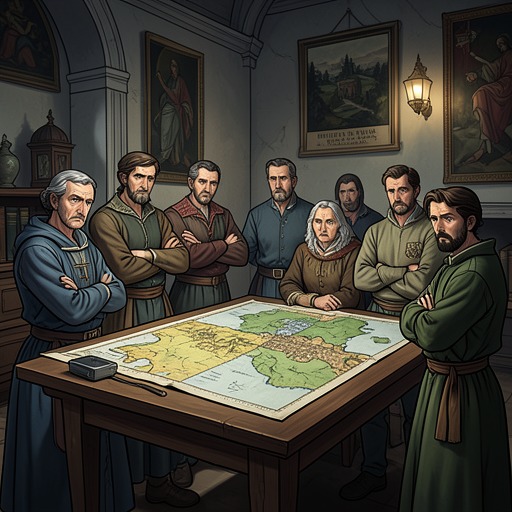
The appointment had an immediate public welcome. The smallfolk loved Baelon the Brave, and the lords regarded him as the obvious successor to Aemon. But the choice was not simply a transfer between two brothers. Aemon had left a daughter, Rhaenys, who was eighteen and pregnant. By giving Dragonstone to Baelon, the king passed over Rhaenys and potentially the child she carried, making the question of succession a dispute about the claims of an entire branch of the royal family.
The King’s Case and the Inheritance Custom
Jaehaerys’s decision accorded with established practice, though it was not presented as an effortless or automatic choice. The king discussed the matter with his small council. Septon Barth was likely consulted, as he was on important matters, and Grand Maester Elysar’s views carried considerable weight. The reasoning favored Baelon’s demonstrated capacity: at thirty-five, he was a seasoned knight, while Rhaenys was eighteen and the sex of her unborn child was not yet known. Baelon had also already fathered two healthy sons, Viserys and Daemon. The affection of the common people for Baelon was another argument cited in support of the appointment.
The precedent invoked reached back to the founding of the dynasty. Aegon the Conqueror, rather than his elder sister Visenya, had been the first Lord of the Seven Kingdoms. Jaehaerys himself had followed his uncle Maegor, although his sister Rhaena had the stronger claim if birth order alone determined the succession. These examples framed the decision as consistent with a male-preference tradition rather than as a novel ruling against Rhaenys personally. Yet the precedent did not resolve the matter for everyone: it gave the king a rationale, not the agreement of those whose claims were set aside.
Opposition and the Second Quarrel
Rhaenys was the first to object. She argued that the king was depriving her son of his birthright, placing a hand on her swollen belly as she did so. Corlys Velaryon, her husband, responded by surrendering his position as admiral and his seat on the small council, then taking Rhaenys back to Driftmark. Her mother, Jocelyn Baratheon, and her formidable uncle, Boremund Baratheon, were also angered by the decision. Their opposition showed that the succession question had become a political division beyond the immediate royal household.
Queen Alysanne’s protest made the dispute a rupture between the king and queen as well. She objected to her granddaughter being passed over because she was a woman, and challenged the assumption that a ruler required a male heir. Alysanne left King’s Landing and flew on Silverwing to Dragonstone. She and Jaehaerys remained apart for two years, a separation recorded as the Second Quarrel. In 94 AC their daughter, Septa Maegelle, helped reconcile them, but the reconciliation did not settle their disagreement over the succession. Alysanne continued to hold that Rhaenys and her children had been unfairly deprived of their rights until her death in 100 AC.
The Unborn Heir and the Dispute’s Legacy
The child at the center of the immediate uncertainty was born a girl in 93 AC. Rhaenys named her Laena. In the following year, Rhaenys gave birth to a son, Laenor. By then Baelon was firmly established as heir apparent, but the arrival of Aemon’s children did not erase the claims of their family. House Velaryon and House Baratheon maintained that Laenor had a better claim to the Iron Throne, while some also argued for Laena and Rhaenys. The dispute therefore outlasted the moment of appointment: Baelon’s designation established the reigning king’s chosen succession, while leaving rival views of inheritance alive.
The later Great Council of 101 AC made the broader stakes more explicit. The assembled lords chose Viserys as heir by a lopsided margin, rejecting the effort by Corlys and Rhaenys to have their son Laenor recognized. The council’s decision was subsequently seen as establishing a precedent that the Iron Throne could pass neither to a woman nor through a woman to her male descendants. That later ruling was distinct from Jaehaerys’s appointment of Baelon, but it echoed the earlier conflict: a royal choice could settle the immediate succession while leaving the claims of women and their descendants contested. The First Succession Dispute thus marks an early, consequential test of the customs that would shape later Targaryen inheritance struggles.