Ironborn War in the Westerlands
Fire & BloodThe Ironborn War in the Westerlands continued after the Dance of the Dragons had ended the worst of the wider conflict. For the first three years of Aegon III’s reign, Lady Johanna Lannister resisted raids by Dalton Greyjoy’s ironborn in the name of her son, Loreon. The war showed how little a royal succession and a general declaration of peace could settle when a regional commander could keep raiding, disregard royal orders, and hold territory against the Crown’s wishes.
Background and Stakes
In the aftermath of the Dance, Dalton had been a valuable ally to the blacks. The peace that followed exposed the limits of that alliance: he showed no more regard for the victors than for the greens. His continued attacks in the west made the conflict a problem for the young king’s government even as fighting elsewhere subsided. Lady Johanna’s resistance was both a defense of her son’s lordship and a challenge to an enemy whose power rested on the ability to strike the coast and withdraw by sea.
The Iron Throne’s authority was tested directly. Dalton stopped short of openly declaring himself King of the Iron Isles, but he paid little heed to its edicts. The account suggests that he may have felt emboldened by the king’s youth and the fact that the Hand was a Lannister. When ordered to end his raiding, he continued; when commanded to restore the women his ironmen had carried off, he invoked the ironborn salt-wife custom. The Crown’s orders therefore confronted not just a raider’s refusal, but a rival claim about who could determine the fate of people and possessions taken in war.
Fair Isle was another point of dispute. The Iron Throne instructed Dalton to return it to its former lords, but he rejected the demand, treating the island’s former owners as if they had vanished beyond recovery. His refusal made clear that the western campaign concerned more than the damage caused by raids: it also involved the continued possession of conquered land. The response from King’s Landing could express the Crown’s claim, but could not by itself make Dalton comply.
The War at Sea
Lady Johanna tried to build a fleet of warships to carry the fight to the ironborn. Dalton struck first at the shipyards, descending on them and setting them ablaze. He also took another hundred women. The raid frustrated Johanna’s attempt to turn the war toward an organized naval counteroffensive, while demonstrating that her preparations were vulnerable before the fleet could be used. The loss was not only material: the attack renewed the human cost of the campaign and made the Crown’s demand for the return of captives more urgent.
The Hand sent Dalton an angry reproach after this attack. Dalton answered by mocking the people of the west and denying that their seizure required redress. His response sharpened the contrast between royal command and the power actually exercised along the coast. The Iron Throne could condemn his actions, but the account records no compliance; the raids and the war continued.
The Failed Expedition to Fair Isle
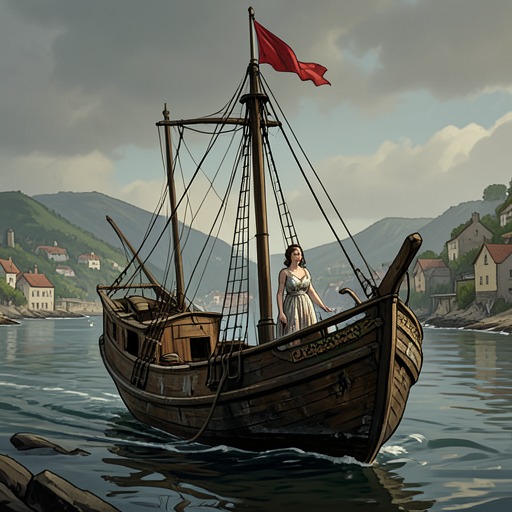
Late in 133 AC, Lady Johanna sought to follow a victory at Kayce with a new attempt to take Fair Isle from the ironmen. Rather than command a purpose-built war fleet, she assembled fishing boats and cogs beneath the walls of Feastfires. A hundred knights and three thousand men-at-arms were embarked. The plan depended on surprise: the force would land on the island’s southern shore under cover of darkness and avoid giving the defenders warning of the crossing.
Someone betrayed the expedition. The ironborn were waiting with their longships, and the intended surprise landing became a disastrous encounter at sea. Lord Prester, Lord Tarbeck, and Ser Erwin Lannister commanded the crossing. Its failure cost Johanna the force she had committed to retaking the island and left Fair Isle in ironborn hands. Dalton sent the commanders’ heads to Casterly Rock with a contemptuous explanation that presented the attack as payment for his uncle, while also disparaging the dead man. The taunt turned the defeat into a deliberate humiliation of the Lannisters as well as a military setback.
Course and Significance
The campaign’s sequence reveals the difficulty of opposing Dalton with the resources available to Johanna. Her effort to create a fleet was checked when the ironborn burned the shipyards; her later expedition relied on improvised vessels and an operation whose success depended on secrecy, which betrayal destroyed. At sea, the ironborn could answer Lannister preparations with swift attacks and retain the advantage around the island they already held. The evidence does not describe a final settlement or the recovery of Fair Isle, so the war’s recorded episodes end without a decisive resolution.
The war also qualifies any simple account of the post-Dance peace. The worst carnage had passed, but the fighting in the west continued for years, and Dalton’s defiance forced the government to reckon with the difference between issuing an order and enforcing it. His former service to the blacks did not bind him to the new regime; Lady Johanna’s loyalty to her son and her campaigns against the raiders did not ensure that the Crown could restore the western order she sought. The failed crossing to Fair Isle gives that unresolved conflict its clearest ending: an ambitious counterstroke, defeated before it could achieve its object.