Jaehaerys I Targaryen
Fire & BloodJaehaerys I Targaryen came to the Iron Throne as a fourteen-year-old claimant in a kingdom divided by Maegor I Targaryen’s rule. He would reign from 48 AC until his natural death in 103 AC, and later generations remembered him as the Conciliator: the king who, in the words of a later scholar, made the Seven Kingdoms one. His achievement rested not on a single conquest or decree, but on a long effort to turn contested authority into accepted rule through restraint, religious accommodation, law, roads, and royal presence. The stability of his reign did not settle the succession question; in its final years, that unresolved question began to fracture the peace he had spent a lifetime building.
Claimant and young king
Jaehaerys’s path to the throne began in flight and opposition. When Maegor returned to King’s Landing, Queen Visenya had died, and Queen Alyssa Velaryon and her children had escaped Dragonstone with the dragons Vermithor and Silverwing. They also took Dark Sister. Maegor subsequently disinherited Jaehaerys, although the account identifies the boy as the rightful heir under the laws of the Seven Kingdoms. The decree instead named Rhaena Targaryen’s daughter Aerea as heir until Maegor had a son and sent Aerea’s twin, Rhaella, to Oldtown to be raised as a septa.
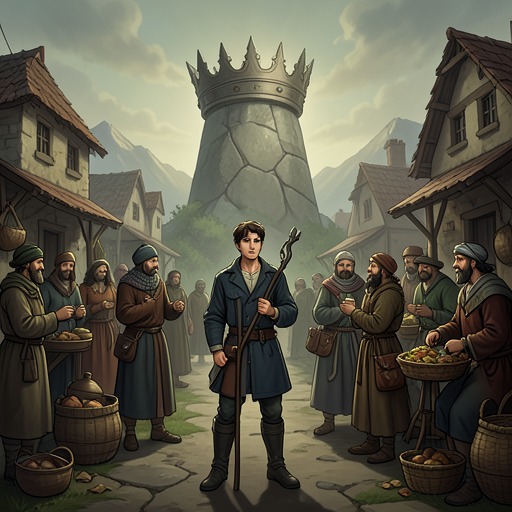
The challenge to Maegor became public at Storm’s End. At fourteen, Jaehaerys was proclaimed king by Rogar Baratheon, who was named Protector of the Realm and Hand of the King. Jaehaerys stood beside his mother and his sister Alysanne Targaryen, unsheathed Dark Sister, and vowed to end his uncle’s rule. He had a formidable visible claim: a hundred banner lords and stormland knights supported the proclamation, he was an accomplished rider, and he rode Vermithor. Alysanne, then twelve, commanded Silverwing. Rogar made the contrast between the rival claims explicit by pointing to the young prince’s two dragons against Maegor’s one.
Jaehaerys’s first major decision as king shaped the character of his accession. Though Rogar’s political approach had the support of many around him, the young king did not simply leave the settlement to his advisers. He climbed the Iron Throne with his maester, Alysanne, and a small group of young knights, summoned the lords, and declared that there would be no trials, torture, or executions at the beginning of his reign. He wanted the realm to see that he was not Maegor. His offer allowed supporters who had come to him late to join without first facing punishment, presenting clemency as both a moral contrast with his uncle and a means of gathering the realm around the new king.
That refusal to begin with vengeance did not mean his authority rested on personal will alone. In 50 AC, on the twentieth day of the ninth moon, Jaehaerys reached his sixteenth nameday and, under the laws of the Seven Kingdoms, became old enough to rule without a regent. His minority had made questions of government and counsel immediate; his accession to personal rule offered the lords and smallfolk a new test of what kind of king he would be.
Reconciliation, faith, and royal presence
The political inheritance Jaehaerys received was a kingdom whose unity had to be continually made visible. Earlier Targaryen rule had used public symbols to establish a place within Westerosi custom: Aegon I Targaryen’s red three-headed dragon standard, his crowning, and the High Septon’s anointing joined military power to lordly and religious recognition. Aegon’s policy also sought to bring people from across the realm into court and to connect noble houses through marriage. Jaehaerys’s later work belonged to this larger project of reconciliation, though the distinctive measures described in his reign were his own.
Faith was one arena in which his authority required persuasion as well as recognition. The Seven Speakers, travelling through the realm, praised Alysanne’s piety, generosity, and love for the king. When septons, begging brothers, knights, or lords challenged their position by citing The Seven-Pointed Star or earlier sermons, they answered with an argument Jaehaerys had crafted in King’s Landing, with the assistance of Septon Oswyck and especially Septon Barth. The Citadel and the Starry Sept would later call that teaching the Doctrine of Exceptionalism. Its significance lay in making a disputed royal position answerable within the language of the Faith, rather than relying solely on the king’s command.
The royal progress likewise made the Crown present across distances that could otherwise leave its rule abstract. In 52 AC, Jaehaerys travelled through the Vale of Arryn, visiting Gulltown, Runestone, Redfort, Longbow Hall, Heart’s Home, and the Gates of the Moon before flying Vermithor up the Giant’s Lance to the Eyrie. Alysanne accompanied him for part of the journey, though she had not fully recovered her strength after childbirth and grief. Her work during the visit included arranging the betrothal of Lady Prudence Celtigar to Lord Grafton of Gulltown, and she held women’s courts at Gulltown and the Gates of the Moon. What she heard there would affect the laws of the Seven Kingdoms.
Alysanne’s influence was substantial, but it was not the same as formal lawmaking power. She could not issue decrees, proclamations, or sentences; the account specifically cautions against treating her as though she possessed the governing powers associated with the queens of the Conquest. Her force lay in the king’s willingness to listen. On their return from the Vale, Jaehaerys acted on what she brought to him, illustrating how policy could be shaped through counsel even when authority to enact it remained his.
Law, roads, and the work of government
After the loss of his mother, Jaehaerys responded to grief by returning to the work of rule. Queen Alyssa Velaryon died after leaving Storm’s End, where the king had secured a High Septon and an accord with the powerful Hightowers of Oldtown. Those political successes could not offset the personal loss. Jaehaerys nevertheless turned again to his responsibilities, as he would repeatedly during his long reign.
One of his major projects began in the quiet of the Red Keep library. With Septon Barth, Grand Maester Benifer, Lord Albin Massey, and Alysanne, he set out to codify, organize, and reform the kingdom’s laws. Jaehaerys called this group his even smaller council. The project was an effort to make government more coherent through the ordering of law, not merely to settle an immediate dispute. Its importance also reflects the character of his kingship: sustained collaboration with trusted advisers, directed toward institutions that could outlast a single royal decision.
He pursued a comparable project in the physical landscape. Looking down on the realm during royal progresses, Jaehaerys saw towns, villages, rivers, forests, mountains, fields, and old ruins, but few proper roads. He ordered that the kingdom should have them. Existing routes, including the roseroad, ocean road, river road, and goldroad, were remade by filling ruts, spreading gravel, and bridging streams; other roads were built anew. The expense was considerable, but the realm was prosperous, and the new master of coin, Martyn Tyrell, proved capable, aided by his wife, known as the apple counter. The work continued mile by mile and league by league for decades. Roads made the unity proclaimed in royal titles more tangible: they connected places that the king’s journeys had shown him belonged to one realm.
Jaehaerys’s attention to the obligations attached to office also appeared in his treatment of the Kingsguard. When Ser Lucamore Strong’s breach of his vows came to light, the king recalled that two Kingsguard who had abandoned Maegor to fight for him had been sent to the Wall, rather than rewarded with continued white cloaks or positions at court. He reasoned that a man who set aside one sacred vow gave the king reason to doubt that he would honour the others. The judgment linked private conduct to public trust: for Jaehaerys, fidelity to the vows governing an office was part of the credibility of the institution itself.
Family, inheritance, and the succession crisis
The royal household was also a political network, and its marriages could not be separated from questions of inheritance and alliance. Jaehaerys and Alysanne arranged the future of their children with those questions in view. In 68 AC, after the death of Princess Daenerys, there was discussion of a match between Aemon, the eldest son and Prince of Dragonstone, and his sister Alyssa. Alysanne rejected that plan and maintained that Alyssa was intended for Baelon, noting the closeness between the two siblings. Aemon instead became betrothed to Jocelyn Baratheon of Storm’s End. Earlier, Jaehaerys’s brother Aenys I Targaryen had married Alyssa Velaryon, daughter of Aethan Velaryon, Lord of the Tides and the king’s lord admiral and master of ships. Their marriage joined the royal family to a house of Valyrian descent already tied to the Crown through the king’s mother.
The security of the realm began to crack when Aemon was killed on Tarth in 92 AC by a Myrish crossbow bolt aimed at the man beside him. Jaehaerys and Alysanne mourned their son. Baelon went to Tarth, drove the Myrmen into the sea, and returned to King’s Landing to a popular reception. The king named him Prince of Dragonstone and heir to the Iron Throne. The decision was widely welcomed: smallfolk loved Baelon the Brave, and many lords regarded him as the obvious successor to his brother.
But Aemon had a daughter. Rhaenys Targaryen had grown into a capable young woman and had married Corlys Velaryon, the king’s admiral and master of ships. She was pregnant when her father died. By giving Dragonstone to Baelon, Jaehaerys passed over Rhaenys and potentially the son she carried. A choice that seemed popular and clear to many lords therefore left a competing hereditary claim unresolved. The later account identifies this succession dispute as one of the seeds of the Dance of the Dragons, a war fought from 129 to 131 AC whose roots lay in Jaehaerys’s long and unusually peaceful reign.
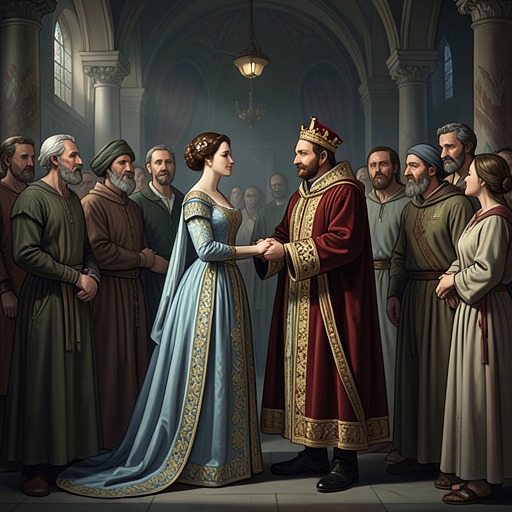
Jaehaerys responded to the uncertainty by calling a Great Council. Great and lesser lords, maesters from the Citadel of Oldtown, and representatives of the Faith were to hear the claimants and decide the succession. The king promised to abide by their choice, whoever they selected. Lord and Lady Velaryon argued for their son, but the assembled lords chose Viserys Targaryen by a decisive margin. The maesters did not publish the precise count; afterward, it was said the vote exceeded twenty to one. The council gave a collective decision where the king’s family history and prior choices had left competing claims. Its result did not erase the political force of succession precedent: later debate over whether Rhaenyra or a male claimant should inherit would again invoke the Great Council of 101.
Death and legacy
Jaehaerys died in bed in 103 AC at the age of sixty-nine, after ruling for fifty-five years. Lady Alicent was reading to him from Septon Barth’s Unnatural History when he died. His remains were burned in the Dragonpit, and his ashes were interred on Dragonstone with those of Alysanne. The mourning extended beyond the boundaries of his rule: even in Dorne, which had not submitted to the Targaryens, men wept and women tore their garments.
The names attached to him register two phases of his memory. In old age and under his successor, he was called the Old King; scholars also remembered him reverently as the Conciliator. His reign offered a model of unity assembled through law, faith, travel, infrastructure, and restraint, yet his family’s succession remained vulnerable to competing interpretations of right. That contradiction followed him into the next generation. During the later conflict, rival claimants drew upon his legacy in the most visible way possible: Criston Cole crowned Aegon II Targaryen with Aegon I’s iron-and-ruby crown, while Daemon Targaryen placed Jaehaerys’s crown on Rhaenyra Targaryen at her coronation on Dragonstone. The two crowns made rival claims legible through the memory of earlier kings, even as Jaehaerys’s own Great Council supplied a precedent that could be used to argue against a woman’s succession.
His legacy was not only a contested inheritance. At White Harbor, Torrhen Manderly recalled that Jaehaerys had acknowledged an earlier wrong done to the Manderlys and promised redress by offering his daughter Viserra in marriage to Torrhen’s great-grandsire. Viserra died, and the promise was forgotten. The recollection preserves both the reach and the limits of the king’s conciliatory politics: a royal promise could acknowledge an old grievance and imagine reconciliation through marriage, but it could also remain unfulfilled. In that sense, the unity associated with Jaehaerys was an enduring political achievement, not a finished settlement. The roads and laws joined the realm materially and institutionally; the succession crisis showed how much still depended on whose claims the realm chose to recognize.