Joffrey Doggett
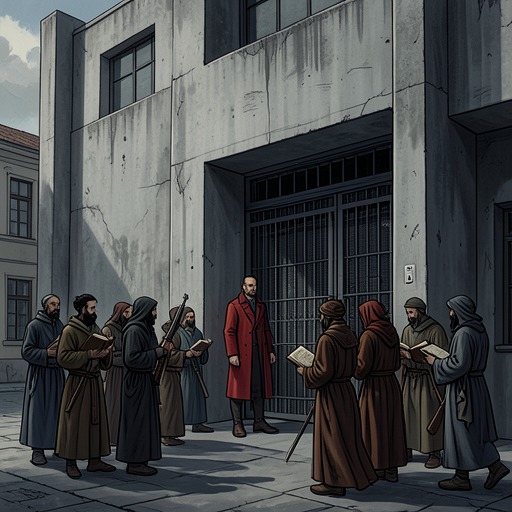
Fire & BloodSer Joffrey Doggett, the Red Dog of the Hills, became the most prominent surviving leader of the outlawed Warrior’s Sons under Maegor Targaryen. He fought the king’s rule through a dispersed campaign that relied on concealment and local support; after Maegor’s fall, Doggett appeared at Jaehaerys Targaryen’s coronation not as a prisoner but under the king’s safe conduct. Jaehaerys declined to restore the order, yet offered its former captain a place in the Kingsguard, converting armed resistance into sworn service to the Crown.
Identity and Rise to Leadership
The Warrior’s Sons chose Doggett as their new grand captain after the order’s fortunes had weakened. He set out from Lannisport to seek the High Septon’s blessing with a hundred men. By the time he reached Oldtown, knights, squires, and freeriders had joined him, bringing his following to two thousand. His journey showed that the outlawed order could still attract substantial support, even as other discontented lords and men of faith gathered across the realm.
The scale of Doggett’s following made him a visible challenge to Maegor’s authority. The king summoned lords and landed knights to King’s Landing, demanded hostages, and outlawed both the Warrior’s Sons and the Poor Fellows, making membership punishable by death. Doggett’s cause was therefore not simply a remnant of an older order: it stood at the center of a broader conflict between the Crown and those who resisted its treatment of the Faith.
Resistance and the Cost of Rebellion
Maegor eventually brought the war to the homes of those who had defied his summons. After Queen Visenya attacked in the riverlands, Maegor flew Balerion to the Westerlands and burned the castles of several pious lords, including the seat of House Doggett. The fires there killed Doggett’s father, mother, and young sister, as well as people serving the household. The evidence records this loss but does not describe Doggett’s response to it; his later conduct is presented instead through his continued leadership of the Warrior’s Sons.
Once the order was outlawed and could no longer meet the king’s forces openly, Doggett sent its members out disguised as hedge knights. They hunted royal loyalists and those they regarded as traitors to the Faith. Among their victims was Ser Morgan Hightower, formerly of the Warrior’s Sons. Other killings followed, while the bounty on a Warrior’s Son’s head did not prevent smallfolk and peasants from sheltering members of the order. Doggett’s campaign thus depended both on the remaining knights’ mobility and on protection from people who remembered the order’s former standing.
By the last year of Maegor’s reign, Doggett’s influence extended across the hill country north of the Golden Tooth, between the Westerlands and the riverlands. Neither Casterly Rock nor Riverrun appeared willing to move against him. Lady Lucinda, the pious wife of the Lord of Riverrun, supported and connived at his movements. Doggett had taken upon himself the mantle of Grand Captain and was recruiting knights to restore the Warrior’s Sons to their former glory. His position also reflected the wider collapse of Maegor’s support: the narrative reports that smallfolk and lords increasingly helped the king’s enemies, while the king’s followers began to disappear.
Alignment with Jaehaerys
The turning point came when Lord Rogar Baratheon proclaimed Jaehaerys the lawful king at Storm’s End. Doggett’s long resistance to Maegor placed him on the same side as the prince, but the account does not describe him as present at the proclamation. By the time Jaehaerys was crowned in Oldtown, Doggett arrived with Lord and Lady Tully of Riverrun, protected by a safe conduct bearing the king’s seal. His presence as a guest rather than a captive demonstrated that the new king was willing to negotiate with a former rebel.
At the coronation, Doggett and Lady Lucinda urged Jaehaerys to undo Maegor’s decrees and restore the Warrior’s Sons and the Poor Fellows. Jaehaerys refused to revive either armed order, saying that the Faith had the protection of the Iron Throne. He did, however, rescind Maegor’s promised bounties for the heads of the two groups. His decision drew a boundary between protecting the Faith and sanctioning its military organizations: he would not wage war against his own people, but neither would he tolerate treason or rebellion.
The Kingsguard and Narrative Significance
Doggett reminded Jaehaerys that he too had risen against Maegor. The king acknowledged his bravery but declared the Warrior’s Sons ended and Doggett’s vows to the order at an end. He then offered Doggett a place in the Kingsguard. The proposal startled the court: when Doggett drew his longsword, observers feared he might attack, but he instead knelt and laid the blade at Jaehaerys’s feet. The account says that tears were visible on his cheeks. The gesture marks a personal and political surrender: the sword that had served an outlawed cause was submitted to the king who would not restore it.
The meeting is presented as a precedent for Jaehaerys’s reign. Rather than reinstate an armed religious order or continue Maegor’s cycle of punishments, the young king separated the Faith’s safety from the Warrior’s Sons’ restoration and offered an individual former enemy a place in royal service. Doggett’s trajectory—from a leader commanding thousands, through years of covert resistance, to a knight of the Kingsguard—embodies that settlement. His acceptance did not revive the order he had led; it redirected his service from its cause to the Crown.