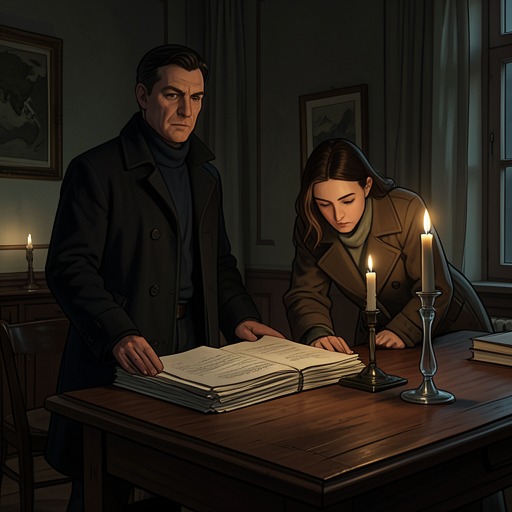
Lysaro Rogare
Fire & BloodLysaro Rogare was the eldest son of Lysandro Rogare and the effective controller of the Rogare Bank after his father’s death. Seeking to rule Lys, he used the bank’s resources to pursue political advancement and planned military conquest. His impatience with the slow accumulation of wealth and influence undid that strategy: the bank failed, Lysaro fled, and after his capture he was returned to Lys and condemned to die under a public sentence of scourging.
Inheritance and control of the bank
Lysandro’s children could not inherit his offices, but his property and wealth were divided among them. His palace passed to Lysara, his ships to Drako, his pillow house to Fredo, and his library to Marra. All his children, including his bastards, received shares of the wealth represented by the Rogare Bank, though the trueborn children received larger portions than the bastards. Effective control of the bank, however, went to Lysaro, his eldest son. He thus inherited access to a vast financial institution without inheriting his father’s political offices.
The account contrasts Lysaro’s ambitions with Lysandro’s method of building power. Lysandro had accumulated wealth and influence over decades; Lysaro wanted to rule Lys but lacked the patience or skill to follow that slower course. As Lys’s political rivals fell around him, he first sought personal security by purchasing one thousand Unsullied from the slavers of Astapor. Their reputation for military discipline and obedience made them a formidable protective force, but they could not secure the financial and political foundations on which Lysaro’s ambitions depended.
Political ascent and the planned war
With the Unsullied around him, Lysaro secured election as gonfaloniere. He cultivated support among the commons with lavish entertainments and won over the magisters with bribes of unprecedented size. These expenses exhausted his personal fortune, so he began diverting gold from the bank.
His plan was to provoke a short, victorious war against Tyrosh or Myr. As gonfaloniere, he expected to gain the prestige of conquest and use it to win the office of first magister. He also intended to plunder the defeated city, restore the money taken from the bank, and emerge as the richest man in Lys. The scheme tied his political advancement to military success and depended on repayment from a conquest that had not yet happened.
Collapse and flight
The plan failed before the projected war could supply its promised riches. Rumors that the Rogare Bank was unsound spread through Lys; their origin was uncertain, though one account attributes the first suggestions to agents hired by the Iron Bank of Braavos. The city’s magisters and merchant princes began demanding their deposits, at first in small numbers and then in a steadily growing rush. Gold flowed out of Lysaro’s vaults until nothing remained.
By the time the withdrawals exhausted the bank, Lysaro had already fled Lys in the dead of night. He left with three bed slaves, six servants, and one hundred of his Unsullied, abandoning his wife, daughters, and palace. The city’s magisters seized the bank and found it an empty shell. The collapse ruined much of Lys, and the destruction of the family’s standing was swift: Lysara and Fredo were among those who later took part in Lysaro’s punishment, while his other siblings were also caught up in the trials that followed.
Lysaro’s flight did not carry him to safety. He and the Unsullied who remained with him were captured at Volon Therys, where they had been waiting for a boat to cross the Rhoyne. The soldiers fought to protect him and died in the struggle; only twenty of the hundred who had left Lys were still with him by then, as he had been forced to sell most along the way. Captured, he was sent downriver to Volantis. The Triarchs offered him to Drako for a price, but Drako declined and suggested that the Volantenes sell him back to Lys. Lysaro was consequently returned there, chained to an oar aboard a Volantene slave ship.
Trial and death
At his trial, Lysaro was asked what he had done with the stolen gold. He began identifying magisters he said he had bribed, but the accusation did not prevent his condemnation: the men he named voted with the rest against him and retained the bribes. His sentence made the losses caused by the bank’s collapse the basis of his punishment. He was to be chained naked to a pillar before the Temple of Trade, where those he had impoverished could whip him, with each person’s share of the punishment determined by the extent of their loss.
The sentence was carried out, and Lysaro died in the seventh hour of its first day. His sister Lysara and his brother Fredo were among those who took up the whip. His bones remained chained to the pillar for three years, until his brother Moredo removed and buried them in the family crypt. The prolonged public aftermath made his punishment a civic spectacle as well as a judgment on the man whose financial scheme had emptied the bank.
Character and narrative significance
Lysaro’s rise and fall turn on the difference between inherited resources and the ability to sustain power. He had control of a great bank, a private fortune, a political office, and a disciplined guard, but spent his personal wealth to secure office and then diverted the bank’s gold to finance a conquest that existed only as a plan. Once depositors lost confidence, the assets that had appeared to make him powerful became the means by which the bank’s failure spread through Lys and beyond.
His fate also contrasts with the slow accumulation of influence associated with Lysandro. Lysaro pursued a compressed route to rule—bribes, military glory, and plunder—while the collapse exposed how dependent that ambition was on public confidence and money remaining in the vaults. His capture, trial, and prolonged punishment complete the reversal: the man who had used the bank to buy support was returned to the city whose wealth he had depleted, where those who suffered losses were given a direct part in his sentence.