Lysene Spring
Fire & BloodLysene Spring was the name given by contemporaries to a brief period of recovery and expanding prosperity in 135 AC, closely associated with House Rogare of Lys and its growing influence in Westeros. The maesters at Oldtown called the same era the Rogare Ascendency, but the popular name emphasized not the family’s power so much as the season in which it flourished: after years of winter and war, trade revived, wealth circulated, and a dragon returned to the skies above King’s Landing. That renewal was genuine, but it rested on a powerful banking house, political alliances, and confidence that would soon prove fragile.
Names and chronology
The two names preserve different perspectives on the period. The Rogare Ascendency was a term used at Oldtown among maesters and archmaesters; people who experienced the era called it Lysene Spring. The difference matters: one label foregrounds the rise of a dynasty, the other a season of relief and possibility. By the end of 134 AC, the Rogares’ power had become a subject of public discussion in King’s Landing. Early in 135 AC, the arrival of spring was formally announced when the Conclave sent white ravens from Oldtown, marking the end of one of the longest and harshest winters in the Seven Kingdoms.
The name therefore joins political chronology to seasonal change. The Rogare family’s ascent preceded the spring, but its height coincided with the thaw. The period’s promise did not mean that the kingdom’s conflicts had disappeared: fighting continued in the Vale, and the recovery followed a war that had damaged trade and devastated communities. Spring offered a change in conditions, not a clean break with the consequences of the past.
The Rogare ascendancy and its reputation
By the close of 134 AC, House Rogare seemed to have reached exceptional influence on both sides of the narrow sea. Lysandro Rogare and his brother Drazenko had become the leading figures in Lys, while their connections to the Iron Throne and Dorne strengthened the family’s position abroad. Their methods were understood as different but complementary: Lotho Rogare used the bank to attract support, Roggerio Rogare his brothel, and Moredo Rogare force and intimidation. Yet the stories that the brothers controlled the young king, the queen, the prince, the Kingsguard, the gold cloaks, and even the Hand were not treated as established fact. The account allows that the rumors contained some truth, but also emphasizes the fear and falsehood mixed into them.
The Rogares were not presented as uniquely hungry for power. They pursued wealth and influence, but so did other factions at court. Their foreign birth, customs, and gods helped turn ordinary political competition into a story of alien domination: the family’s ambitions became especially alarming to Westerosi observers because they were Lysene. The period’s reputation thus records both actual influence and the suspicion through which that influence was interpreted.
Lysandro’s position in Lys was substantial but not secured by hereditary offices. He styled himself First Magister for Life, while the family’s influence also rested on the bank and on relationships across the narrow sea. Drazenko’s marriage to Princess Aliandra Martell of Dorne, followed by his appointment as her Prince Consort and Lord of the Stepstones, marked the Rogare ascendancy’s high point. Lysandro, meanwhile, came to be spoken of as Lysandro the Magnificent. These titles and alliances made the family’s reach visible, but its political authority remained vulnerable to succession struggles and depended heavily on individual power.
Trade, credit, and recovery
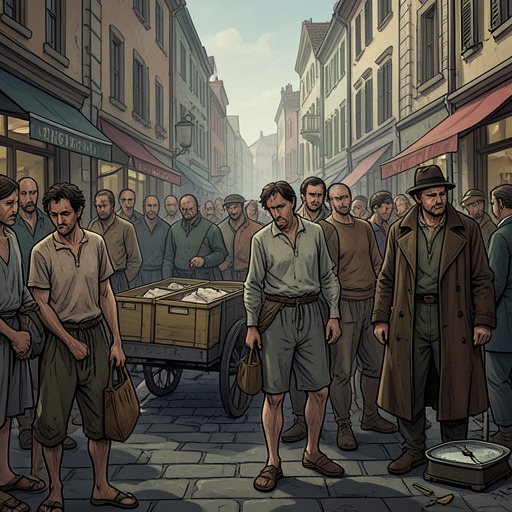
The prosperity associated with Lysene Spring extended beyond the Rogares themselves. In King’s Landing, the Rogare Bank paid strong returns to depositors, encouraging more lords to place their money with the Lyseni. Trade also flourished along the Blackwater. Ships from Tyrosh, Myr, Pentos, Braavos, and especially Lys crowded the docks with silks, spices, Myrish lace, jade from Qarth, ivory from Sothoryos, and other goods that had seldom been seen in the Seven Kingdoms. Banking and maritime commerce reinforced one another: confidence in the bank drew deposits, while the movement of ships made the capital a marketplace for goods from far beyond Westeros.
The revival was not confined to King’s Landing. Duskendale, Maidenpool, Gulltown, and White Harbor saw expanding trade, as did Oldtown and Lannisport. On Driftmark, Hull experienced a renewed burst of activity: scores of ships were built and launched. The mother of Lord Oakenfist expanded her trading fleets and began constructing a large manse overlooking the harbor, which Mushroom dubbed the Mouse House. These details give the season’s prosperity a material shape: busy ports, new vessels, expanded fleets, and a conspicuous building project.
Recovery also had a political and humanitarian dimension. In the spring of 135 AC, Lord Cregan Stark borrowed heavily from the Iron Bank of Braavos to purchase food and seed for his starving smallfolk. The war in the Iron Islands ended, although conflict persisted in the Vale. There, after the Arryn claimants refused to bring their dispute to King’s Landing, Lord Thaddeus Rowan sent a thousand men to Gulltown under Ser Corwyn Corbray to restore the King’s Peace and settle the succession question. The contrast is central to the period: commerce and food supplies could improve even as armed conflict continued in one part of the kingdom.
Financial precedents and the limits of prosperity
The period’s economic recovery followed a succession of fiscal crises, which makes its reliance on credit particularly significant. Under the regency of Jaehaerys I, the Crown’s treasury had been drained by Maegor’s wars and the expenses of the coronation, the Golden Wedding, and the unfinished Dragonpit. Edwell Celtigar tried to raise revenue by tripling port fees, taxing goods entering and leaving the city, and levying innkeepers and builders. Instead of filling the treasury, these measures slowed construction, emptied inns, and diverted merchant ships from King’s Landing to other ports. The Dragonpit’s work stopped for lack of funds.
Later, Rego Draz obtained three substantial loans from the Iron Bank of Braavos and rival lenders in Tyrosh and Myr. The credit allowed construction of the Dragonpit to resume, but the king and Rego recognized that borrowing alone could not resolve the Crown’s deeper financial problems. Jaehaerys rejected taxes that would burden ordinary trade and hospitality, choosing instead to tax costly imports. These earlier measures show how royal finance could redirect commerce and construction, and how different policies could produce sharply different responses from merchants and the public.
A related pattern reappeared during Rhaenyra’s rule. After the Dance left the Crown’s vaults empty, Bartimos Celtigar restored the older port charges and added new levies on drink, shops, inns, and property. When the war ended, Tyland Lannister abolished Rhaenyra’s taxes, pleasing both lords and smallfolk; he also set aside a million golden dragons in loans for lords whose lands had been damaged. His rebuilding program included fortified granaries in King’s Landing, Lannisport, and Gulltown, though buying grain in quantity sharply raised its price and burdened the poor. These episodes do not belong to Lysene Spring alone, but they clarify the conditions against which its prosperity stood: recovery depended on the circulation of money, while the means of raising and distributing that money could still produce resentment or hardship.
Collapse and historical meaning
The prosperity proved vulnerable when Lysandro and Drazenko died within a day of one another under suspicious circumstances. Drazenko died in Sunspear after choking on a piece of bacon; Lysandro drowned when his opulent barge sank on the return from his Perfumed Garden. Some regarded the deaths as accidents, while many suspected murder and believed that the Faceless Men of Braavos were responsible. Possible instigators included the Iron Bank, the Archon of Tyrosh, Lysene merchants and magisters who resented Lysandro’s rule, or even his own sons. None of these suspicions could be proved.
Lysandro’s death exposed a weakness behind the family’s apparent permanence: the offices through which he governed Lys were not hereditary. His corpse had scarcely been recovered before former allies and rivals began struggling to succeed him. His children divided parts of the family’s estate—his palace went to Lysara, his ships to Drako, his pillow house to Fredo, and his library to Marra—while the family’s wealth also included shares in the Rogare Bank for his legitimate children and bastards. Effective control of the bank, however, passed to his eldest son, Lysaro Rogare. The dispersal of property could not itself preserve the political and financial structure that Lysandro had built.
Lysaro’s later attempt to secure power through the bank’s resources helped turn instability into collapse. Rumors that the bank was unsound prompted depositors to demand their money; withdrawals grew into a rush that emptied its vaults. Lysaro fled Lys with a hundred Unsullied, servants, and bed slaves, leaving his wife, daughters, and palace behind. The bank was found to be hollow, and the resulting ruin damaged people well beyond Lys: Westerosi lords and merchants learned that the money they had entrusted to House Rogare was lost. The end of the Rogare system was not simply the reversal of a family’s fortunes; it revealed how much the season’s broader prosperity had come to depend on confidence in a single institution.
Lysene Spring consequently carries a deliberate tension between renewal and fragility. Its trade expansion, revived ports, food purchases, and conspicuous new construction were real achievements after winter and war. But the name also recalls the speed with which prosperity founded on concentrated wealth and uncertain political succession could fail. Spring arrived; it did not guarantee that the structures flourishing beneath it would endure.