Maegor’s Proscription of the Faith Militant
Fire & BloodMaegor’s Proscription of the Faith Militant was the royal policy that outlawed the Warrior’s Sons and the Poor Fellows during Maegor’s war against the Faith. It sought not only to break the orders’ armed resistance but to make the Iron Throne, rather than independent religious forces, responsible for defending the Faith. Its implementation joined legal prohibition to military violence and conditional surrender.
Background and Royal Decree
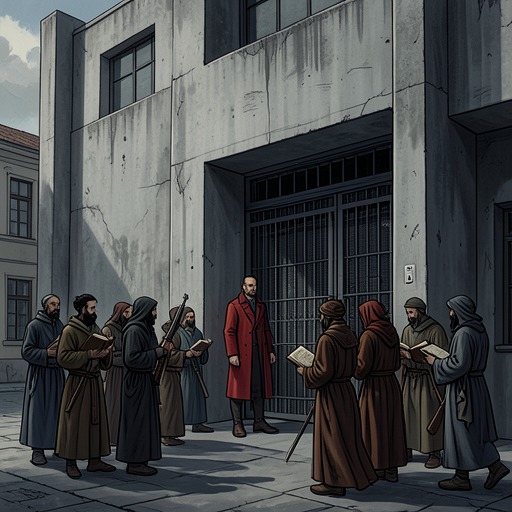
The proscription followed Maegor’s accession to the Iron Throne amid open conflict with the Faith Militant. His first demand was that the Poor Fellows gathering near the capital lay down their weapons, under threat of proscription and death. When they did not comply, he called on loyal lords to disperse them by force. The High Septon in Oldtown answered by urging the Faithful to take up arms against Maegor’s rule, making the conflict a struggle over both royal authority and who could claim to defend the gods.
Resistance continued beyond the field of battle. The Poor Fellows persisted in smaller attacks across the Reach, the Trident, and the Vale, while the Warrior’s Sons rebuilt their numbers. Maegor summoned lords and landed knights of uncertain loyalty to King’s Landing to swear homage and provide children as hostages. He then declared both orders outlawed, made membership punishable by death, and ordered the High Septon to appear at the Red Keep for trial on a charge of high treason. The High Septon refused and instead called on Maegor to come to Oldtown to seek the gods’ forgiveness.
Enforcement and Terms of Surrender
Maegor’s response relied on dragonfire as well as royal commands. Queen Visenya burned the seats of several houses in the riverlands; Maegor then attacked the castles of lords who had defied his summons, including the seat of the Warrior’s Sons’ leader, Ser Joffrey Doggett. The destruction demonstrated the penalty for supporting the outlawed orders, but it did not by itself end the Faith Militant’s resistance.
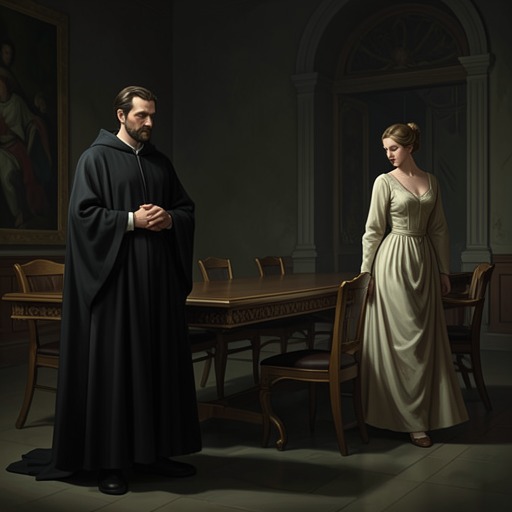
After Lord Hightower’s men arrested the Warrior’s Sons in Oldtown and the city raised Targaryen banners, Maegor remained there for almost half a year, holding court and presiding over trials. Captured members of the Warrior’s Sons were offered a choice: renounce the order and take the black in the Night’s Watch, or refuse and face death. Three-quarters accepted the black. Maegor personally beheaded seven condemned men, while their former brothers-in-arms carried out the other executions. Ser Morgan Hightower alone received a full royal pardon.
Dissolution and Continuing Penalties
A new High Septon formally dissolved both the Warrior’s Sons and the Poor Fellows, declaring that the Seven no longer needed armed champions because the Iron Throne would protect the Faith. Maegor gave surviving members until the end of the year to surrender their weapons and abandon rebellion. Those who remained defiant would be hunted under a bounty: a gold dragon for a Warrior’s Son and a silver stag for a Poor Fellow.
The policy therefore made surrender a route out of the conflict for some, while placing those who continued to resist outside the law and subject to lethal force. Its stated settlement transferred the defense of the Faith to the Crown, but the decree was enforced through burned strongholds, executions, and rewards for capture by killing. The order’s strength was gravely diminished: after the burning of its members in King’s Landing and the subsequent campaign, it never again approached its former power.