Maiden's Day and the bride selection
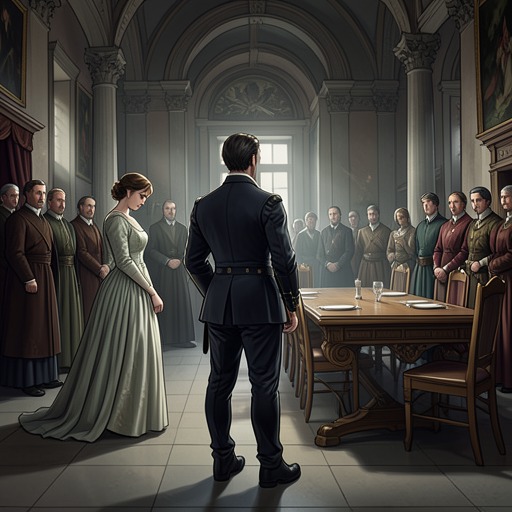
Fire & BloodMaiden’s Day and the bride selection was a royal marriage contest that turned into a test of power between Aegon III and his Hand, Unwin Peake. Unwin arranged the public choice hoping to direct the king toward his own daughter, Myrielle Peake, and thereby advance his influence at court. Instead, Aegon chose Daenaera Velaryon, a six-year-old brought to the presentation by his half-sisters Baela and Rhaena. When Unwin tried to have the choice set aside, the regents backed the king. The event’s outcome joined a child’s unexpected appearance to a larger reversal: a spectacle designed to manage Aegon became the means by which he frustrated the Hand’s plan.
Political Design and Public Invitation
After Jaehaera’s death, Unwin remained intent on marrying Myrielle to Aegon, but he needed to pursue the match without alienating the lords whose support sustained his position. He therefore announced that the king should choose a new wife from among noble maidens summoned from across the Seven Kingdoms. The choice was presented as Aegon’s own, and the future queen was described as his lifelong companion, expected to share his work and bear his children. The language made the contest sound like a royal duty conducted for the good of the realm; its practical effect was to put the king’s marriage at the center of a political struggle.
The proposed ball stirred excitement far beyond the court. Parents and daughters across the realm imagined the possibility of a royal match, and noblewomen began preparing for the journey and presentation. Unwin had already summoned Myrielle from Starpike, three moons before the event, hoping that she could become familiar to Aegon before he made his choice. His position as Hand gave him an opportunity to shape the proceedings, but the response overwhelmed any attempt to keep the contest narrow. Although Lord Peake limited entry to maidens of noble birth under thirty, more than a thousand candidates and their households crowded into the Red Keep. Applicants even came from across the sea, though the daughters sent from Old Volantis never reached King’s Landing after corsairs seized them on the way.
The Presentation in the Red Keep
Despite its name, the occasion was not a conventional ball. There was no dancing, wine, or conversation between the king and the candidates. Aegon sat on the Iron Throne, dressed in black with a golden circlet and a gold chain, while a herald announced each maiden’s name and lineage. Each candidate curtsied; the king acknowledged her with a nod; then the next was presented. With so many participants, the format reduced a supposed courtship to a rapid procession before a silent monarch. The crowd grew difficult to manage, the herald lost his voice, and the king became increasingly restless as the hours passed.
Some candidates tried to make themselves memorable with brief remarks. Their attempts could not alter the basic rhythm of the ceremony: Aegon did not answer, but nodded to show that he had heard. The event’s scale and formality worked against the intimate choice its organizers had advertised. Mushroom later called it the Maiden’s Day Cattle Show, a name that captured the distance between the promised celebration and the actual parade. Unwin, however, saw the king’s evident weariness as useful. He reasoned that each weary nod or frown made his daughter’s selection more likely, since the king might become increasingly ready to choose someone already familiar to him.
Myrielle’s Apparent Advantage and Daenaera’s Arrival
Myrielle had spent almost a moon at court before the presentation, and Unwin arranged for her to share several suppers with Aegon. Fourteen years old and one year older than the king, she was described as brown-haired and brown-eyed, with freckles and crooked teeth that made her shy about smiling. Aegon said little during their meals, but appeared to tolerate her company. Three days before the event, he gave her one of the late queen’s dolls. Myrielle took it as a sign of affection, and Unwin had reason to believe his careful preparation was working.
Unwin also arranged for Myrielle to appear late in the first hour: not first, which might have made favoritism too obvious, but early enough that Aegon would not yet be exhausted. When he greeted her by name and noted that she liked the doll, the exchange seemed to confirm the Hand’s hopes. Myrielle brought the doll with her, cradling it as she stood before the king. Her presentation appeared to reward Unwin’s efforts to secure familiarity without openly granting her precedence.
The balance changed when fewer than a dozen candidates remained. Trumpets announced Baela and Rhaena, the king’s half-sisters and daughters of Prince Daemon. They entered on black chargers in black velvet gowns, with rubies at their throats and the three-headed dragon of House Targaryen on their cloaks. Baela was pregnant; Rhaena was still recovering after a miscarriage. They rode together to the Iron Throne despite an attempt to stop them. Rhaena then told her brother that they had brought his new queen.
The girl was Daenaera Velaryon, six years old, an orphan and a ward of Baela and Alyn Velaryon. Her parents were named in the herald’s introduction, which also identified her guardians and their standing. Dressed in pale silk, lace, and pearls, Daenaera smiled at Aegon. He returned her smile and told her she looked very pretty. This contrast with his weary attention to the long procession made the choice immediately apparent: Unwin’s plan had not merely lost its advantage; the king’s preference had turned decisively elsewhere. Aegon called his cupbearer, Gaemon Palehair, and had him announce that Daenaera would be his wife.
The Regents’ Decision and the Marriage
Unwin accepted the result publicly, but challenged it at the next council meeting. He argued that Daenaera’s age meant the marriage could not soon produce an heir and that the succession would remain uncertain in the meantime. He presented the king’s decision as a youthful error that the regency had a duty to correct, and pressed for Aegon to marry a woman old enough to bear children. The objection exposed the political purpose beneath his concern: setting aside Daenaera’s selection would reopen the opportunity to arrange a match more favorable to him.
Lord Rowan challenged the proposal by asking whether Unwin meant his own daughter. The other regents did not support the Hand. For once, they resisted his wishes and upheld the king’s choice; the betrothal was announced the following day. The decision ended the prospects of the many disappointed candidates who left the city, while also placing a limit on Unwin’s ability to use the regency to determine Aegon’s marriage.
Aegon III married Daenaera on the last day of 133 AC. The procession drew a smaller crowd than the earlier wedding of Aegon and Jaehaera, in part because Winter Fever had killed almost a fifth of King’s Landing’s population. Those who came out despite the bitter winter weather welcomed the new queen warmly. Baela and Rhaena, riding behind the royal litter, were cheered as well. Unwin followed farther back, his displeasure visible to those who noticed him. The final scene thus registered both a dynastic outcome and a political defeat: Aegon’s marriage was settled, the regents had rejected the Hand’s attempt to overturn his choice, and the sisters who brought Daenaera had helped shape the royal household’s future.