Peace of Dorne
Fire & BloodThe Peace of Dorne ended the First Dornish War in 13 AC, concluding a conflict that neither dragons nor armies had brought to a close. Its decisive turn came through diplomacy: Prince Nymor sent his daughter Deria to King’s Landing with the skull of Meraxes and terms of peace, then entrusted her with a sealed letter for King Aegon. The king accepted the proposed terms after reading it, but burned the letter and never explained what had changed his mind. The treaty’s outcome is clear; its most consequential cause remains a mystery.
Causes and the Dornish Embassy
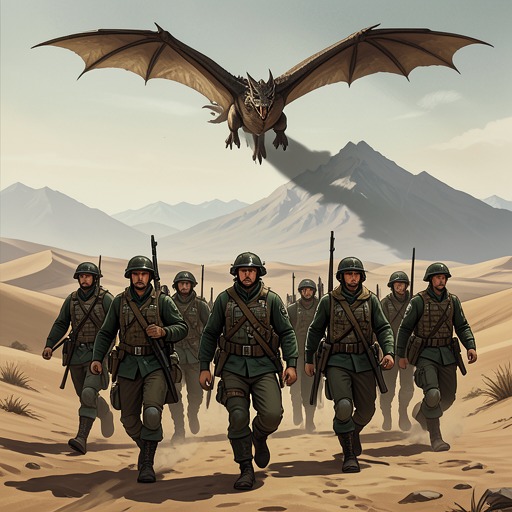
The embassy followed a change of ruler in Dorne. Meria Martell, the Yellow Toad of Dorne, died in 13 AC, and her son Nymor succeeded her as Lord of Sunspear and Prince of Dorne. At sixty, with failing health, he had little appetite for further slaughter. His daughter and heir Deria led the delegation to King’s Landing, carrying the skull of the dragon Meraxes as well as her father’s peace proposals. The gesture joined the memory of the war to the possibility of ending it: the remains of a dragon lost in the conflict arrived at court alongside an offer to stop the fighting.
The proposal met resistance before it reached the king’s decision. Visenya opposed peace without Dorne’s submission, and councillors echoed her position. Orys Baratheon urged harsh treatment of Deria, while Lord Oakheart proposed that she be sold into sexual exploitation. Aegon rejected both suggestions. He insisted that Deria had come as an envoy beneath a banner of peace and would not be harmed under his roof. His refusal to permit retaliation against the envoy established a boundary even as the court debated whether her father’s terms should be accepted.
The King’s Decision
Aegon’s reluctance was not simply the result of opposition at court. The king was weary of war, but peace without submission risked making the death of his sister Rhaenys appear to have been in vain, along with the bloodshed that followed it. His councillors warned that accepting the terms might be read as weakness and encourage further rebellion. The Reach, the stormlands, and the marches had suffered heavily and might not forgive the Dornish. The danger was not confined to political judgment: Aegon feared that the people of King’s Landing might attack the delegation if it left the Aegonfort without a strong escort. Grand Maester Lucan later wrote that the king was close to refusing the proposal and continuing the war.
Deria then presented her father’s sealed letter for the king’s eyes alone. Aegon read it in open court while seated on the Iron Throne, remaining silent and stone-faced. When he rose, accounts said that blood marked his hand. He burned the letter and did not discuss its contents. That night he mounted Balerion and flew across Blackwater Bay to Dragonstone, whose mountain was still smoking. He returned the next morning and agreed to Nymor’s terms. Soon afterward, he signed a treaty of eternal peace with Dorne. The movement from public silence to a solitary flight, and then to an agreement by morning, defines the episode’s sharp reversal without explaining it.
The Unreadable Letter
The letter’s contents are never established. One account presents it as an earnest appeal from one father to another, powerful enough to move Aegon. Another possibility is that it listed the lords and noble knights who had died in the war, confronting the king with its human cost. Some septons advanced a supernatural explanation, claiming that Meria had written the message before her death in Queen Rhaenys’s blood and enchanted it to overcome Aegon’s resistance. These accounts disagree not only about the letter’s contents but about what kind of force ended the war: personal grief, remembrance of the dead, or magic.
Grand Maester Clegg offered a different political explanation many years later. In his view, Dorne no longer had the strength to continue fighting, and Nymor may have tried to secure peace through a threat: if Aegon refused, the prince would hire the Faceless Men of Braavos to kill Aenys, the six-year-old son and heir of Aegon and Rhaenys. The account presents this as speculation, not as a confirmed statement from Nymor or Deria. It therefore cannot resolve the mystery any more than the other theories. The king’s secrecy and the destruction of the letter leave the peace’s immediate catalyst permanently uncertain.
Aftermath and the Politics of Peace
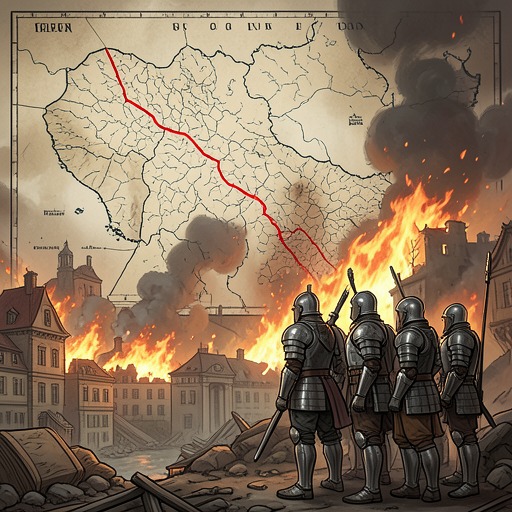
The treaty brought the First Dornish War, dated from 4 to 13 AC, to an end. The account does not detail the treaty’s provisions beyond Nymor’s proposed terms and Aegon’s acceptance; its emphasis falls instead on the difficulty of making peace after a costly war and on the private intervention that reversed the king’s apparent course. The envoy’s safety, the council’s fear of appearing weak, the suffering of the affected regions, and the uncertain fate of Aenys all frame the decision as more than a simple choice between war and peace.
Elsewhere in the history, later councils confront a related problem: a settlement may avert immediate destruction without resolving the claims that produced conflict. During the struggle between Rhaenyra and her half-brother, some councillors warned that resisting her would lead to war, while others urged negotiation. Rhaenyra invoked her father Viserys’s designation of her as heir when challenged to accept terms. Later, Corlys Velaryon proposed pardons for rebellious lords who submitted and supplied hostages, alongside arrangements for members of the rival royal family; Rhaenyra rejected extending pardon to the half-brothers she considered responsible for taking her throne and killing her sons. These episodes do not explain Aegon’s decision, but they sharpen the contrast: the Peace of Dorne is remembered as a settlement whose public terms are known while the private reason that made acceptance possible has vanished. Its ending is firm; the decisive words behind it are lost.