Rhaenyra's Rule over King's Landing
Fire & BloodRhaenyra's Rule over King's Landing was a brief exercise of royal power built on military occupation and public claims to legitimacy, then weakened by punitive government and unpopular taxation. Though Rhaenyra took the Red Keep and the Iron Throne, her possession of the capital did not secure the consent of its people: as taxes rose and executions mounted, the queen once celebrated as the Realm's Delight came to be regarded by many Kingslanders as a cruel ruler.
Conquest and competing claims
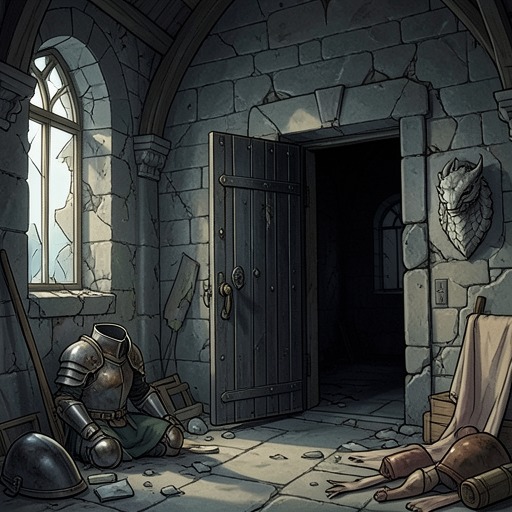
King’s Landing fell in less than a day to Rhaenyra’s forces. A small group of Hightower defenders held the River Gate for nearly eight hours, but the queen’s soldiers entered through the other six gates, while the sight of dragons overhead discouraged further resistance. After Alicent surrendered the castle’s keys and ordered the defenders to lay down their arms, Rhaenyra’s forces found the Iron Throne waiting in the Red Keep. The victory gave her the capital, but it did not end the rival claim of Aegon II, who had escaped the city.
Her authority had already been presented through a coronation on Dragonstone. In contrast to Aegon II’s crowning with the Conqueror’s iron-and-ruby crown, Daemon placed the crown of Jaehaerys the Conciliator on Rhaenyra’s head before a small gathering. She named Jacaerys heir and claimed the title of queen; Daemon claimed the role of Protector of the Realm. The contrast between the two ceremonies made the succession dispute visible in its symbols as well as its competing rulers. The Great Council of 101 AC had chosen Viserys over Laenor by a reported margin of more than twenty to one, and many understood its decision to establish that the throne could not pass through a woman. Rhaenyra’s coronation asserted her own right against a precedent that challenged it.
Taking possession and rewarding supporters
Rhaenyra made the Red Keep the stage for her possession of the capital. Still wearing armor, she sat on the Iron Throne and required those in the castle to kneel, seek forgiveness, and swear allegiance. The ceremony continued through the night. Its force lay in making submission public: the queen occupied the seat of her father and predecessors, while the people of the court were made to acknowledge her rule in person.
She then reshaped offices and rewards around loyalty to her cause. Luthor Largent, whose City Watch had helped open the city, was ennobled. Lorent Marbrand became commander of the Queensguard, and Rhaenyra replaced Grand Maester Orwyle with Gerardys, whom she treated as the only legitimate holder of the office. Imprisoned supporters of the rival faction were released and given lands, offices, and honors. At the same time, Rhaenyra ordered searches for Aegon II, his children, and other fugitives, offering rewards for information and sending inquisitorial parties to pursue those accused of helping them.
Her treatment of defeated opponents was severe, though not uniform. Alicent was imprisoned in golden chains, but Rhaenyra spared her because of their shared connection to Viserys. Otto Hightower was executed, as was Jasper Wylde; Tyland Lannister was sent to the torturers in the hope that he would disclose the location of the Crown’s missing wealth. Rosby and Stokeworth, who had changed allegiance to avoid punishment, were also executed. Their deaths created a further dispute over inheritance: Daemon proposed rewarding dragonseeds with their lands through marriages to the young heiresses, while Corlys argued that their younger brothers had stronger customary claims. Rhaenyra chose to give the lands and castles to the sons, avoiding a decision that might alienate other lords whose own inheritance rights rested on the same conventions.
Taxation and the loss of popular support
The Crown’s empty treasury shaped the most consequential policies of Rhaenyra’s rule. Aegon II had spent the money left in King’s Landing, while much of Viserys’s remaining treasure had been sent elsewhere and lay beyond the queen’s reach. Bartimos Celtigar, appointed master of coin, responded by reviving taxes imposed earlier by his ancestor Edwell Celtigar and adding new levies. Wine and ale taxes doubled, port fees tripled, and shops, inns, property, and goods entering or leaving the city were all assessed. The duties fell especially heavily on traders: ships trapped in the Blackwater by the Velaryon blockade faced new charges before they could sail, and those unable or unwilling to pay could lose their ships and cargoes.
Celtigar also made punishment a source of revenue. Executions were to be held at the Dragonpit, where spectators would pay an entry fee to witness the condemned being fed to the queen’s dragons. In combination, these measures linked the Crown’s need for money to visible displays of coercive power. Rhaenyra had entered a city where many had welcomed her return, but daily executions and mounting taxes changed that response. People began to describe her as grasping and vindictive, and one wit compared her rule to Maegor’s. The gap between her earlier public image as the Realm’s Delight and her reputation as queen became part of the political cost of her government.
The policy had a historical precedent, but not a successful one. During the regency of Jaehaerys I, Edwell Celtigar had imposed higher port charges and levies on King’s Landing’s smallfolk. Trade declined as merchants diverted ships to other ports, building slowed, and the Crown’s Dragonpit project ran out of funds. Years later, Rego Draz addressed Jaehaerys’s financial crisis differently, securing three loans from the Iron Bank of Braavos and rival banks in Tyrosh and Myr so that construction could resume. Rhaenyra’s government instead returned to the tax measures that had previously damaged trade, now amid the pressures of war and a blockade.
Unstable rule and aftermath
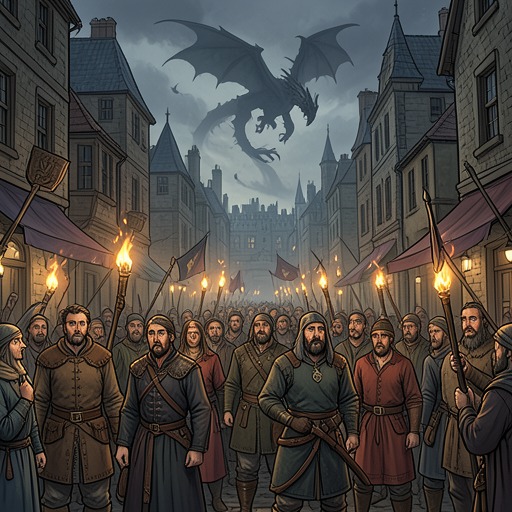
The queen’s hold on the capital rested in part on the armed presence of her supporters and their dragons. She sent for her younger son Aegon and made him her cupbearer, keeping him close, while planning Joffrey’s installation as heir. Yet possession of the Red Keep did not mean that the city’s anger had been contained. During the later assault on the Dragonpit, a growing crowd of smallfolk set out to attack the dragons. Rhaenyra sent riders to try to disperse them and seize their leader, but the city was in turmoil and the remaining loyal City Watch was too small to offer confidence of success. The episode exposed the distance between the queen’s command over the castle and her ability to command the population beyond it.
After Rhaenyra’s rule ended, Tyland Lannister abolished her and Celtigar’s taxes as part of an effort to restore trade and rebuild the kingdom. That later reversal underlined the political and economic burden the levies had imposed. Rhaenyra had established her presence in the capital through military victory, coronation, and compelled oaths; she could not make those signs of authority stand in for popular support.