Royal financial crisis
Fire & BloodThe Royal financial crisis was not a single shortage but a recurring weakness of the Crown: war and royal undertakings drained its reserves, and efforts to replace the lost gold could burden trade, anger the population, or leave the monarchy indebted. Under the regency for Jaehaerys I, the failure of unpopular levies halted construction of the Dragonpit; later, loans and taxes on imported luxuries offered a different response. During the Dance of the Dragons, control of the treasury became part of the struggle for power, and the empty vaults left by the rival regimes made economic recovery a central task for Aegon III’s government.
War costs and the regency
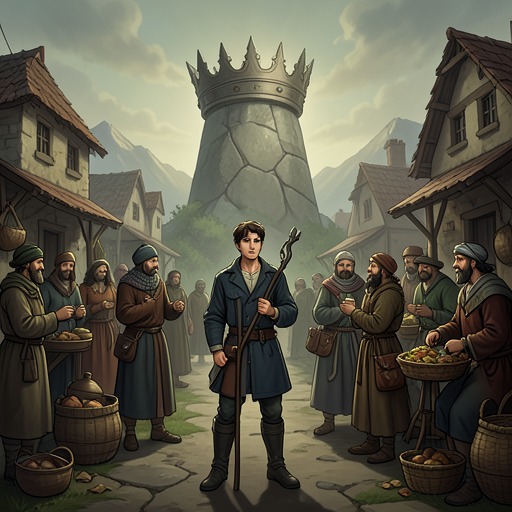
The immediate crisis followed the wars of Maegor the Cruel, which had exhausted the royal treasury. His master of coin raised existing taxes and introduced new ones in an effort to replenish it, but the measures yielded less gold than expected and deepened the lords’ hostility toward the king. The change of ruler did not erase the problem: the coronation of Jaehaerys and Alyssa Targaryen’s Golden Wedding had been costly celebrations, while Lord Rogar Baratheon intended to finish the Dragonpit before handing the capital and kingdom over to the young king. The Crown lacked the money to pay the builders.
Edwell Celtigar, serving as master of coin during the regency, tried to raise funds without offending the lords by shifting the burden onto the smallfolk and commerce in King’s Landing. He tripled port fees, taxed some goods both entering and leaving the city, and imposed levies on innkeepers and builders. The policy failed on its own terms. Building slowed, inns emptied, and merchants diverted ships to Driftmark, Duskendale, Maidenpool, and other ports where they could avoid the charges. The taxes also applied in Lannisport and Oldtown, but had less effect there because Casterly Rock and the Hightower did not enforce them. Celtigar became widely loathed in the capital, and the Crown could no longer pay for the Dragonpit’s construction, so work on its great dome stopped.
Jaehaerys’s borrowing and new taxes
When Jaehaerys assumed personal rule, the treasury was still empty and the Crown’s debt was growing. Rego Draz, the new master of coin, sought loans from the Iron Bank of Braavos and competing banks in Tyrosh and Myr. By negotiating with the institutions against one another, he secured three substantial loans on favorable terms. The borrowing provided immediate relief: builders and stonemasons returned to work on the Dragonpit on Rhaenys’s Hill. Both king and master of coin understood, however, that loans could delay rather than resolve the underlying shortage.
Jaehaerys rejected a return to Celtigar’s port fees and levies on innkeepers, and he was unwilling simply to demand gold from the lords as Maegor had done. Instead, he chose to tax costly imports that wealthy consumers wanted. The list included silk and samite, cloth-of-gold and cloth-of-silver, gemstones, Myrish lace and tapestries, Dornish wines but not Arbor wines, Dornish sand steeds, and finely worked armor and helms from Tyrosh, Lys, and Pentos. Spices from beyond the Jade Gates were to bear especially heavy taxes. This approach sought revenue from luxury consumption rather than direct demands on the lords or basic city commerce, while leaving the Crown reliant on borrowed money as it put its longer-term finances in order.
The treasury as a prize in civil war
The Dance of the Dragons turned the Crown’s reserves into both a resource and a vulnerability. As King Viserys lay dying, Tyland Lannister, appointed master of coin by the Greens, divided the royal gold into four portions: one was placed with the Iron Bank of Braavos, one sent under guard to Casterly Rock, one to Oldtown, and the remaining share reserved for bribes, gifts, and possible sellswords. The distribution placed most of the treasure beyond the immediate reach of whoever held King’s Landing, while reserving funds for political and military purposes.
When Rhaenyra Targaryen captured the city, the treasury she inherited was empty. Aegon II had spent the portion left in King’s Landing; the other three portions remained with the Iron Bank, the Hightowers of Oldtown, and the Lannisters of Casterly Rock, beyond her grasp. Bartimos Celtigar, her master of coin, responded by restoring taxes once enacted by his ancestor Edwell and adding further levies. He doubled taxes on wine and ale, tripled port fees, charged every shopkeeper a fee for keeping a business open, and assessed inns by the number of beds. He also brought back and tripled entry and exit fees and imposed a tax on property, from merchants’ manses to beggars’ hovels. The breadth of the charges made the fiscal problem visible in daily city life, but the evidence records the burden rather than a successful recovery under Rhaenyra.
Rebuilding under Aegon III
After the Dance, Tyland Lannister made the restoration of trade and reconstruction priorities of the Hand’s government. He abolished the taxes imposed by Rhaenyra and Bartimos Celtigar, a measure welcomed by both great lords and smallfolk. With the Crown’s gold once again secure, he set aside a million golden dragons in loans for lords whose lands had been devastated by the war. Many took the money, though the lending created a rift between the Iron Throne and the Iron Bank of Braavos.
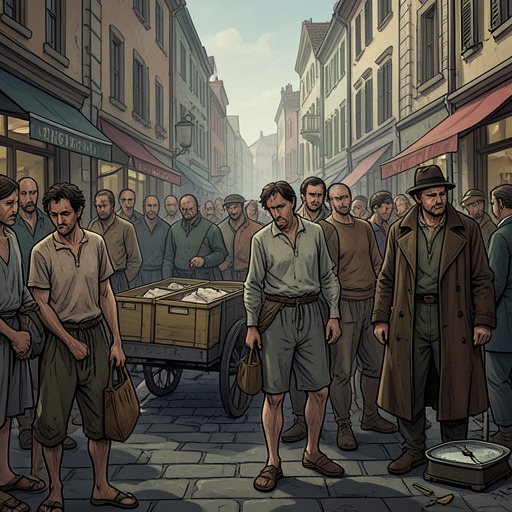
Tyland also ordered three large fortified granaries built in King’s Landing, Lannisport, and Gulltown, and arranged to fill them with grain. The purchases sharply raised grain prices: they benefited those able to sell wheat, corn, and barley, but angered innkeepers, pot-shop owners, and the poor and hungry. The policy thus paired reconstruction and preparation of food reserves with a new cost borne unevenly across the kingdom. His measures addressed the aftermath of war through lending, construction, and provisioning, but the consequences show that restoring the Crown’s capacity could itself reshape markets and produce hardship.